Last updated November 17, 2026
Free written scope consultation - allowances, timeline, and change-order rules on paper before a single trade is scheduled
DIY vs Professional Construction: The Los Angeles Homeowner’s Decision Guide
California’s owner-builder permit requires you to sign a declaration that you won’t sell the home within one year. If you do sell inside that window, you must disclose the owner-built work to the buyer, and that disclosure routinely triggers a demand for licensed remediation at escrow. In Los Angeles, where home values make every escrow negotiation a high-stakes event, that single line on a permit application changes the math on do-it-yourself work far more than skill or tool budget ever will. This guide walks through the legal reality first, then the money, then a decision framework built on your resale timeline rather than a vague “know your limits” slogan.
Quick Answer
In Los Angeles, hire a licensed contractor for anything that requires a permit, touches electrical, gas, or structural systems, or that you may need to disclose at resale. Handle yourself only cosmetic, non-permitted work where you accept the full cost of mistakes and the work won’t be scrutinized in a future sale. When in doubt, the owner-builder declaration’s one-year resale restriction is the deciding factor, not your confidence with a nail gun.
Styles & brands we work with
- Kitchen remodeling
- Bathroom remodeling
- Home additions & ADU
- Roofing
- Windows & doors
- Driveway & pavers
- Fence
Table of Contents
- What the California Owner-Builder Permit Actually Requires You to Sign
- Project Types in Los Angeles You Cannot Owner-Permit, Regardless of Skill
- Calculating Your True DIY Cost: Permits, Waste, and the Value of Your Weekend
- Where Contractor Work Is Inspectable vs. Where You Have No Recourse
- A Decision Framework Based on Resale Timeline, Project Type, and Risk
- The Commercial-Scale Question: When DIY Stops Being About Money
- Common Mistakes to Avoid
- When to Call a Professional
What the California Owner-Builder Permit Actually Requires You to Sign
When an unlicensed homeowner pulls a permit in Los Angeles to build on their own property, they sign a state-mandated owner-builder declaration. That form is not a formality. It’s a sworn statement with resale and insurance consequences, and it’s the part most online DIY guides skip until you’ve already broken ground.
Here’s what you’re attesting to when you sign:
- You will occupy the home as your principal residence for at least one year after the work is completed. This is the “one-year rule” you’ll see referenced on the permit application itself.
- You will not sell the property within that one-year window without disclosing the owner-built work to the buyer. That disclosure goes on the transfer disclosure statement (TDS), the same document where you list known defects.
- You understand the work is not covered by a contractor’s license bond, and general liability policies typically exclude owner-built work. If a future buyer is injured by an owner-built deck or subfloor, the claim lands on you.
- If the project is a multi-unit or speculative property intended for resale, the owner-builder exemption doesn’t apply at all. Los Angeles plan check enforces this.
In practice, the one-year rule means a homeowner who sells in month nine after a big kitchen renovation has to hand the buyer a disclosure packet detailing the owner-permitted work. In our experience across Los Angeles, that disclosure is where deals start to wobble. Buyers routinely ask for licensed remediation, escrow credits, or holdbacks before they’ll sign off. If the work fails a subsequent inspection, the buyer’s agent will often demand the entire scope be redone by a licensed contractor, at the seller’s cost.
The owner-builder route is defensible in one narrow scenario: you’re planning to stay in the house five years or more, the work is genuinely cosmetic or within owner-permit scope, and you know the work will never be reviewed by a buyer’s inspector. Outside that scenario, the legal tail is longer than the DIY tail. The General Contractor in Los Angeles route eliminates the disclosure entirely for anything requiring a permit, because the permit is pulled by a licensed entity and the work is inspected by the city.
Project Types in Los Angeles You Cannot Owner-Permit, Regardless of Skill
There is a category of work where the owner-builder declaration doesn’t apply, no matter how much experience you have or how many YouTube walkthroughs you’ve watched. Los Angeles Department of Building and Safety (LADBS) and the California Contractors State License Board both draw these lines clearly, and they exist because the failure modes are injury or death, not aesthetic.
- Electrical panel replacement and service upgrades. Swapping a 100-amp panel for a 200-amp service, adding a subpanel, or moving a service drop requires a licensed electrician in most Los Angeles jurisdictions. The panel is the single most dangerous component in a house; LP gas lines, arc faults, and backfeed scenarios don’t leave room for a first-timer.
- Gas line extensions and modifications. New gas runs for a range, dryer, or outdoor kitchen require a licensed plumber or gas contractor and a pressure test witnessed by the inspector. We’ve seen unpermitted gas runs in Los Angeles get flagged in pre-sale inspections more often than any other single item.
- Structural modifications in seismic zones. Los Angeles sits on a mix of Zone 3 and Zone 4 seismic design categories depending on the address. Load-bearing wall removal, foundation upgrades for soft-story buildings, and shear wall additions require engineered plans and a licensed contractor. A homeowner can’t legally pull these permits as an owner-builder with any hope of getting through plan check.
- Roof replacement with a two-story or steeper pitch. Roofing is technically owner-permittable in some cases, but the fall hazard and the fact that most Los Angeles roof warranties are void if installed by a non-licensee make it a bad bet. If you’re considering replacement on a hillside home in Silver Lake or Mount Washington, the license requirement is practical, not just legal.
- Any work on a property you intend to sell within 12 months. This is the resale-timeline trap in disguise. Even work that is legally owner-permittable becomes a disclosure liability if the sale window is short.
The pattern is consistent: the trades that can kill someone (electrical, gas, structural) are closed to owner-builders by design. The trades that can cost someone money (cabinet installs, drywall, paint, tile) remain open. We tell Los Angeles homeowners to sort their project into one of those two buckets before they spend a dollar.
Calculating Your True DIY Cost: Permits, Waste, and the Value of Your Weekend
The DIY-vs-hire cost comparison that lives on most websites is dishonest because it compares contractor labor to the sticker price of materials alone. That’s not a comparison; it’s a fantasy. Here’s the four-line formula we use when a Los Angeles homeowner asks us to sanity-check their budget.
- Material cost, marked up for the waste rate. Tile, flooring, drywall, and lumber all have waste. Realistic waste rates: 10-15% for tile and plank flooring, 15-20% for framing lumber, 5-10% for drywall. A “cheap” $2,200 tile install is really a $2,500 tile install once you account for cutoffs and breakage.
- Permit fees, plus the plan check surcharge. Los Angeles permit fees scale with valuation and can run $600-$2,400 on a mid-sized kitchen or bathroom project once plan check and inspection fees are added. Owner-builder permits don’t waive these; they just move who pulls them.
- Tool rental and consumables. For a first-timer, expect $400-$1,200 per project on tool rental alone (wet saw, tile snap cutter, drywall lift, nailer, sprayer). Buying equivalents runs $1,500-$3,500 for tools you may use once.
- Time-value of labor, honestly priced. A first-time tiler takes roughly three times as long as a journeyman on the same square footage. If you bill your own time at even $30/hour, a 40-hour journeyman job becomes a 120-hour first-timer job, which is $3,600 of your own time. Add the repeat labor when (not if) you redo a section. In our experience across Los Angeles, first-time DIY projects rarely land under the contractor bid once those four lines are added up.
The math is even more lopsided when a permit is in play. Add the resale disclosure risk from the previous section, and the DIY “savings” often lives only on the spreadsheet, not in the bank account. For a Los Angeles kitchen scale project, we regularly see DIY budgets come within 15-20% of a licensed bid, and that gap disappears entirely once you count your own hours.
Where Contractor Work Is Inspectable vs. Where You Have No Recourse
The second factor that tips the decision is enforceability. Some types of work are inspectable and enforceable after completion; others leave the homeowner with no practical recourse. That gap is where licensed work earns its price.
Work with real recourse looks like this:
- Permitted electrical, plumbing, framing, and roofing. Inspected by LADBS, covered by contractor warranty, and traceable through the permit record at resale. If the work fails, the homeowner has both the inspection record and the contractor’s written guarantee as leverage.
- Surfaces and systems installed by a licensed contractor. Stone counters, cabinetry, doors, and fixtures carry manufacturer warranties that require licensed installation to remain valid. A Cambria quartz counter installed by a non-licensee can void the manufacturer’s surface warranty entirely.
- Work under a written guarantee. Any project with a written, dated guarantee (for example, the 365-Day Done Right Promise that Bradford Remodeling Co Los Angeles puts on every completed job) gives the homeowner something to enforce if the work fails within the window.
Work with no practical recourse looks like this:
- Cosmetic drywall patching and paint. Nobody inspects it, warranty enforcement is nearly impossible, and the cost of redoing it is low. DIY is a defensible choice here.
- Tile work in a secondary bathroom. If the tile pops a year later, you’ll only know it from the grout line. Resetting it is a maintenance item, not a claim.
- Any work where the “contractor” was unlicensed. Under California law, an unlicensed contractor can’t enforce a contract, and the homeowner can often claw back payments. That cuts both ways: if the work is bad, your recourse is small claims, not the license board.
We use a simple filter: if you can’t point to a permit, a manufacturer’s installed warranty, and a written guarantee, you don’t have recourse. That’s the real comparison, not the line on the bid.
A Decision Framework Based on Resale Timeline, Project Type, and Risk
Here’s the framework we walk Los Angeles homeowners through before they commit to either path. Score your project on these three axes.
- Resale timeline. Selling within 12 months? Hire licensed, no exceptions, regardless of project. Selling within 5 years? Hire licensed for anything visible or permit-triggering. Staying 5+ years? DIY becomes defensible for cosmetic work only.
- Project type. Electrical, gas, structural, roofing, and anything requiring a permit: licensed. Cosmetic, non-permitted, low-risk: DIY is on the table. Everything in between: get a contractor bid and compare it to the true DIY cost from the previous section.
- Risk tolerance. If a $4,000 mistake would wreck your year, hire. If it would annoy you and cost a weekend to redo, DIY is a reasonable call. Most Los Angeles homes carry enough equity that the resale downside of unpermitted work is 10x the DIY savings.
If all three axes point to licensed, that’s your answer, and it’s not close. If two point to licensed, hire. If only one points to licensed, which usually means “cosmetic project, long hold, thick skin,” you can take the DIY path without legal risk. We rarely see a Los Angeles homeowner regret the licensed path. We routinely see homeowners regret the DIY one when it shows up on a TDS.
The Commercial-Scale Question: When DIY Stops Being About Money
There’s a tipping point where the DIY question stops being financial and becomes operational. It usually happens around the $15,000-$20,000 project mark, or the moment two or more trades need to sequence together. A kitchen that needs rough-in plumbing, an electrical update, cabinet install, counter templating, tile, and finish carpentry is no longer a DIY project with a long weekend; it’s a schedule, and schedules are what licensed contractors actually sell.
That’s not puffery. It’s the thing a homeowner can’t do alone. Coordinating a cabinet delivery with the counter templating crew (which can’t template until cabinets are set and level), then scheduling the tile setter for the backsplash the day after counters are in, then getting the electrician back to finish trim after tile, is a full-time job. Most Los Angeles schedules run 4-8 weeks on a kitchen for exactly that reason. We see DIY kitchens stretch to 6-9 months because the homeowner has to wait for the next free weekend, and every week of open kitchen creates its own cascading delays.
Where DIY still makes sense at scale: painting, cabinet hardware, and interior door replacement (Therma-Tru door installs are within reach for an experienced homeowner, provided the door isn’t structural and the weather seal is done correctly). Those are the exception. Everything else, once you cross two or more trades, belongs with a licensed contractor who can sequence it. See our Kitchen Remodeling in Los Angeles page for how the sequencing works on a full-scope kitchen.
See the difference
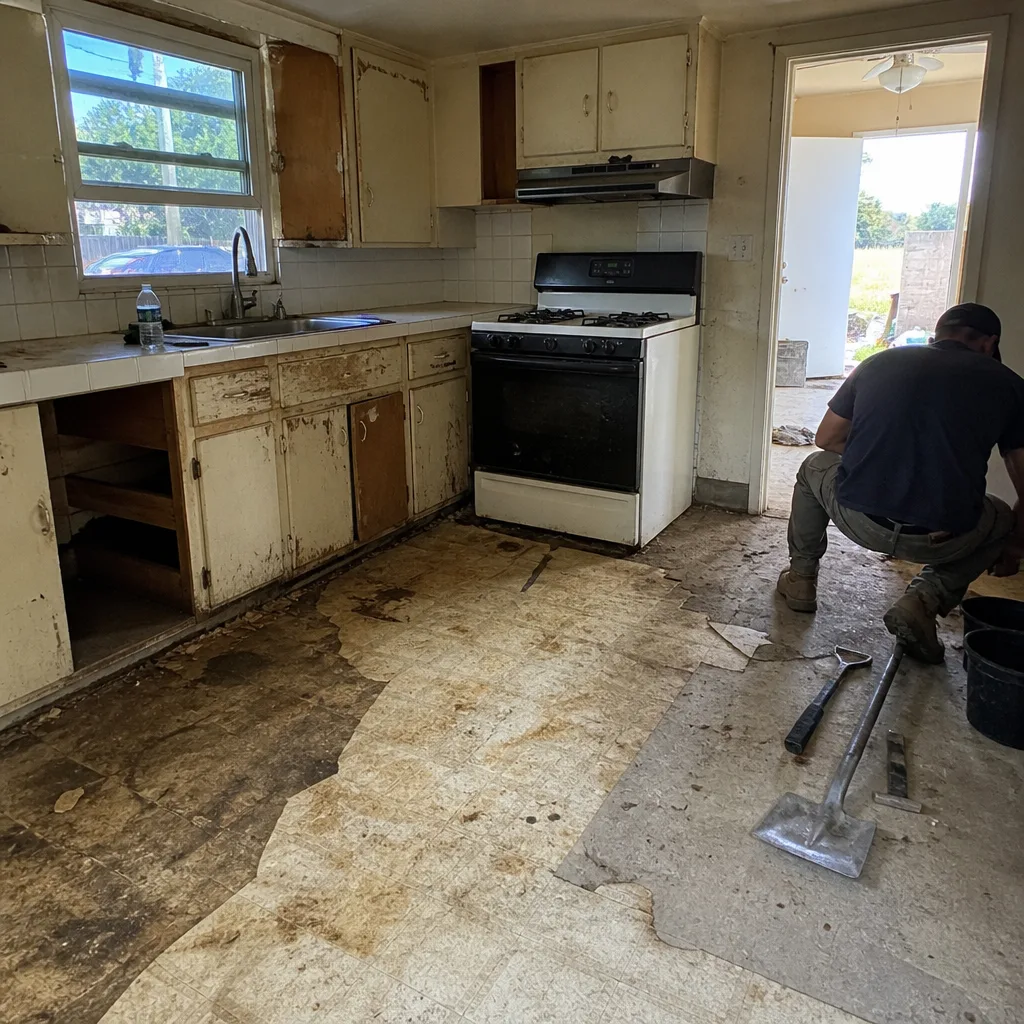 Before
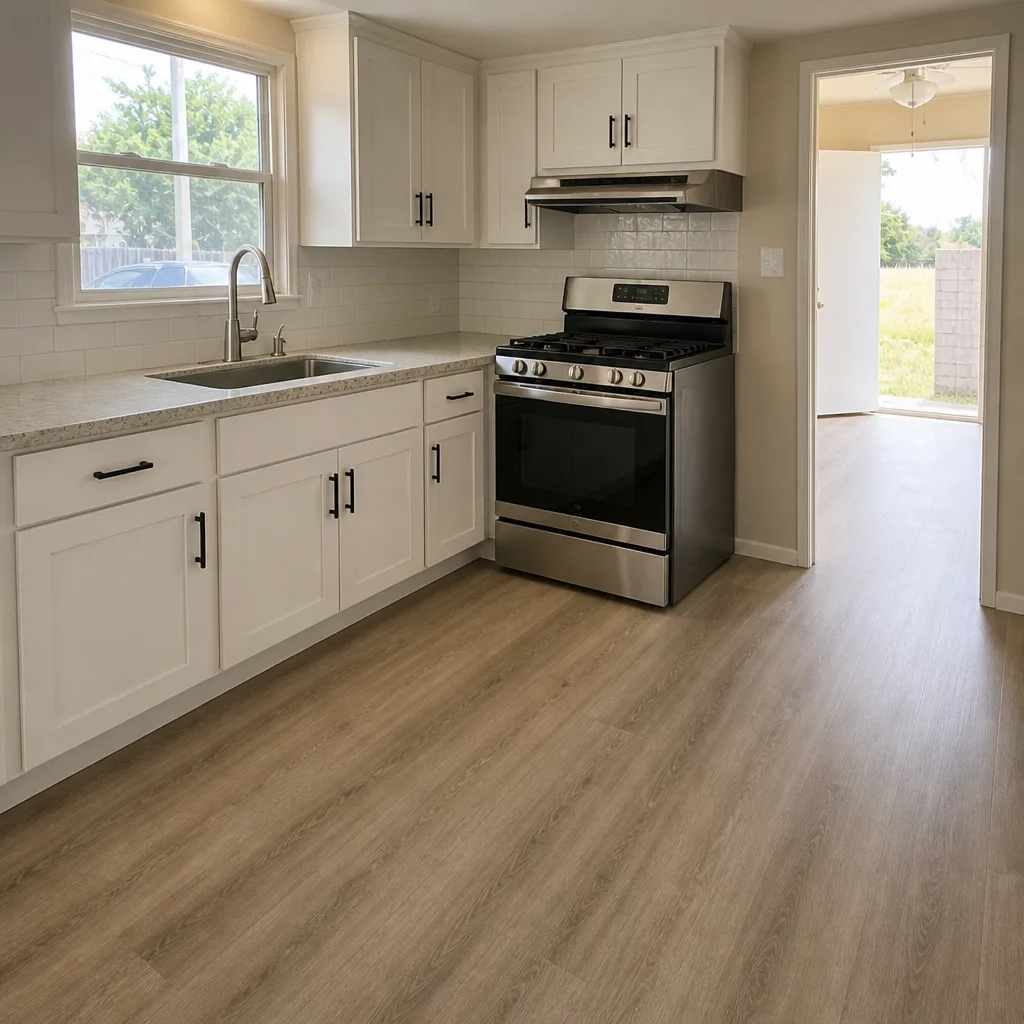 After
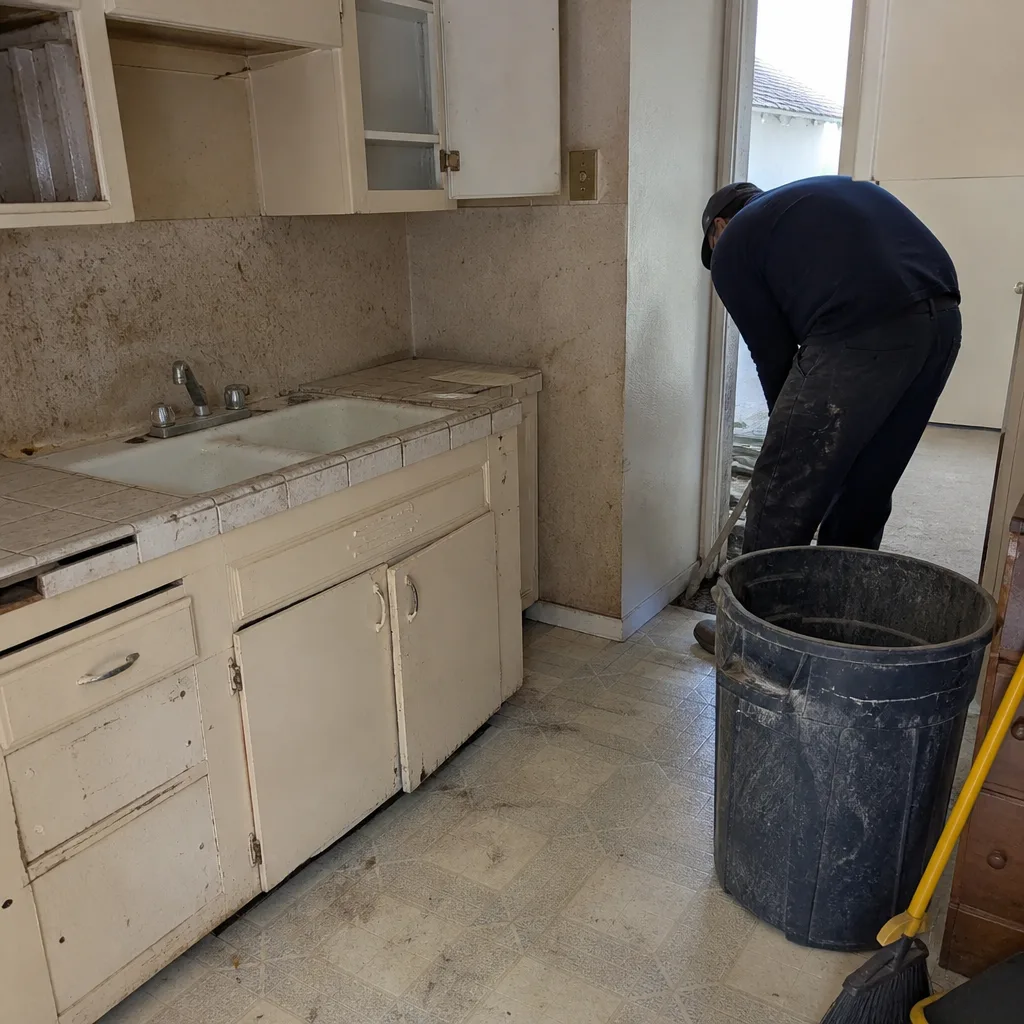 Before
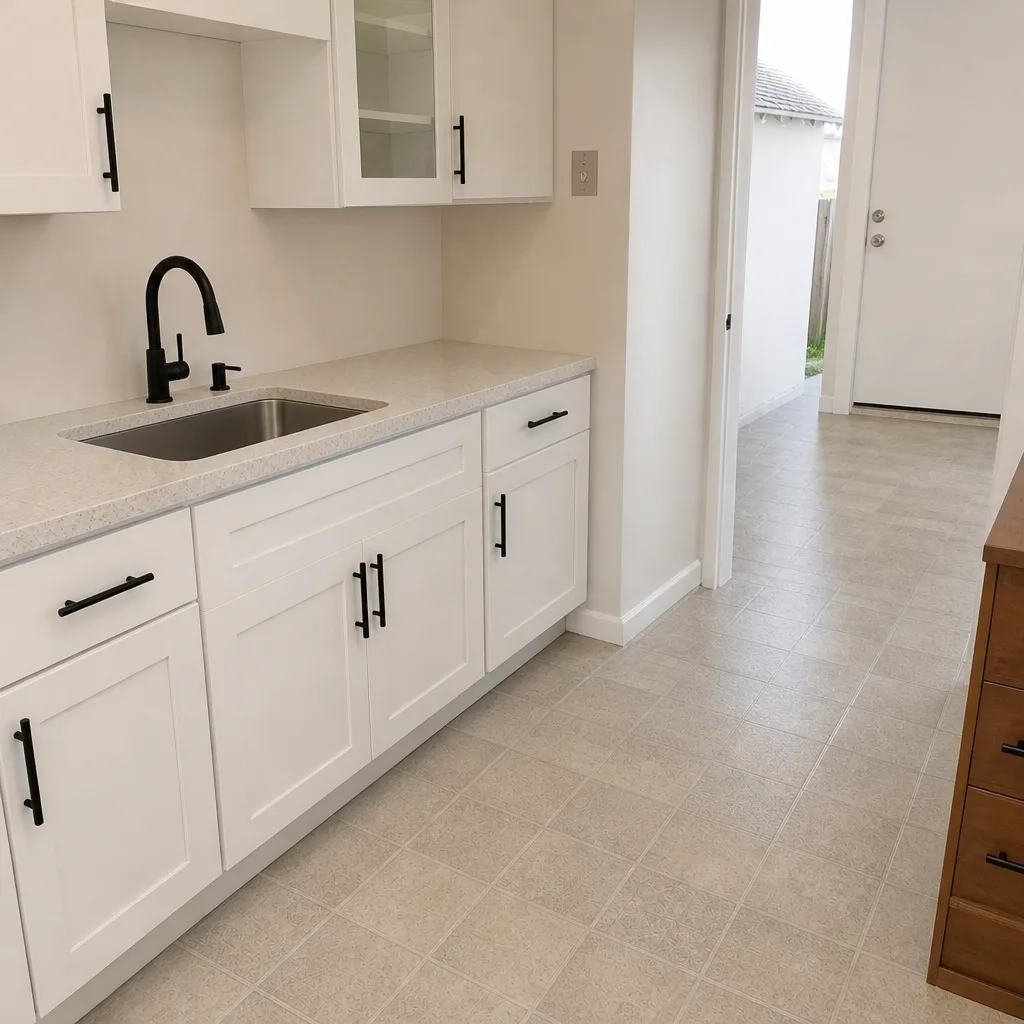 After
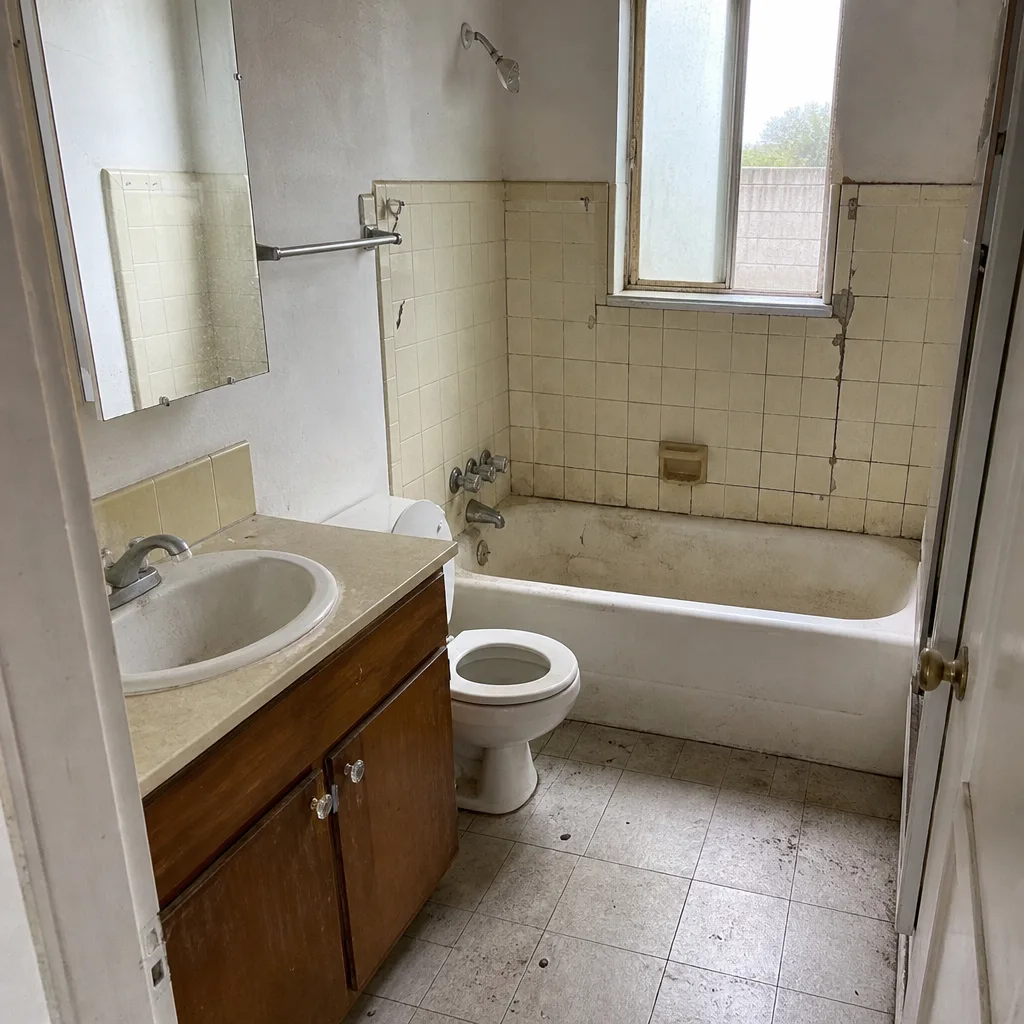 Before
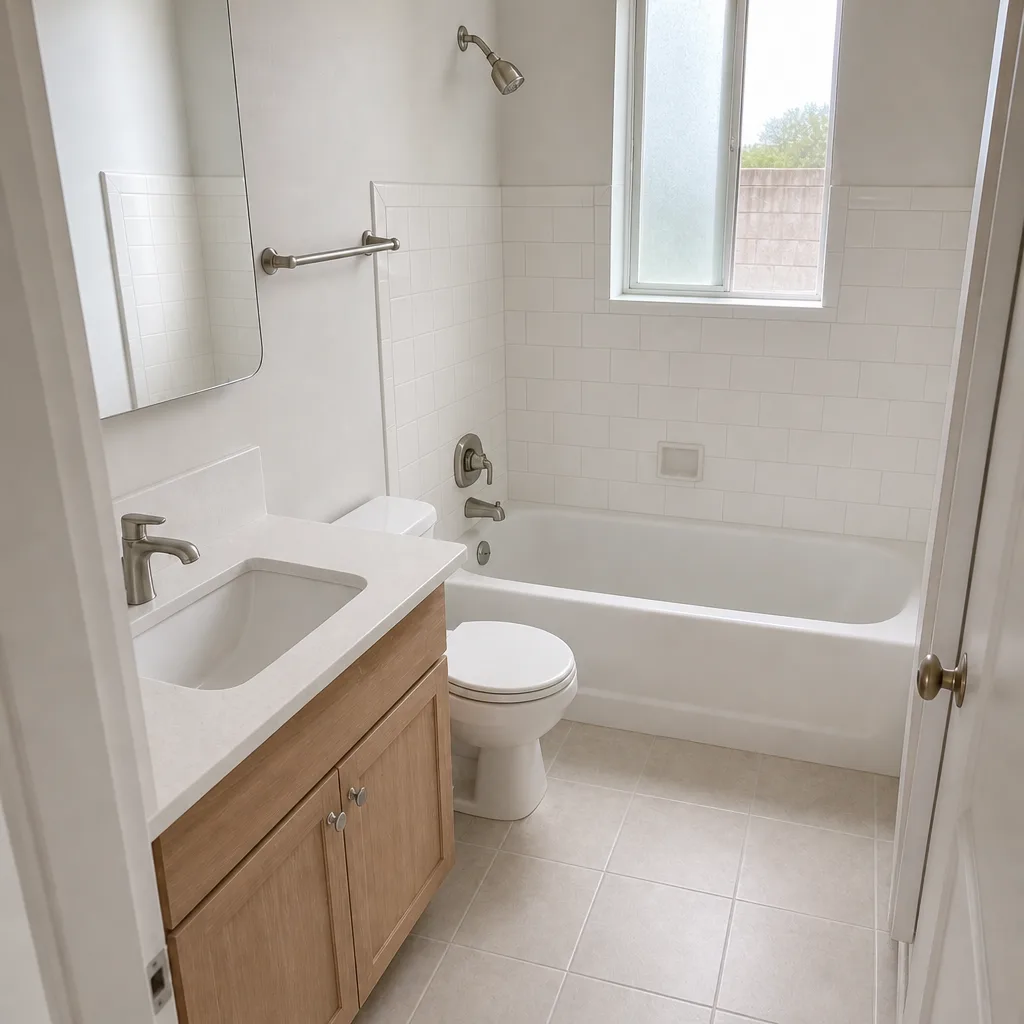 After
Common Mistakes to Avoid
- Pulling an owner-builder permit without reading the one-year resale rule. This is the mistake we see most often. The declaration is on the application form itself; it is not buried, and it is not negotiable.
- Assuming a small-project permit is “no big deal” for resale. In Los Angeles, even a permitted bathroom remodel generates a permit record that future buyers’ agents will request. Owner-built bathroom work that shows on a TDS gets flagged immediately.
- Skipping the manufacturer warranty fine print. Cambria quartz, Caesarstone surfaces, and most premium fixtures require licensed installation to keep the warranty valid. DIY install doesn’t just cost labor; it costs the warranty.
- Comparing contractor labor line-items to material receipts. That comparison is wrong on both sides. The contractor bid includes permit fees, waste, sequencing, tools, and a written guarantee. The material receipt includes materials.
- Hiring an unlicensed “handyman” for permitted work. This is the worst of both worlds. You lose the resale cleanliness of a professional record and the small claims leverage you’d have had as an owner-builder. In Los Angeles, unlicensed work on permitted scopes often gets torn out at pre-sale inspection.
- Starting a permit-required project in a home you plan to sell. We’ve watched homeowners in the Valley do this twice – once when they started the work, again when they tried to sell. Both times the disclosure cost more than the contractor bid would have.
- Assuming a general liability policy covers owner-built work. Most homeowner policies exclude owner-performed construction from coverage. If a piece of owner-built work fails and damages the house, the claim is often denied.
When to Call a Professional
Call a licensed contractor, without comparing bids first, when: the work touches a panel, a gas line, or a structural member; the work requires a permit of any kind; you plan to sell within 12 months; the scope crosses two or more trades; the work is on a second-story exterior or a steep pitch; or you discover a prior owner did work that now needs to be corrected before sale. Each of those conditions eliminates the DIY path in Los Angeles, and each one is more common than homeowners expect. Bradford Remodeling Co Los Angeles offers free estimates in Los Angeles – call (844) 343-6681. Every project starts with a written price before any work begins, and every completed project carries the 365-Day Done Right Promise in writing.
Frequently Asked Questions
Yes, for many cosmetic and non-permitted project types, provided the home is your principal residence and you sign the owner-builder declaration. The declaration carries a one-year resale restriction and a disclosure obligation you must honor at the sale. Anything requiring a permit, plus electrical panel work, gas lines, and structural modifications, must be performed by a licensed contractor in Los Angeles.
You must disclose the owner-built work to the buyer on the transfer disclosure statement. In practice, Los Angeles buyers’ agents routinely ask for licensed remediation, escrow credits, or both before the sale closes. If the work fails a future inspection, the buyer can require the entire scope be redone by a licensed contractor at the seller’s cost.
Rarely, once you add permit fees ($600-$2,400), tool rental ($400-$1,200 per project), waste allowance (10-20%), your own hours at even a modest hourly rate, and the resale disclosure risk. In our experience, DIY kitchen budgets land within 15-20% of a licensed bid on comparable scope. Call (844) 343-6681 for a free written estimate – the comparison is much easier with a real number in hand.
Electrical panel replacements and service upgrades, gas line extensions and modifications, and structural modifications in seismic design Zones 3 and 4 (which cover much of Los Angeles) all require a licensed contractor, regardless of homeowner skill. Roof replacement on steep or two-story pitches is practically in that bucket even when it’s technically possible to owner-permit.
Most homeowner policies exclude owner-performed construction from coverage. If owner-built work causes damage, the claim is typically denied and the cost lands on the homeowner. Licensed contractor work, by contrast, is covered by the contractor’s own insurance and backed by a written guarantee, which is part of what shows up on the contractor bid that DIY doesn’t include.
Check the license number on the Contractors State License Board (CSLB) website, and confirm the license matches the legal business name on the contract, not a DBA. Ask for a written price before work begins, a background-checked crew, and a dated, written guarantee on completion. Bradford Remodeling Co Los Angeles puts every price and guarantee in writing before any work starts, and a live person answers the phone 24/7 – call (844) 343-6681.
The Bottom Line
In Los Angeles, the DIY-vs-hire decision is a legal question first and a skill question second. The owner-builder declaration’s one-year resale rule and disclosure obligation mean that any permitted project on a home you might sell within 12 months is a licensed-contractor job by default. Electrical panels, gas lines, and seismic-zone structural work are licensed-only regardless. DIY is defensible for cosmetic, non-permitted work where you accept the cost of mistakes and your resale timeline is long. For everything else, the licensed bid includes a permit record, a manufacturer warranty, and a written guarantee that a DIY receipt doesn’t have.
Every Bradford Remodeling Co Los Angeles project starts with a written price before any work begins, is delivered by background-checked and uniformed technicians, and is covered by the 365-Day Done Right Promise: if the work fails within a year, we return and correct it at no charge. Live person on the phone, 24 hours a day. Call (844) 343-6681 to schedule your free estimate, or start with our Bathroom Remodeling in Los Angeles, Kitchen Remodeling in Los Angeles, and General Contractor in Los Angeles service pages, or visit the Bradford Remodeling Co Los Angeles home page to see how a project runs start to finish.
Written by the team at Bradford Remodeling Co Los Angeles.