Last updated November 17, 2026




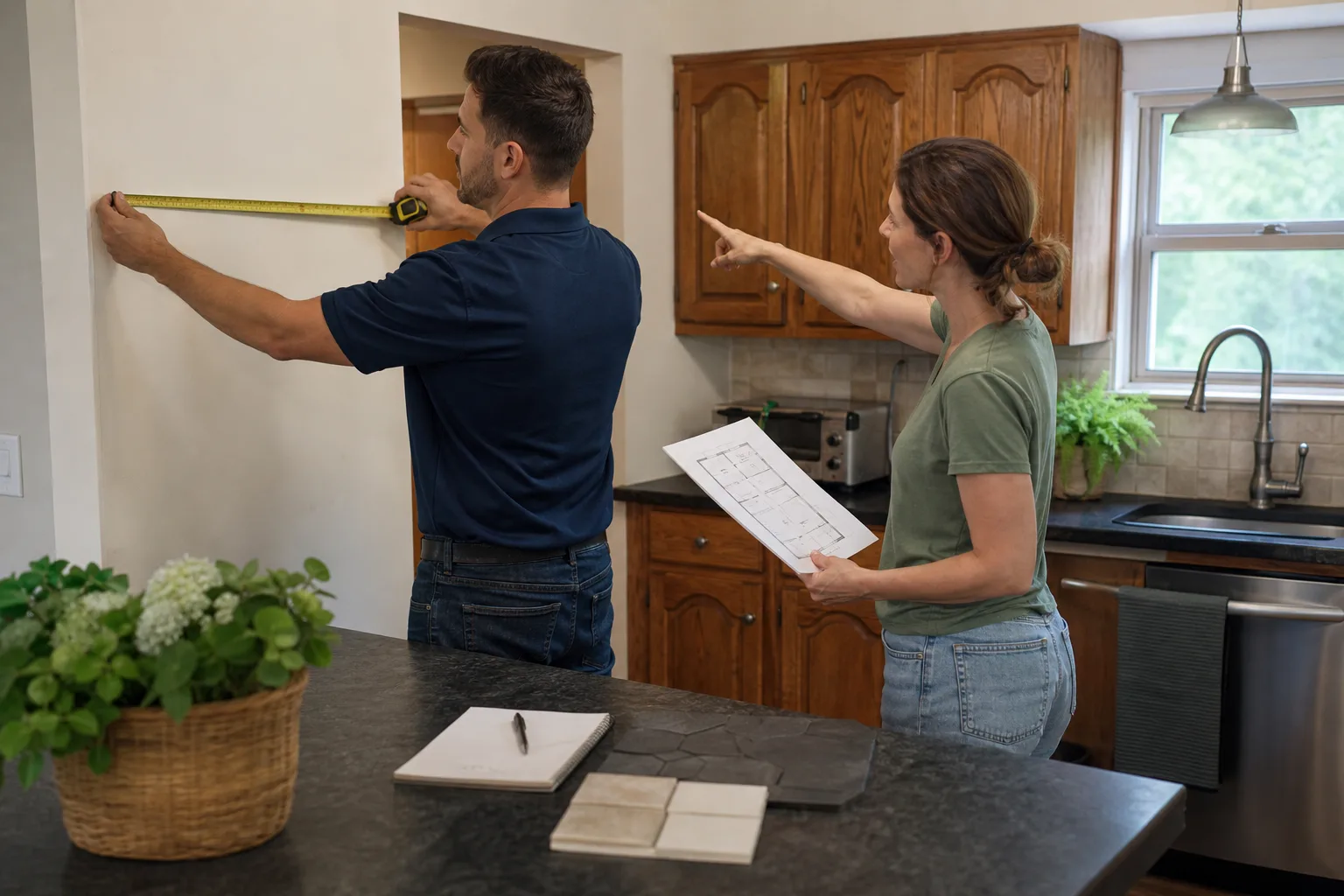
Free written scope consultation - allowances, timeline, and change-order rules on paper before a single trade is scheduled
General Contractor Warning Signs Every Homeowner Should Know
A contractor hands you a printed estimate, shows you a license number, and asks for a “standard” 50% deposit to lock in your start date. Three signals that read as professional. One of them is illegal in California. That’s the part most homeowners miss. The dangerous red flags in remodeling aren’t the obvious ones – the unmarked van, the cash-only demand, the price quoted on a napkin. They’re the polished behaviors that scammers learn because they look trustworthy to people who’ve done their research. This guide walks through the warning signs that actually matter in Los Angeles, from deposit caps to permit games to the contract clauses that quietly protect the wrong party.
Quick Answer
The biggest warning signs when hiring a general contractor are: demanding more than a 10% (or $1,000) deposit, refusing to put start and end dates in the contract, skipping permits on work that clearly requires them, quoting by square footage without ever visiting the site, and applying pressure to sign the same day. Each of these is verifiable before you hand over a dollar. In Los Angeles, a legitimate contractor will welcome every check because the paperwork holds up.
Styles & brands we work with
- Kitchen remodeling
- Bathroom remodeling
- Home additions & ADU
- Roofing
- Windows & doors
- Driveway & pavers
- Fence
Table of Contents
- The Deposit Warning Sign Most Homeowners Wave Off
- How to Verify the License Number in Front of You
- The Contract Omissions That Signal Real Risk
- Why “We Don’t Need a Permit” Is a Red Flag
- Behavioral Red Flags During the Bid Process
- How to Compare Bids Without Getting Fooled
- What Squared-Away Looks Like at Job Close
- Common Mistakes to Avoid
The Deposit Warning Sign Most Homeowners Wave Off
California law caps the down payment on a home improvement contract at 10% of the contract price or $1,000, whichever is less. This comes from the Contractors State License Board (CSLB) rules under Business and Professions Code section 7159.5. A contractor who asks for 30%, 40%, or the “standard” 50% up front has either not read the rules that govern their own license, or has read them and decided you won’t check. Neither is a good outcome for the person paying for the kitchen.
The 50% deposit is the most common version of this scam because it sounds routine. Homeowners hear it from friends, from TV shows, from the last contractor who gave them a bid. It’s still a violation. A license holder can lose their license over it, which means anyone asking for that number in writing is either careless or confident they won’t get caught.
Why the cap exists: a large upfront payment shifts all the risk to you. If the contractor walks with the deposit, you’ve lost real money. If they underbid and need cash to cover materials for someone else’s job, your project stalls. The 10%/$1,000 cap keeps the contractor invested in finishing.
What’s normal instead:
- A modest deposit that stays under the legal cap
- Milestone payments tied to completed, inspected phases of work (demo complete, rough-in signed off, cabinets set)
- A final payment held back until the punch list is closed and the written guarantee is in your hand
In our experience, Los Angeles homeowners in areas like Sherman Oaks and Pasadena often get pushed on deposits by contractors who need cash flow, not by contractors running a disciplined operation. The two aren’t the same thing, and only one of them finishes on schedule.
How to Verify the License Number in Front of You
A business card with a license number printed on it proves very little. License numbers get borrowed, rented, or lifted from a legitimate company’s website by unlicensed operators. The only way to know the number belongs to the person in front of you is to check it against the state database and match the details.
Here’s the process, and it takes about five minutes:
- Go to the CSLB website (cslb.ca.gov) and open the license lookup tool.
- Enter the license number exactly as printed on the card.
- Confirm the business name matches the one on the estimate and the card. A mismatch is a deal-stopper.
- Check the license status – it should say “Active,” not “Expired,” “Suspended,” or “Canceled.”
- Look at the classification. Residential remodeling generally falls under Class B (general building) or Class C- specialty licenses. If the license only covers a trade the contractor is claiming to do as a GC, ask why.
- Check the workers’ compensation and bond status listed on the record. A contractor without an active bond on file is not a risk you want to take on a remodel.
- Ask the person in front of you to show photo ID matching the name on the license record, or matching an authorized representative listed in the CSLB’s personnel records.
That last step is the one most people skip, and it’s the one that matters. The license belongs to a person or a company. If the person showing it to you isn’t on the record, you’re being shown someone else’s credential.
We’ve run this check on every technician who walks through a Los Angeles homeowner’s door, because a background-checked, uniformed crew is the baseline, not a selling point. Our General Contractor in Los Angeles page explains how we apply that standard across kitchen and whole-home work in the city.
The Contract Omissions That Signal Real Risk
A contract with the wrong numbers is easy to spot. A contract missing the right clauses is the one that costs people money six months later. These are the omissions we look for first when a homeowner brings us a contract from another bidder and asks our read on it.
- No start date and no end date. California requires both in the written home improvement contract. A contract that says “work to begin upon permit issuance” with no firm date leaves you with no leverage if the crew disappears for three weeks. A real schedule has dates on paper.
- No written change order process. A change order is how mid-project changes get priced and approved before the work happens. If the contract doesn’t say how change orders are handled, expect a verbal “we’ll figure it out at the end” – which becomes an invoice you can’t dispute.
- No lien waiver clause. A lien is a legal claim against your property by someone who wasn’t paid. Subcontractors and suppliers can file one if the general contractor doesn’t pay them, even if you paid the GC in full. A contract that addresses lien releases from subs protects you. One that ignores it does not.
- No description of what’s excluded. The most expensive sentence in remodeling is “that was extra.” A serious contract says what’s included and what isn’t – drywall repair, appliance haul-away, permits and inspections.
- No reference to the guarantee. Whatever warranty the contractor offers should be in the contract with its term and its coverage spelled out. A verbal “we stand behind it” is not a guarantee.
Our own standard puts every price and every guarantee in writing before a tool comes out. That’s what The Garrison Standard means on our side of the table, and the 365-Day Done Right Promise is stated in writing on every project. If the work fails inside that year, we come back and correct it at no charge. That language belongs in a contract, not just on a website.
For a deeper look at how we handle scope and pricing on larger jobs, our Kitchen Remodeling in Los Angeles page shows what a documented scope looks like in practice.
Why “We Don’t Need a Permit” Is a Red Flag
The most confident-sounding lie in remodeling is “we don’t need a permit for this.” It usually comes with a small laugh and a story about the city being slow. The story is convincing because permits in Los Angeles genuinely do take time. But the rule is not the contractor’s call. It’s the city’s, and in most cases, the state’s.
In Los Angeles, the Department of Building and Safety governs what needs a permit. Most homeowners don’t know that interior structural work, moving plumbing, adding or relocating electrical, and any change to a home’s footprint almost always requires one. Even minor things like water heater replacements have permit requirements in some cases. A contractor who waves this off isn’t saving you time. They’re leaving you with an unpermitted remodel that can:
– Fail to appraise when you sell (buyers and lenders catch unpermitted work)
– Void your homeowner’s insurance on the affected structure
– Get flagged for demolition by the city after the fact, sometimes years later
– Create a tax assessment surprise when the county discovers the improvement
Here’s how to verify permit requirements yourself in about 10 minutes:
- Go to the Los Angeles Department of Building and Safety website and open the permit information or LADBS “What Needs a Permit” page.
- Search for the specific scope – “kitchen remodel,” “bathroom relocation,” “wall removal” – and read the requirements for that category.
- Call the LADBS permit counter directly and describe the work in plain English. They will tell you whether a permit is required.
- If a permit is required, ask the contractor for the permit application number and the name it was filed under. Verify the name is the contractor’s, not a straw.
- After the job, ask to see the finaled inspection record. A permit that was opened and never finaled still counts as an open issue on your property.
The reason we pull permits on every job that needs one is simple: an inspection is a second set of eyes on the work. Passing inspections is part of the deliverable, not a nuisance to route around. In areas like Silver Lake and Echo Park, that discipline matters more, because older housing stock often has unpermitted prior work that comes to light when a new permit is pulled.
Behavioral Red Flags During the Bid Process
Some of the worst contractors don’t fail on paperwork. They fail on behavior, and the behavior shows up before they ever touch your house. Watch for these during the bid process.
Pressure to sign the same day
Any sense of urgency is a warning. A disciplined remodeler has a backlog. They don’t need to close you today. If a contractor says the quote expires at 5 p.m. or the price goes up tomorrow, the quote was never a quote – it was a lever.
Refusing to provide a written scope
A written scope is a written list of what will be done, in what order, using what materials. If the “estimate” is one number with no breakdown, you have nothing to compare and nothing to hold them to. Ask for the line-item version. A contractor who won’t produce one either hasn’t thought the job through or doesn’t want you to see what’s missing.
Quoting by square footage without a site visit
A kitchen isn’t priced per square foot. A whole-home remodel isn’t priced per square foot. The variables – substrate condition, accessibility, plumbing routing, electrical capacity – are all in the walls. A quote with no walkthrough is a guess dressed up as a number. We’ve seen bids land 40% below reality because the contractor never looked at the plumbing behind the wall or the electrical panel feeding the kitchen.
Badmouthing every competitor
Some criticism of other contractors is fair. But a bid conversation spent trashing everyone else usually means they can’t sell on their own merits. Ask how they handle problems when they come up and listen to the answer.
No references from jobs in the last 12 months
References from two and three years back don’t tell you what a company’s current crew, current subs, and current quality control actually look like. Ask for recent local references and call them.
How to Compare Bids Without Getting Fooled
The lowest bid usually wins the job and loses the homeowner. That isn’t because cheap contractors are dishonest. It’s because cheap bids are usually missing scope. A contractor who skipped the line for permit fees, or who quoted standard-grade cabinets when the other bidder quoted KraftMaid, or who left out the haul-away, isn’t cheaper. They’re bidding less work. In Los Angeles, where labor and permit costs are real, a bid that lands well below the others is a warning, not a deal.
When comparing two or three bids:
- Line up the scope, not the total. Put the two written scopes side by side and check for missing items.
- Compare materials by brand and model. “Premium cabinets” is not a specification. “KraftMaid in a specific door style and finish” is. When a bid names Cambria or Caesarstone for the surfaces, you can price the material decision yourself. When it says “quartz,” you can’t.
- Compare the payment schedule. A schedule tied to completed milestones is safer than a schedule tied to calendar dates.
- Compare the guarantee. Ask what happens if something fails in month six. A written guarantee with a specific coverage term beats a verbal “we’ll take care of you.”
- Compare the permit line. A bid that doesn’t include permit and inspection costs may mean the contractor isn’t planning to pull one.
Bathrooms are where this plays out most often. A tile job that looks equivalent on paper often isn’t once you check the substrate prep and waterproofing. If you want to see how we structure a written bathroom scope, our Bathroom Remodeling in Los Angeles page lays it out.
What Squared-Away Looks Like at Job Close
The bid process and the contract are the front half. The close is where the truth comes out about whether you hired the right contractor. A job that ends squared away looks like this:
- The site is clean. Debris is hauled, floors are protected and then uncovered, no stray materials left for you to dispose of.
- You have the documented scope with any change orders attached, in writing, priced before the work.
- You have the signed written guarantee in your hand, with the coverage term stated.
- You have the finaled inspection record for every permit pulled.
- You have manufacturer documentation for installed fixtures and cabinetry, so warranties on the Kohler faucet or the Cambria surface are traceable to the original purchase.
- The punch list is closed, and you’ve signed off on it.
If any of those are missing at close, ask why before you make the final payment. A contractor operating by The Garrison Code expects the question.
Common Mistakes to Avoid
- Paying a “standard” 50% deposit. It’s illegal in California. It’s also the single most common way homeowners lose money on a stalled remodel, and it comes up in every part of Los Angeles from the Valley to the South Bay.
- Trusting a business card over the CSLB database. A license number only protects you if it’s verified against the person showing it. Rented and borrowed licenses are a known problem in high-demand markets like Los Angeles.
- Signing a contract with no dates. Without a start and end date in writing, you have no recourse if the crew disappears for two months during the framing phase.
- Accepting a permit wave-off. “We don’t need one” is the contractor’s opinion. The city’s opinion is the one that shows up on the property record when you sell.
- Comparing bids by total only. The low bid is usually the short-scope bid. Compare line by line and watch for permit costs, haul-away, and named material brands.
- Skipping the recent local references. A reference from three years ago doesn’t tell you what today’s crew and current subs look like. Ask for two jobs from the last year in your area.
- Hiring on the first visit. A same-day signature is a pressure tactic, not a courtesy. Take 48 hours and run the checks in this guide before you commit.
See the difference
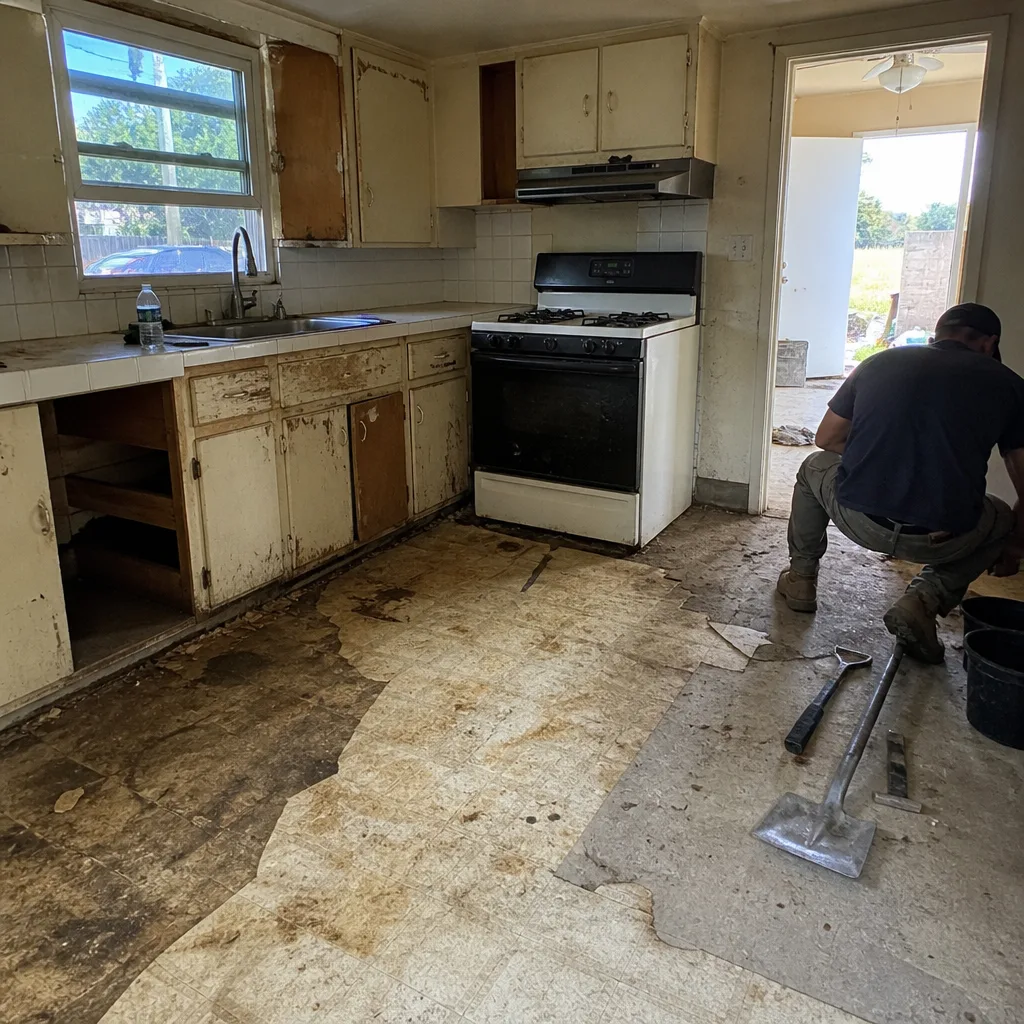 Before
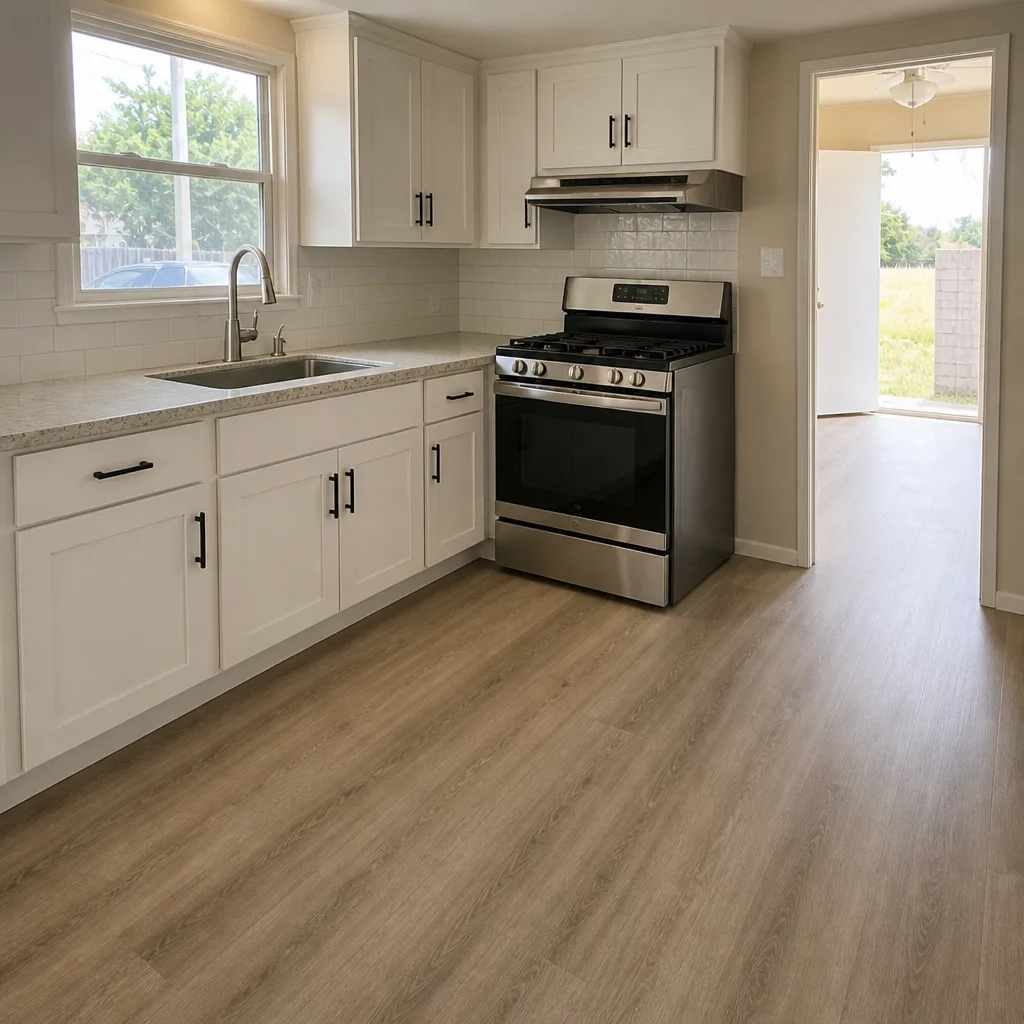 After
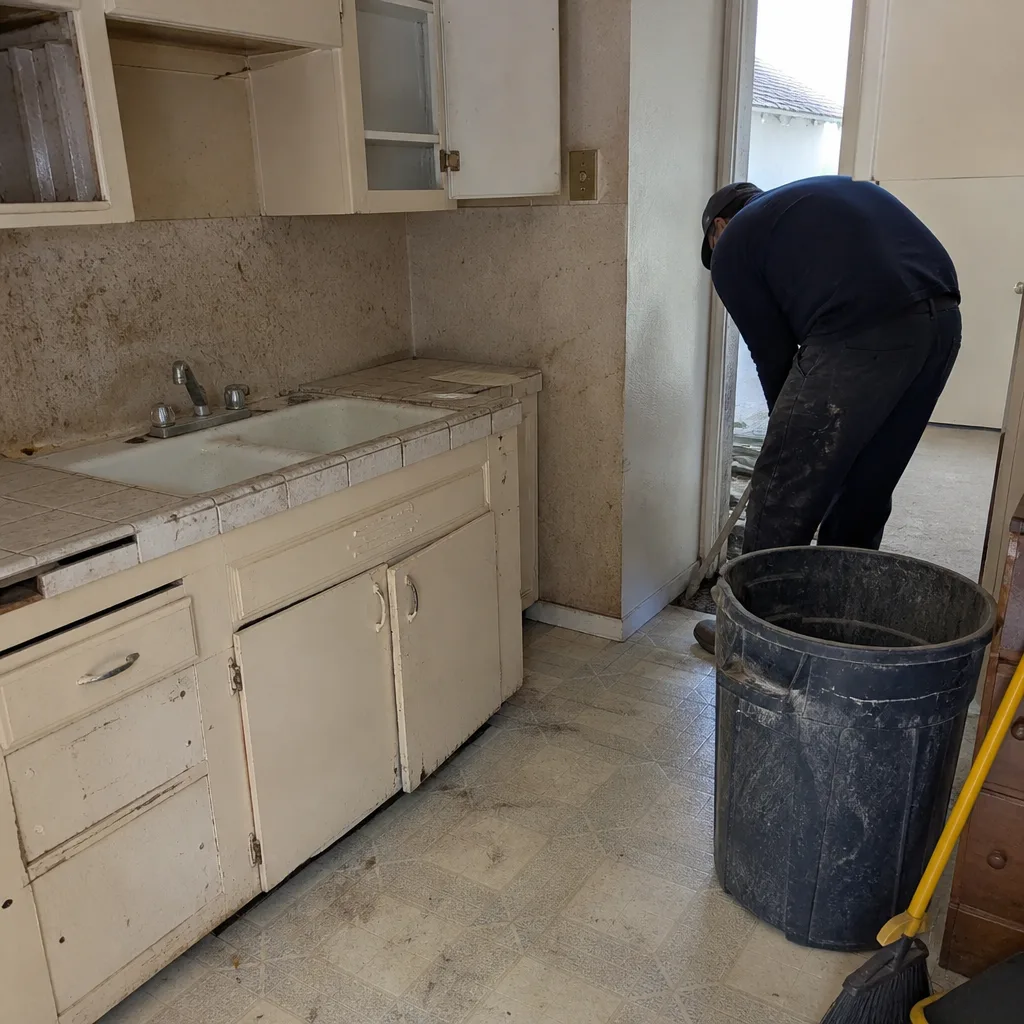 Before
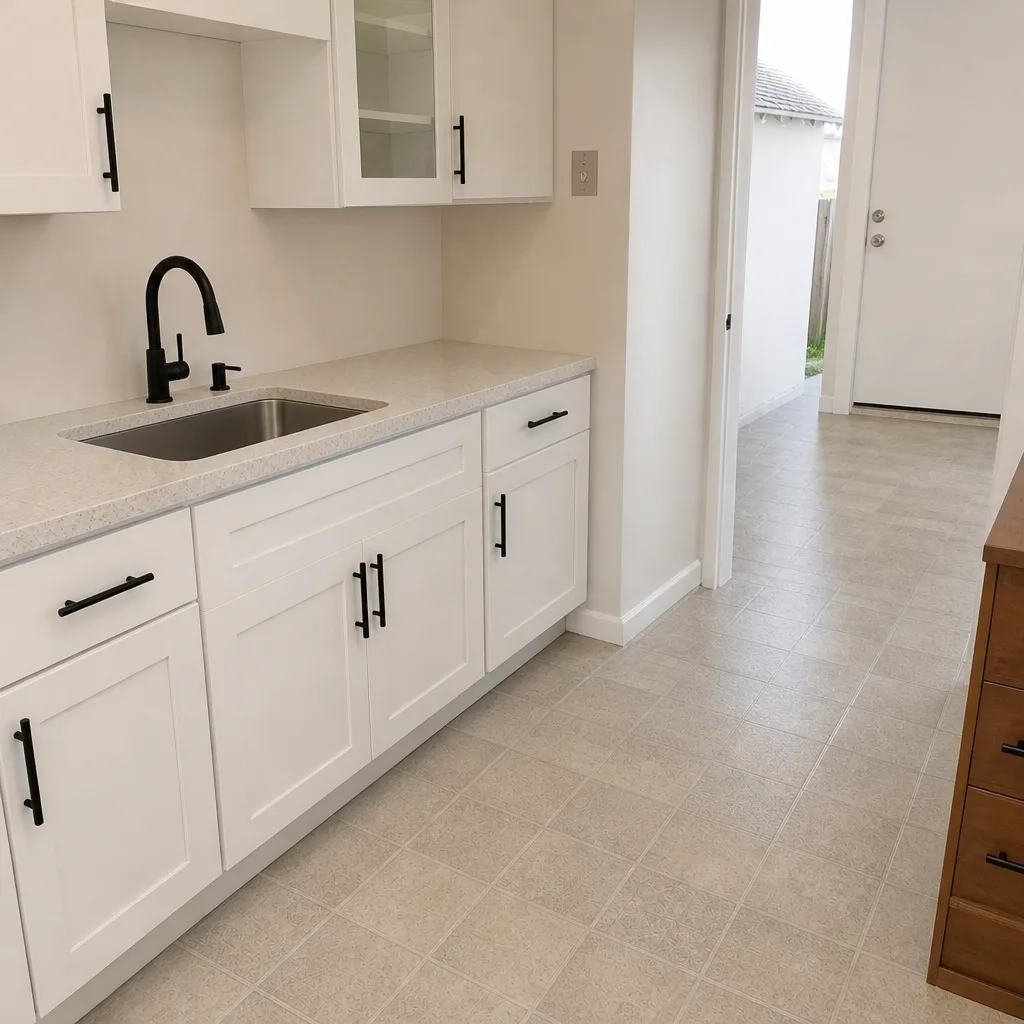 After
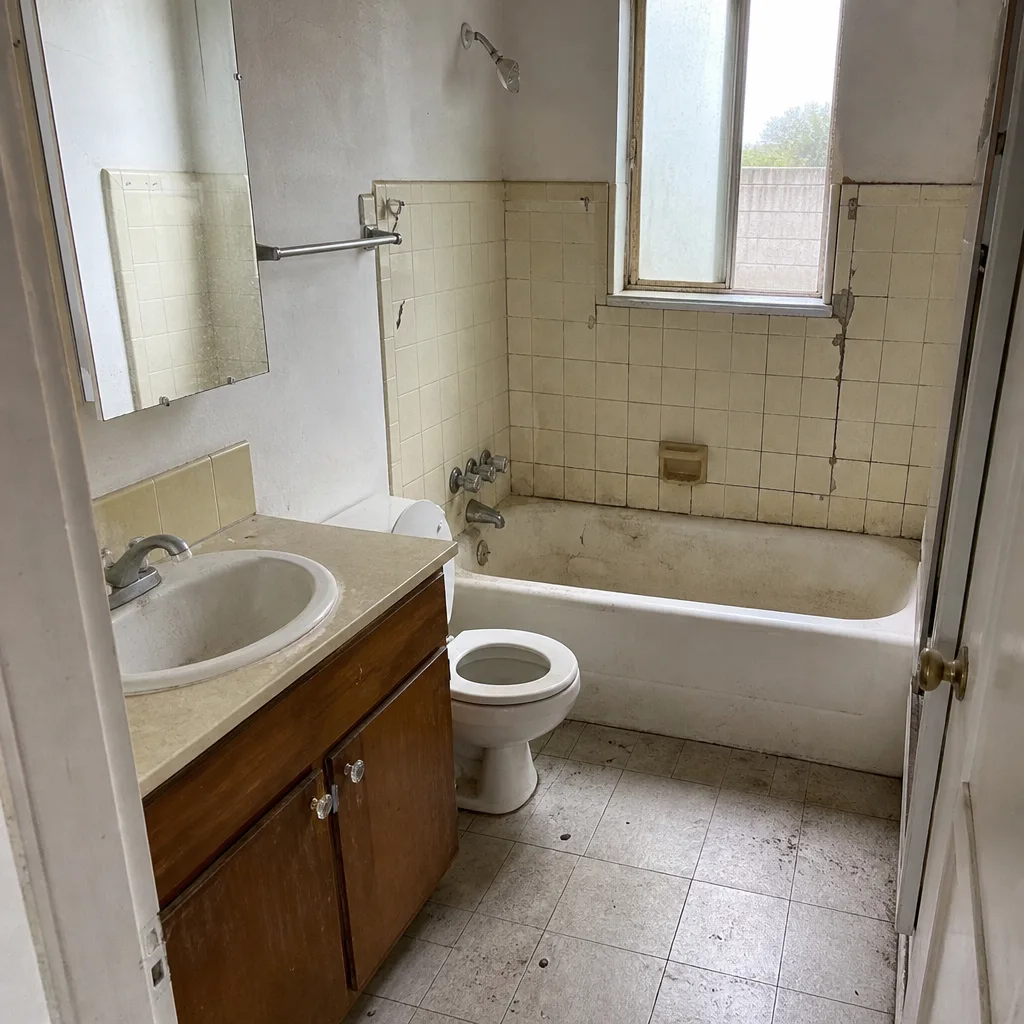 Before
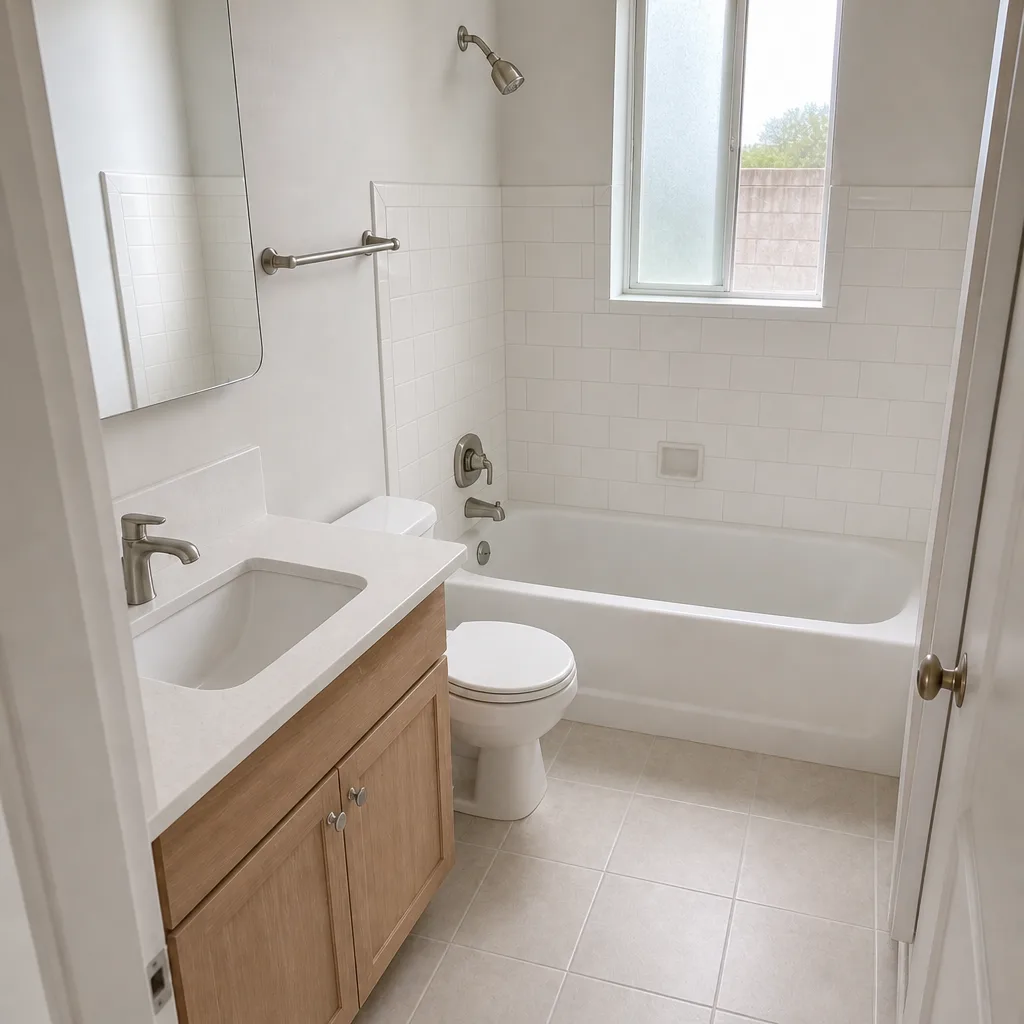 After
When to Call a Professional
Some decisions in a remodel aren’t homeowner decisions. Bring in a licensed general contractor when the work involves wall removal, electrical panel changes, gas line relocation, plumbing rough-in, or anything structural. These are the areas where a short-cut isn’t just expensive to fix – it’s a safety issue. The same goes for permits: if you’re unsure whether your project needs one, that’s a call for a professional, not a guess. Water intrusion in a Los Angeles bathroom from a bad substrate job is the kind of failure a homeowner can’t diagnose alone, and unpermitted electrical is the kind of problem a homeowner shouldn’t try to fix. Bradford Remodeling Co Los Angeles offers free estimates in Los Angeles – call (844) 343-6681. A written price comes before any work starts, every time.
Frequently Asked Questions
The most dangerous red flags are the ones that look professional: asking for a 50% deposit (illegal in California), showing a license number without letting you verify it against the CSLB record, quoting without a site visit, and pressing for a same-day signature. Each is verifiable before you sign anything.
California caps the down payment at 10% of the contract price or $1,000, whichever is less, under CSLB rules. A contractor asking for more isn’t being aggressive – they’re violating the license rules that govern their own operation. Call (844) 343-6681 for a written estimate with a compliant payment schedule.
Look up the license number on the CSLB website (cslb.ca.gov) and confirm the business name on the record matches the estimate and the business card, the status is Active, and the classification covers the work being bid. Then ask the person in front of you for photo ID matching the license record. Anyone legitimate will hand it over without argument.
Yes. Permit requirements are set by the city and state, not the contractor. In Los Angeles, structural work, plumbing and electrical changes, and any footprint change almost always require one. You can verify requirements in about 10 minutes by calling the LADBS permit counter directly.
Not without comparing scope line by line. Low bids are usually missing items – permit fees, haul-away, substrate prep, named material brands. A bid that lands 40% below the others is a sign the contractor skipped the site visit or left work out of the number. Compare by scope and specification, not total.
A written guarantee should state the coverage term in writing and what happens if the work fails inside it. Our 365-Day Done Right Promise runs for a full year after completion, and if the work fails inside that window we return and correct it at no charge. Ask any contractor to put their guarantee in the contract, not just in conversation.
The Bottom Line
The warning signs worth watching for in a general contractor aren’t the obvious ones. They’re the polished moves – a printed estimate with a 50% deposit, a license number with no verification, a confident “we don’t need a permit,” a quote by square footage without a walkthrough. Each one is cheap to check and expensive to miss. Run the CSLB lookup, read the contract for dates and change orders, ask for recent local references, and insist on a written scope with a written price before any work starts. That discipline is what separates a remodel that ends squared away from one that ends in small claims court. Bradford Remodeling Co Los Angeles works to that standard on every project, and a live person answers the phone 24/7 when you call (844) 343-6681.
For a full look at how we run remodeling in the city, start with our Bradford Remodeling Co Los Angeles home page and call (844) 343-6681 to schedule your free estimate.
Written by the team at Bradford Remodeling Co Los Angeles.