Last updated November 17, 2026





Free written scope consultation - allowances, timeline, and change-order rules on paper before a single trade is scheduled
Choosing the Right Construction Brand: A Buyer’s Guide for Los Angeles
A five-star Google rating tells you a contractor has satisfied customers. It tells you nothing about whether the contract those customers signed would have protected them if something went wrong. We’ve watched plenty of Los Angeles homeowners hire on portfolio photos and star counts, and we’ve watched what happens when the job goes sideways and the paperwork turns out to be a one-page estimate with a signature line. The variable that actually determines your experience isn’t the marketing. It’s whether the written agreement legally obligates the contractor to the scope, timeline, and warranty they described to you out loud. This guide teaches you to read the contract, not the brochure.
Quick Answer
The best remodeling contractor in Los Angeles for you is the one whose written agreement obligates them to a defined scope, a fixed price, a schedule, and a warranty with a named duration and claim process – and who can prove, with documents you can verify, that they’re insured, bonded, and licensed in California. Photos and ratings are marketing. The contract is the product. Evaluate the contract first, and you’ll catch most of the risk before you sign anything.
Styles & brands we work with
- Kitchen remodeling
- Bathroom remodeling
- Home additions & ADU
- Roofing
- Windows & doors
- Driveway & pavers
- Fence
Table of Contents
- The Five Clauses Your California Remodeling Contract Must Contain
- What “We Stand Behind Our Work” Actually Means (Legally, Usually Nothing)
- Fixed-Price vs. Not-to-Exceed Contracts: Two Different Documents, Two Different Risks
- How to Verify Insurance That Actually Covers Your Project
- The Due-Diligence Sequence That Catches the Most Risk in the Least Time
- Why the Brand Roster on the Contract Matters
- What Makes Evaluating a Contractor Different in Los Angeles
- How to Run a Reference Call That Gets You Real Information
The Five Clauses Your California Remodeling Contract Must Contain
California Business and Professions Code Section 7159 sets minimum requirements for home improvement contracts: the contractor’s license number, a description of the work, the total price, a payment schedule, and notice of the right to cancel. That’s the floor. We’ve reviewed agreements from Los Angeles contractors that clear 7159 and still leave the homeowner exposed, because the sections that govern what happens when something goes wrong aren’t in the statute – they’re in the clauses the contractor chooses to write or omit.
Five clauses separate an enforceable, protective agreement from a document that technically complies and practically doesn’t:
- Written warranty scope and duration. A named length of time, a definition of what counts as a covered defect, and the process for filing a claim. “Workmanship guaranteed” is not a clause; it’s a sentence with no teeth.
- The change-order process. How changes get priced, who signs, when the price is locked. A contract that lets the contractor “adjust” scope without a signed change order gives them a blank check.
- Lien waiver timing. California’s mechanics lien law gives subcontractors and suppliers the right to lien your property if they aren’t paid. Your contract should require conditional lien waivers at each draw and unconditional waivers at final payment, so you can prove the money actually reached the trades.
- Dispute resolution method. Mediation, arbitration, or litigation – and which state’s law governs. Silence on this point means you find out the hard way.
- Subcontractor disclosure. Who’s actually performing the work, whether they’re licensed and insured, and whether the general contractor carries responsibility for their defects. In Los Angeles, where large remodels routinely pull in four or five trades, this clause is the difference between one accountable party and a finger-pointing contest.
We write every Bradford Remodeling agreement with all five. That’s part of what The Garrison Standard means in practice: the price and the guarantee are in writing before a single tool comes out.
What “We Stand Behind Our Work” Actually Means (Legally, Usually Nothing)
“We stand behind our work” is a marketing phrase. It has no legal meaning. A homeowner who hears it and signs a contract without a written warranty clause has no enforceable remedy if the tile cracks six months later – they have a verbal promise from a company whose interpretation of “stand behind” may not match theirs.
A written warranty has three components that a verbal one doesn’t:
- A named duration. Not “lifetime,” which is unenforceable in practice, but a defined window – twelve months, twenty-four months, five years.
- A covered-defect definition. What counts as a failure? Water infiltration at a shower curb? Cabinet doors that warp? A grout line that opens? The warranty should say, in plain terms.
- A claim process. How you report, how fast they respond, who pays for the return visit, and what happens if the fix doesn’t hold.
We give every completed Bradford Remodeling project a written guarantee under the 365-Day Done Right Promise: a full year of coverage, and if the work fails inside that window, we come back and correct it at no charge. That’s a document you can hand to a lawyer if you ever need to. “We stand behind our work” is a sentence you can quote from memory. Only one of those is worth anything when the shower pan leaks.
When you’re evaluating a contractor for a Bathroom Remodeling in Los Angeles or a full kitchen gut, ask for the warranty clause in writing before you ask for the price. If they can’t produce one, you’ve learned something useful at no cost.
Fixed-Price vs. Not-to-Exceed Contracts: Two Different Documents, Two Different Risks
These two arrangements get used interchangeably in conversation and are legally different documents. The difference matters most when a job runs into surprises – which in Los Angeles remodels, on 1920s bungalows in Silver Lake or Hancock Park, it almost always does.
A fixed-price contract locks the total. If the contractor underbudgeted, that’s their problem. The number doesn’t move unless you sign a change order for work outside the agreed scope. The homeowner’s risk is contained; the contractor carries the estimating risk.
A not-to-exceed contract caps the total, but the contractor can bill up to the cap without a change order as long as the work falls within the described scope. It reads like protection and often isn’t, because the scope language is where the slack hides. A loose scope plus a not-to-exceed ceiling is functionally a cost-plus contract wearing a disguise.
What to look for in either arrangement:
- The scope description must name what’s included and what’s excluded. “Permits included” or “permits by owner” changes the number by thousands in Los Angeles, where plan check and inspection fees on a kitchen remodel can run well into four figures.
- Allowances (for tile, fixtures, cabinetry) must have a stated dollar figure and a stated process for what happens if you go over. An “allowance” with no number is a future change order.
- The payment schedule should be tied to milestones, not to calendar dates. California caps home improvement deposits at $1,000 or 10% of the contract price, whichever is less, and front-loading beyond that is a red flag.
We write fixed-price agreements unless the scope genuinely can’t be known until demolition – and in those cases, we tell you why before you sign. That’s part of the no-hassle upfront pricing commitment: a written price before any work starts, every time, with no numbers that move at the door. If you’re comparing us against another General Contractor in Los Angeles, put both contracts side by side and read this section against each. The one that’s vaguer on scope is the one to walk away from.
How to Verify Insurance That Actually Covers Your Project
A certificate of insurance is a snapshot. It tells you that on the day it was issued, the contractor had general liability coverage at some limit. It doesn’t tell you the policy is still in force, that the coverage extends to your project, or that the contractor’s workers’ compensation is current – and it certainly doesn’t tell you whether you, the homeowner, are protected if a worker gets hurt on your property or a subcontractor’s defect damages your neighbor’s wall.
The steps that actually confirm coverage:
- Ask for the certificate and read the dates. The policy period must cover your entire project timeline, not just the start date. Los Angeles kitchen remodels routinely run eight to twelve weeks; a certificate expiring in thirty days is not adequate.
- Call the insurer, not the contractor. The certificate lists the issuing broker and a phone number. Call them and confirm the policy is active, the limits match what’s written, and the contractor is current on premium.
- Request additional insured status. On a large project, you can be named as an additional insured for the duration of the work. This is standard on commercial jobs and less common on residential, but a contractor who can arrange it is telling you something about how they operate.
- Verify workers’ comp separately. General liability does not cover injured workers. In California, if the contractor doesn’t carry workers’ comp, you – the homeowner – can be exposed to a claim from an injured employee.
- Check the CSLB license and the contractor’s bond at the same time. The Contractors State License Board lookup shows the license status, the bond amount, and any disciplinary history in one search. A current license and an active bond are the floor.
Bradford Remodeling technicians are background-checked and uniformed on every job. That’s a Garrison Partners standard, not a job-site decision – and it’s one of the things you should be able to verify with documents before the crew shows up.
The Due-Diligence Sequence That Catches the Most Risk in the Least Time
Most homeowners run their diligence in the wrong order. They call references first, and the references (usually hand-picked by the contractor) say glowing things, and the momentum carries the decision. Here’s the sequence that catches the most risk in the least time, in the order we’d run it if we were hiring someone else:
- CSLB license lookup (5 minutes). Confirm the license is active, the classification matches the work (B for general building, C-54 for tile, C-36 for plumbing, etc.), and there’s no disciplinary history. This is free and public.
- Bond verification (2 minutes, same page). The bond number and status are on the CSLB record. A lapsed bond means the contractor isn’t currently compliant with state requirements.
- Better Business Bureau complaint log (10 minutes). You’re not looking at the rating; you’re looking at the pattern of complaints. One complaint in ten years is noise. Six complaints in eighteen months with the same theme – “didn’t return after deposit,” “price went up after demolition” – is a pattern.
- Contract review (30 minutes). Read all five clauses from the earlier section. If any are missing, ask why in writing. Their answer tells you as much as the document does.
- Insurance verification (15 minutes, involves calling the broker). See the earlier section.
- Reference calls (30-45 minutes, last, not first). By now you’ve narrowed the field, and the reference call is about calibrating the contractor’s communication style, not confirming basic legitimacy.
That sequence takes about ninety minutes and eliminates the majority of high-risk contractors before you’ve invested time in a site visit. It’s the order we’d want a Los Angeles homeowner to run on us before signing. If a contractor resists it, they’re telling you who they are.
Why the Brand Roster on the Contract Matters
Specifications are where a construction brand’s marketing claims get tested against reality. A contractor who says “premium materials” and then leaves the brands off the contract has preserved their ability to substitute whatever arrives on the truck. A contractor whose contract names KraftMaid for the cabinetry, Cambria for the countertops, Kohler or Moen for the fixtures, and James Hardie or GAF for the exterior has given you a document you can enforce when the delivery doesn’t match what you agreed to.
We work from a documented brand roster because it makes specifications traceable. Cabinetry comes from KraftMaid or Wellborn, surfaces from Cambria or Caesarstone, hardscaping from Belgard or – on many Los Angeles hillside and driveway projects – Tremron or Techo-Bloc, which hold up under the sun and dry cycles we actually have. Every brand on the roster carries a manufacturer warranty that backs our own, which means a covered defect has two layers of remedy instead of one.
If you’re planning a Kitchen Remodeling in Los Angeles and the bids you’re comparing don’t name brands, insist on it. Brand-name specifications in writing protect you from silent substitutions during the build. That’s true whether you hire us or anyone else.
What Makes Evaluating a Contractor Different in Los Angeles
Los Angeles has a set of local conditions that change how you should read a contractor’s contract and their track record. Three that come up repeatedly in our work:
- Permit cost and time vary enormously by jurisdiction. The City of Los Angeles, Santa Monica, Pasadena, and the county each run on their own timelines and fee schedules. A contractor whose contract doesn’t specify who pulls permits and who pays for plan check is leaving a cost that can swing thousands of dollars in a gray zone. Ask explicitly.
- Hillside and older-housing stock change the structural risk. A 1920s bungalow in Echo Park or a hillside home in the Hollywood Hills is very likely to open up surprises during demolition – knob-and-tube wiring, no shear detailing, a foundation that’s settled more than the inspector can see from the surface. Contracts in Los Angeles need a defined process for what happens when the scope expands mid-job, because it will. A contractor whose change-order process is verbal isn’t ready for this market.
- Wildfire zone and seismic code. If the property is in a Very High Fire Hazard Severity Zone, exterior materials have specific requirements, and James Hardie products (which we specify) are one of the common ways to meet them. Seismic retrofit work on soft-story and pre-1980 housing is a separate scope that may or may not be in the contract. Read carefully.
None of this means you can’t hire well in Los Angeles. It means the diligence cuts a bit deeper here. For your first look at how we operate, see the Bradford Remodeling Co Los Angeles home page and read the guarantee language carefully – it’s written to be read, not skimmed.
How to Run a Reference Call That Gets You Real Information
Reference calls usually fail because the homeowner asks questions that invite the easy answer. “Were you happy with the work?” gets a yes. “Would you hire them again?” gets a yes. Neither question surfaces the information you actually need: how the contractor behaves when something goes wrong, because on almost every project something goes wrong.
Better questions, in order:
- “What was the original contract price, and what was the final invoice?” If they don’t remember, ask if the price stayed within ten percent of the original.
- “How did the contractor handle the change orders? Did they write them down before doing the work, or after?”
- “Was the schedule that was in the contract the schedule you actually got? If not, how far off was it, and did you know before the deadline or after?”
- “When a defect showed up after the job closed out, how did the contractor respond? Did they come back on their own, or did you have to chase them?”
- “Was the site cleaned at the end of every working day, or did you do cleanup?”
- “Was there anything in the contract you wish had been written differently?”
The last question is the one that gets you the real answer. A reference who says “yes, actually, I wish the warranty clause had been clearer” has just told you more than a page of five-star reviews. A contractor who offers references you can ask these questions to, and who has answers that hold up, is telling you their paperwork is built to survive a real review.
Common Mistakes to Avoid
- Hiring on portfolio photos alone. Photos show the finished product, not the contract, the change-order history, or what happened when a defect surfaced six months later. In Los Angeles, where every remodeler has a glossy project page, the photos tell you nothing about the paperwork.
- Accepting “we’ll work it out” on scope. If the contract doesn’t list exclusions – permits, plan check, haul-away, finish carpentry, paint – you’ll find out on the invoice. Every exclusion should be written.
- Treating a certificate of insurance as insurance verification. The certificate is a snapshot; the coverage is the policy. Call the broker.
- Skipping the CSLB check because “they’re too big to fail.” License suspensions and disciplinary actions are public, and they happen to large companies too. Five minutes of lookup saves significant heartache.
- Paying deposits above the statutory cap. California caps home improvement deposits at $1,000 or ten percent of the contract price, whichever is less. A contractor who asks for more is asking you to give up your leverage.
- Signing a guarantee with no duration. “We guarantee our work” is a sentence, not a warranty. Insist on a duration, a defect definition, and a claim process.
- Not asking who the subcontractors are. On a large Los Angeles remodel with four or five trades, the general contractor’s responsibility for subcontractor defects should be written into the agreement. If it isn’t, the accountability evaporates right when you need it most.
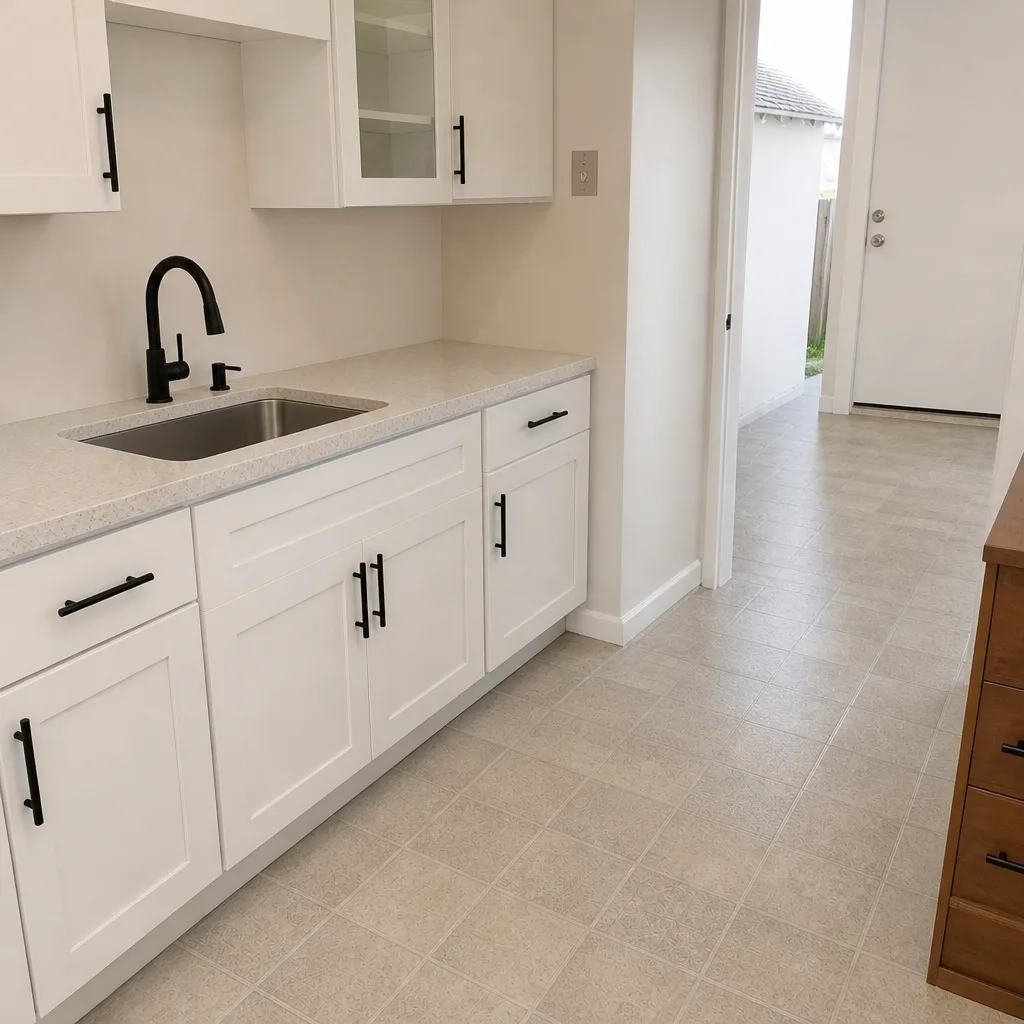
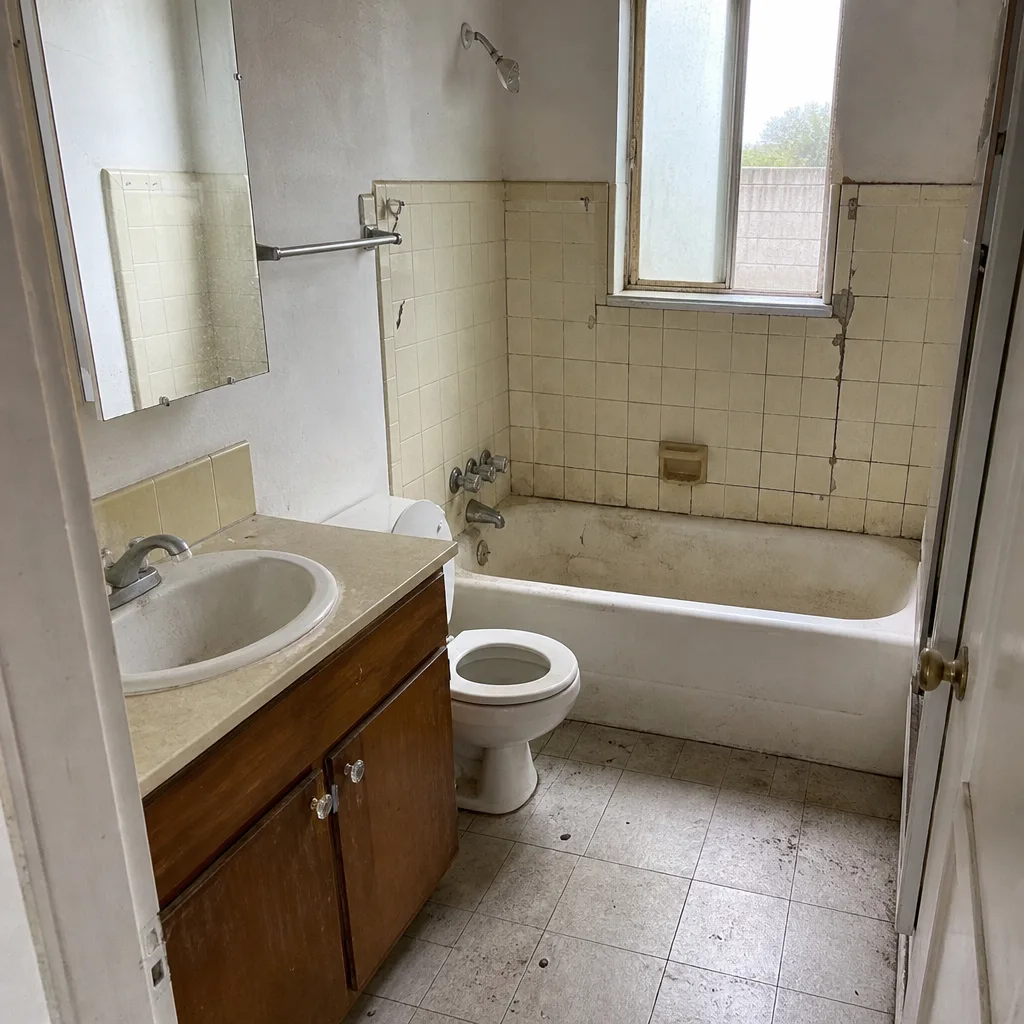
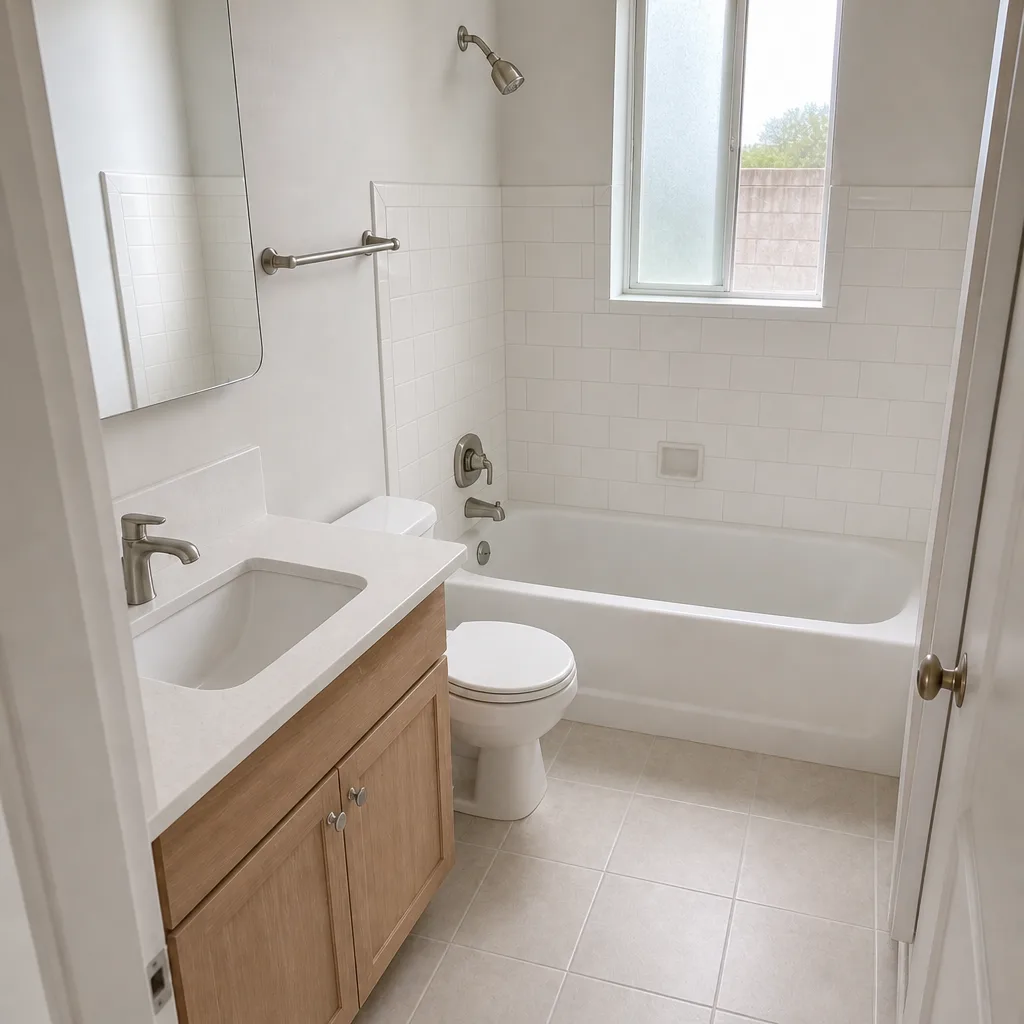
See the difference
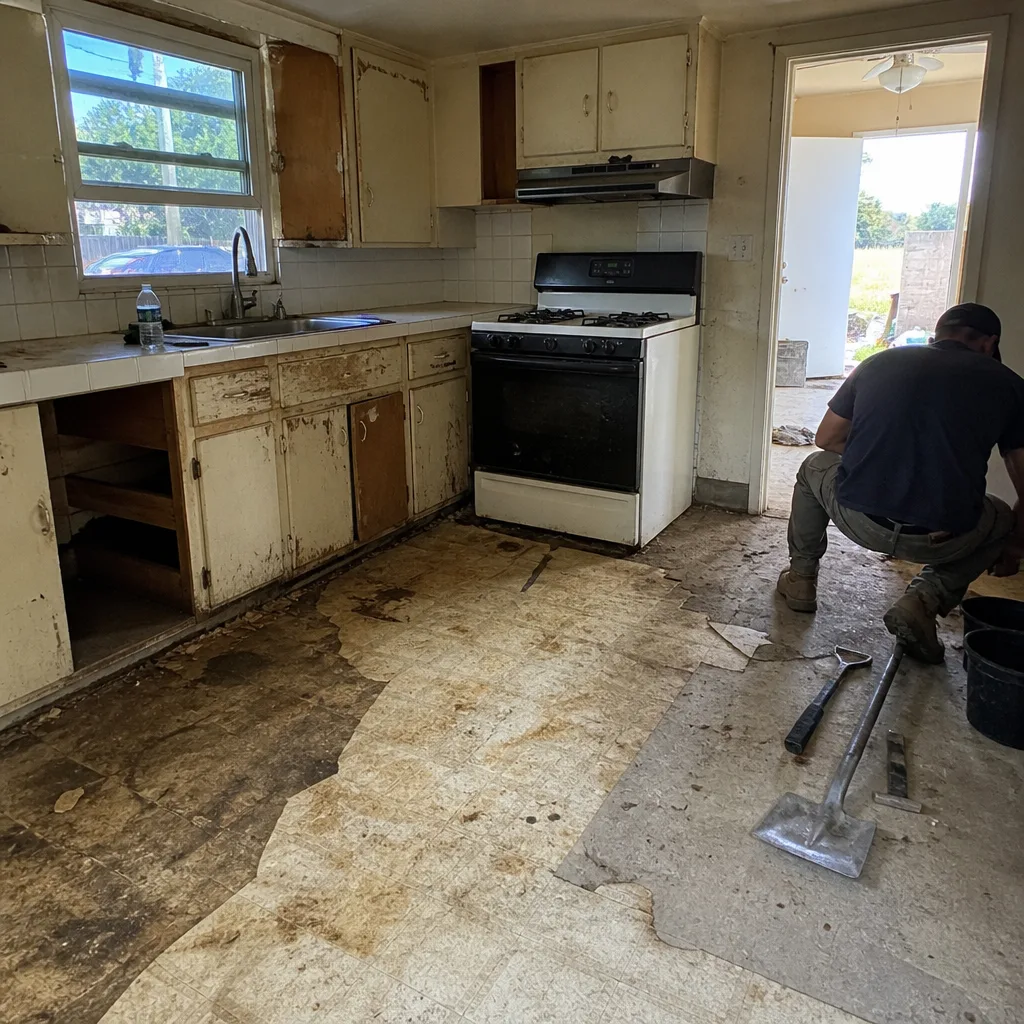 Before
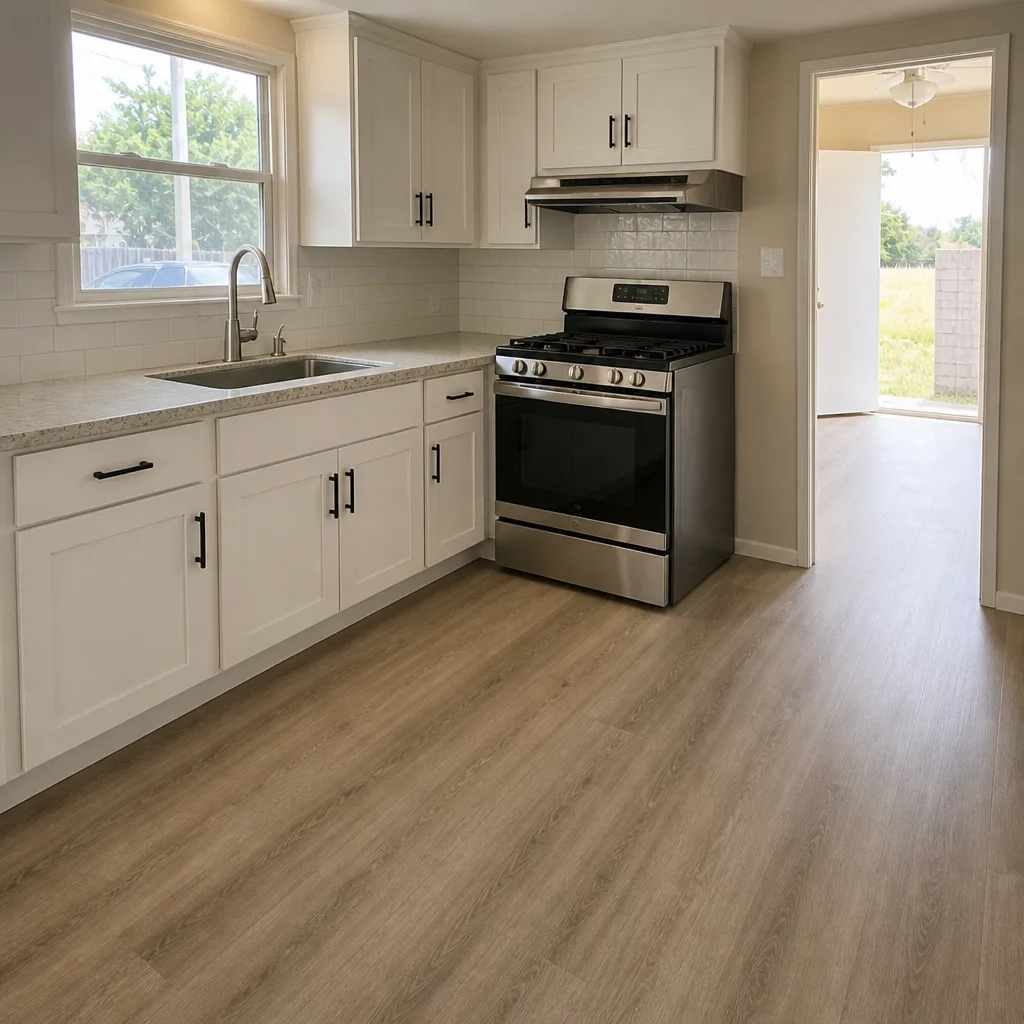 After
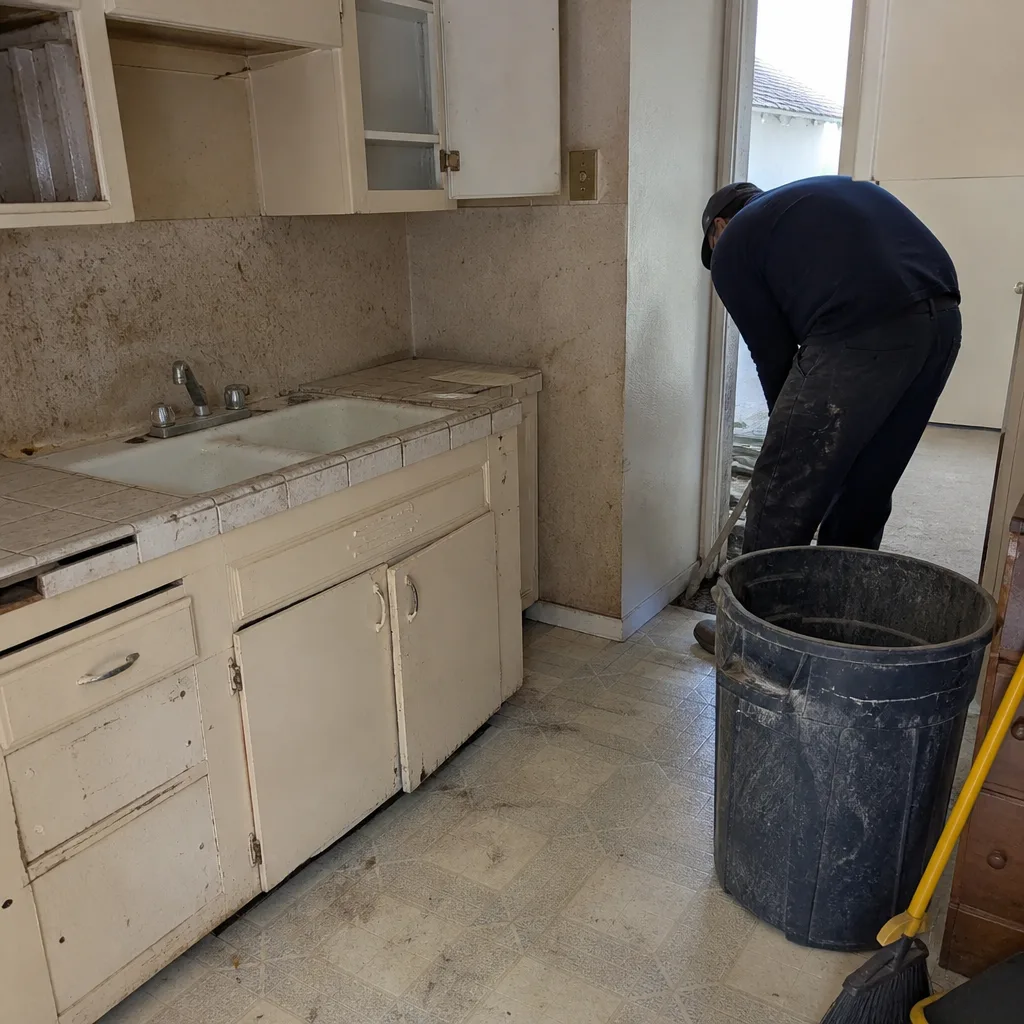 Before
 After
 Before
 After
When to Call a Professional
Some decisions can wait. A contract review shouldn’t. If you’re holding a proposal from a Los Angeles contractor and you’re not sure whether the agreement covers scope, change orders, lien waivers, or a written warranty, that’s the moment to have a second set of eyes on it. The same goes for any project where you’re hearing “we’ll figure that out during demolition” – in this market, that sentence is a warning sign, not a reassurance. Bradford Remodeling Co Los Angeles offers free estimates in Los Angeles with a written price before any work starts, and every project carries the 365-Day Done Right Promise in writing. If you’ve been burned by no-shows, repricing at the door, or work that never got finished, our whole operating model is built around the opposite. Call (844) 343-6681 to schedule your free estimate.
Frequently Asked Questions

A mid-range kitchen remodel in Los Angeles typically runs $75,000 to $140,000 depending on square footage, cabinetry grade, and whether walls move. A cosmetic refresh with new cabinet fronts, counters, and fixtures can run $30,000 to $50,000, while a full gut with relocation of plumbing and electrical often lands north of $150,000. The number that matters is the written price on your contract, not the range from a guide. Call (844) 343-6681 for an exact quote – estimates are free.
On a fixed-price contract, the price doesn’t change unless you sign a written change order for work outside the agreed scope. In Los Angeles, the most common legitimate change orders come from demolition surprises in older homes – unexpected wiring, subfloor damage, or a framing condition that wasn’t visible before the walls opened. Our change-order process puts the price in writing before any additional work starts, so the invoice you get is the invoice you agreed to. Call (844) 343-6681 to review what a written change-order process looks like in practice.
Yes, on every Bradford Remodeling project that requires one, and the permit is in the written scope before work starts. Which jurisdiction issues the permit – City of Los Angeles, county, or a separate city like Santa Monica or Pasadena – affects the timing and cost, so it’s spelled out on the front end. If a contractor’s proposal doesn’t explicitly state who pulls and pays for permits, ask before signing. Call (844) 343-6681 with your address and we’ll walk you through which jurisdiction applies.
The 365-Day Done Right Promise is a full-year written guarantee on every completed project. It covers workmanship defects – the things that fail because of how the work was done, not because of how the materials wore – for twelve months after completion, and if the work doesn’t hold inside that window, we come back and correct it at no charge. The precise scope, exclusions, and claim process are written into your agreement, not left verbal. Call (844) 343-6681 and we’ll send you the exact warranty language before you commit to anything.
A full kitchen remodel typically runs eight to twelve weeks from permit approval to final walkthrough; a primary bathroom runs four to six weeks. Los Angeles plan check timelines add three to eight weeks depending on the jurisdiction, and older homes in neighborhoods like Echo Park or Hancock Park sometimes carry surprises that add days in the field. Every Bradford Remodeling contract carries a schedule tied to milestones with a defined process for delay notices. Call (844) 343-6681 to get a schedule estimate for your specific project.
No. A five-star rating tells you a contractor has satisfied customers; it tells you nothing about whether the contract those customers signed would have protected them if something had failed. Read the contract, verify the CSLB license and bond, call the insurance broker, and ask references what they wish had been written differently. The rating is the front door; the paperwork is what you actually live with. Call (844) 343-6681 if you’d like to see how our agreement is structured before you compare it against the bids you already have.
The Bottom Line
Choosing a remodeling contractor in Los Angeles by marketing is a coin flip; choosing by contract is a decision. The five clauses, the fixed-price versus not-to-exceed distinction, the insurance verification steps, and the due-diligence sequence all point at the same principle: the written agreement is the product. A guarantee without a duration is a sentence. “We stand behind our work” without a warranty clause is a mood. A written price with no change-order process is an opening bid. Read the paperwork first, verify the license and insurance second, and only then look at the photos. If the contract protects you, the photos don’t matter. If it doesn’t, they don’t either. Call (844) 343-6681 to schedule your free estimate – we’ll put the price and the guarantee in writing before a single tool comes out.
Written by the team at Bradford Remodeling Co Los Angeles.