Last updated November 17, 2026


Free written scope consultation - allowances, timeline, and change-order rules on paper before a single trade is scheduled
Bathroom Remodeling Troubleshooting: Common Problems and How to Fix Them
Tile lippage over 1/32 inch. Grout joints that wander off line. A shower door that won’t seal. These aren’t aesthetic complaints – they’re installation defects, and there’s an ANSI standard that defines each one. Most homeowners don’t know the standard exists. Most contractors count on that. This guide gives you the technical benchmarks, the documentation steps, and the recourse options for the problems that surface mid-project and after the punch list. We’ve watched hundreds of Los Angeles remodels go sideways for one reason: the contract never pinned down what “installed correctly” meant.
Quick Answer
Most bathroom remodel problems aren’t construction failures – they’re contract failures. When the scope doesn’t define tile tolerance, waterproofing method, or change-order triggers in writing, nobody is accountable. Fix the contract first, document defects with measurements and certified-mail notice second, and use the workmanship warranty, CSLB complaint process, or California small claims court (up to $12,500) as your escalation ladder.
Styles & brands we work with
- Kitchen remodeling
- Bathroom remodeling
- Home additions & ADU
- Roofing
- Windows & doors
- Driveway & pavers
- Fence
Table of Contents
- What do ANSI A108 tile standards actually require?
- How do you document a bathroom remodel defect properly?
- Workmanship warranty vs. materials warranty: which covers your failure?
- What if the contractor ghosts after a problem surfaces?
- When is a change order legitimate and when is it padding?
- Why do showers leak in Los Angeles and who’s responsible?
- How do you fix a defect without tearing out the whole bathroom?
What Do ANSI A108 Tile Standards Actually Require?
ANSI A108 is the American National Standard for ceramic tile installation, and it converts “that looks wrong” into a spec you can cite. The current edition sets a maximum allowable lippage of 1/32 inch (0.8mm) for pressed-edge tile with grout joints narrower than 1/4 inch, and 1/16 inch for rectified tile. If your installer laid 12×24 rectified porcelain with 1/16-inch joints and you can catch a fingernail under any edge, that’s a defect under the standard, not a personality conflict.
Grout joint tolerance runs in the same league. ANSI allows +/- 1/16 inch variance across a 10-foot run for running bond patterns. Wander more than that and the grout lines telegraph from across the room – something we see weekly in Los Angeles hall bathrooms built in the 1950s where the walls weren’t plumb before the tile went up.
Back-butter coverage is the other one homeowners don’t know to check. ANSI A108.5 requires a minimum 95% mortar coverage on the back of each tile in wet areas, with 80% acceptable in dry areas, and full contact at all corners and edges. Coverage is invisible after installation. The way to verify it is during installation or at demolition – which is why a written scope should specify trowel size and notch depth before the first tile is set.
Ask for the standard by name in the contract. A contractor who flinches at writing “installed per ANSI A108.5” into the scope is telling you something useful.
How Do You Document a Bathroom Remodel Defect Properly?
Documentation is what separates a fix from a fight. A verbal complaint about a leaking shower pan gets you a shrug; a dated photo set with measurements and a certified-mail letter gets you a return visit. The sequence matters, and it should start the day you notice the problem.
- Photograph with scale. Lay a tape measure or a ruler in the frame next to the defect. A photo of a crack means nothing; a photo of a 1/8-inch crack in a horizontal grout line three courses above the shower valve means everything.
- Log the date and conditions. Write down when the defect appeared, whether it recurs (shower leaks after 10 minutes of use, for example), and any water stain or movement you’ve observed over a week.
- Send written notice via certified mail. Email is fine for speed; certified mail is what holds up in a CSLB complaint or small claims filing. State the defect, cite the contract provision or ANSI standard you believe is violated, and give a reasonable correction window – 10 business days is standard.
- Request a joint inspection. Ask the contractor to walk the bathroom with you and sign a written acknowledgment of the issues. If they refuse, note the refusal in your log.
- Get an independent opinion only if the contractor stalls. A second contractor’s written assessment costs $150-$400 in Los Angeles and carries weight in every subsequent forum.
Keep everything in one folder. Text messages, emails, the contract, the change orders, photos with timestamps. When you file with the CSLB or in small claims, that folder is your case.
Workmanship Warranty vs. Materials Warranty: Which Covers Your Failure?
The failure determines the warranty, and the two are almost never the same document. A workmanship warranty covers how the product was installed – adhesion, waterproofing, alignment, sealing. A materials warranty covers the product itself – a Kohler valve cartridge that fails prematurely, or a tile lot with a manufacturing defect like shade variation or crazing.
The most common failures fall on the workmanship side:
- Shower pan leaks – installer error in the waterproofing membrane or weep-hole placement, not a defective pan liner.
- Tile delamination – insufficient mortar coverage, which is a workmanship issue.
- Grout cracking along joints – movement joint omission, workmanship.
- Squeaky floor under tile – substrate prep failure, workmanship.
- Shower door won’t seal – plumb and level errors during installation, workmanship.
The genuine materials warrant cases (a Moen cartridge that seizes in month eight, a slab of Cambria quartz with a factory fissure) get handled through the manufacturer, and premium brands typically honor them well. What matters is that your contract specifies a written workmanship warranty period in days or months, and that it names what “failure” means. A full-year written guarantee on workmanship is the standard to ask for; anything shorter leaves the most expensive defects uncovered.
Brand specification also matters here. When the scope names KraftMaid cabinetry, Kohler fixtures, and specific tile manufacturers rather than “cabinetry allowance” and “tile allowance,” the warranty chain has documentation behind it. Vague allowances mean the warranty discussion after a failure starts with an argument about which product was even installed.
What If the Contractor Ghosts After a Problem Surfaces?
California gives you three real escalation paths, and they can run in parallel. Start with the CSLB complaint, which is free and carries licensing consequences the contractor can’t ignore – a license can be suspended or revoked for abandonment or defective work. File online or by mail; include your contract, your certified-mail notice, and your photo log.
Small claims court in California caps at $12,500 for individuals filing against a contractor. Recoverable amounts typically include the cost to correct the defective work plus certain consequential damages. The filing fee is modest, the process is designed for people without lawyers, and contractors who ignore certified mail tend to show up for a court date. Note the statute of limitations: four years for written contracts in California, two for oral.
Mechanics lien is the third leg, and it works in reverse from what most homeowners expect. The lien is the contractor’s tool against the property, not yours – but if the contractor files one after walking off the job, you’ll need to respond with a lis pendens or a bond to clear title. A county recorder search tells you whether any lien has been filed against your address. In Los Angeles, a lien clouding your title can stall a refinance or sale fast, so check it early rather than at the closing table.
The pre-emptive move is the contract you signed at the start. The Garrison Standard exists because of exactly this failure pattern: written price up front, written scope, written guarantee, and a documented chain of who did what. If a contractor won’t put those in writing before the first tool comes out, they’ve already told you what happens when a problem surfaces.
When Is a Change Order Legitimate and When Is It Padding?
A legitimate change order is triggered by a field condition nobody could have seen from the drawings: rotted subfloor under the toilet once the tile came up, galvanized supply lines that crumble when touched, a cast-iron drain that’s cracked inside the wall. In a Los Angeles 1920s Craftsman or a 1950s tract house in the Valley, those conditions are common enough that a scoped contract should include a line-item contingency – $1,200-$4,000 for substrate surprises is typical here.
Padding looks different. It arrives after the contract is signed, it’s vague (“additional framing required”), it has no photo evidence, and it arrives as a lump sum rather than a line-item price with a written change order signed before work proceeds.
The test to apply:
- Did the contractor show you photos of the field condition before the work was done? Legitimate.
- Is there a written change order with a line-item price you can sign before the work starts? Legitimate.
- Is the price roughly what the same item would cost as a standalone job? Legitimate.
- Is the request verbal, urgent, and bundled with “we can’t proceed without it”? That’s the pattern to challenge in writing.
Never authorize a change order on a phone call. Sign it, keep a copy, and make sure the revised total is written down. The Garrison Code frames it as the price you were quoted is the price you pay, with change orders only for conditions you approve in writing first.
Why Do Showers Leak in Los Angeles and Who’s Responsible?
Shower leaks in Los Angeles are almost always waterproofing failures, and they’re rarely caused by the tile itself. The waterproofing layer – a topical membrane like a liquid-applied or sheet product, or a traditional liner with pre-slope – is what keeps water out of the wall cavity and the subfloor. When it’s installed wrong, the leak surfaces six to eighteen months later as a smell, a soft spot, a bubbling paint line on the adjacent wall, or a stain on the ceiling below.
Los Angeles adds a specific wrinkle: our water is hard (typically 8-14 grains per gallon depending on the source), so mineral scale builds fast at the shower base and around the drain weep holes. A shower pan with a clogged weep hole or a missing pre-slope traps that scale and water simultaneously, which accelerates the failure. In hillside neighborhoods from Silver Lake to Sherman Oaks, movement from clay soil and seasonal settling also opens up cracks in the substrate under a tile floor, which telegraph through the tile above.
Who’s responsible depends on what failed:
- Waterproofing membrane failure – workmanship. The installer’s responsibility, covered under the workmanship warranty.
- Missing pre-slope under a liner – workmanship, and the most common cause of pan leaks we see in Los Angeles.
- Cracked shower pan from structural settling – usually a hybrid: substrate prep (workmanship) plus site conditions. The coverage discussion hinges on what the scope said about substrate.
- Failing valve cartridge – materials warranty through the manufacturer (Moen, Kohler, and similar carry long terms on cartridges).
Testing is simple: plug the drain, fill the pan with an inch of water, and watch it for an hour. If the water level drops more than 1/8 inch, or if you see moisture on a wall or ceiling below, the membrane has failed and the fix runs $2,500-$6,500 in Los Angeles for a full pan rebuild. That’s the range the numbers should land in before anyone picks up a tool.
How Do You Fix a Defect Without Tearing Out the Whole Bathroom?
Most defects don’t require a full gut. The question is whether the problem is contained at the tile-and-grout layer or has reached the waterproofing. If it’s lippage or a wobbly grout line on a floor that’s otherwise sound, a partial repair is realistic – remove and reset the affected tile, regrout the run, seal it, and move on. In Los Angeles, that typically costs $400-$900 for a localized repair including labor and materials.
If water has reached the wall cavity or subfloor, the repair has to go deep enough to reach the failed layer. That means removing tile and substrate to the framing in the affected zone, inspecting the waterproofing and subfloor, and rebuilding with the same ANSI-compliant methods. A quick skim coat or silicone over a wet spot is a delay, not a fix, and it voids most manufacturer warranties on the products above it.
A few things to insist on regardless of repair scope:
- The repairs be documented with before-and-after photos in writing.
- The workmanship warranty be reissued for the repaired area (Bradford’s 365-Day Done Right Promise restarts on any corrected work we complete).
- The repair be scoped in a written line-item estimate before anyone touches a tile – $250 for the assessment and $1,800 for the repair are different conversations, and you should have both numbers on paper.
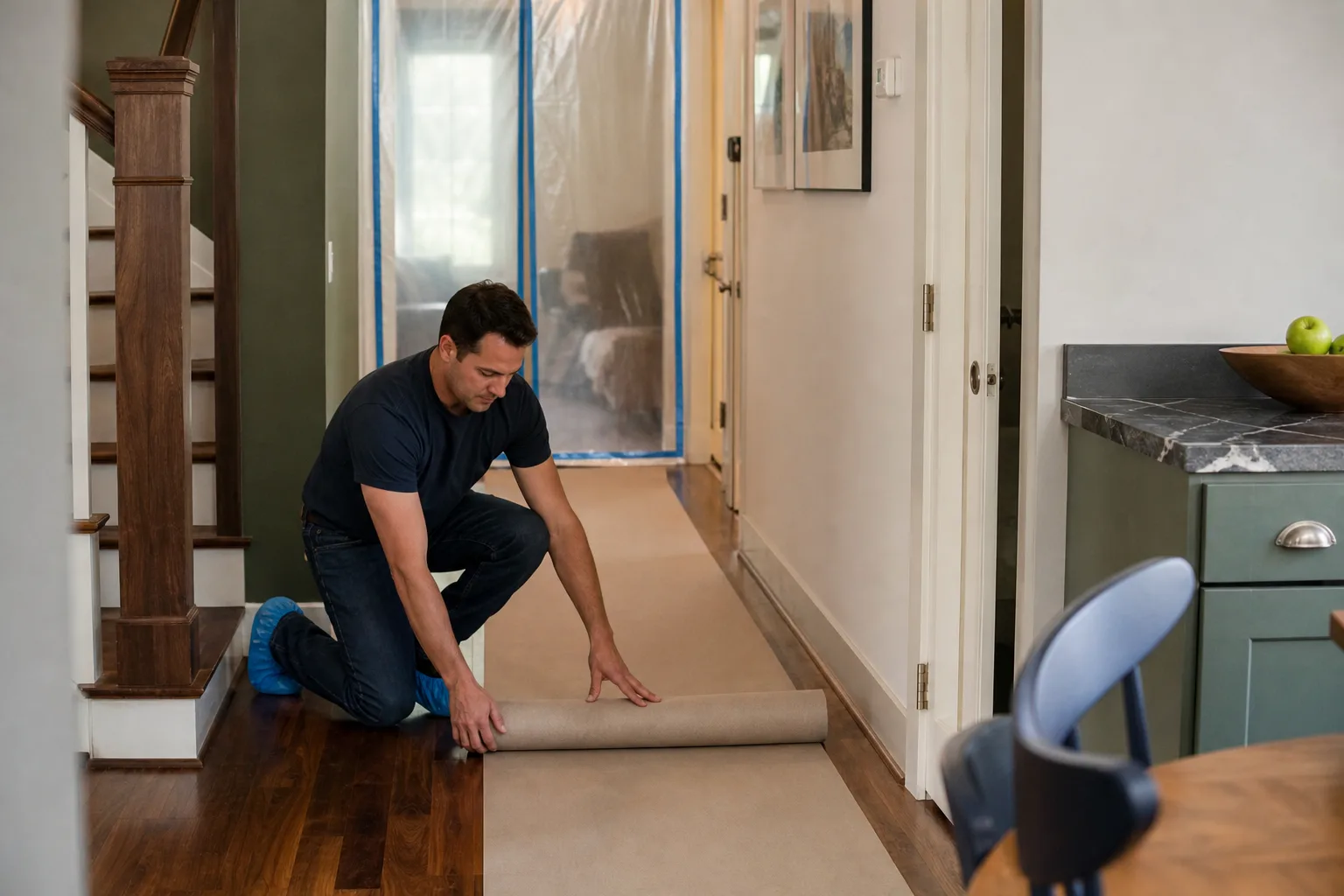
- The finished site is left clean: no construction dust through the hallway, no debris in the yard, no loose tile sitting in the bathtub three weeks later. Squared-away is a fixed standard, not a mood.
For the broader project context – what good bathroom remodeling looks like from the start – our Bathroom Remodeling in Los Angeles service page walks through the full scope of a properly specified remodel, including waterproofing and tile specification. If you’re already planning beyond a repair, the General Contractor in Los Angeles page covers how we structure a written price and scope before work begins.
Common Mistakes to Avoid
- Accepting a verbal scope. “We’ll tile the shower and do the pan” is not a scope. It doesn’t define the waterproofing method, the tile standard, or the change-order process, which means nothing is enforceable if the pan leaks in Los Angeles.
- Skipping the ANSI reference. Without a technical benchmark in the contract, a lippage complaint becomes one opinion against another. Cite ANSI A108.5 in writing before the first tile goes down.
- Paying in cash for the whole job. Cash leaves no paper trail for a CSLB complaint or small claims filing. Use checks or electronic payments so the amounts are documented.
- Ignoring early water signs. A faint smell in the bathroom or bubbling paint on the adjacent wall is a warning, not a quirk. In Los Angeles, mold can establish inside a wet wall cavity in 48-72 hours.
- Hiring on price alone. The bid that’s $4,000 under the others is usually missing waterproofing, substrate prep, or the workmanship warranty. Ask what’s not included, in writing.
- Authorizing change orders by phone. Every legitimate change order gets a written line item and a signature. Verbal change orders are where surprise invoices are born.
- Letting the contractor name brands on the fly. A scope that specifies KraftMaid cabinetry and Kohler fixtures rather than “cabinetry” and “fixtures” has a traceable warranty chain; a scope with allowances doesn’t.
- Not checking for mechanics liens. A subcontractor who never got paid can file against your property even if you paid the general. Check the county recorder within 90 days of project close.
For a broader view of how these issues play out across an entire home, see our Kitchen Remodeling in Los Angeles guide – the same contract discipline applies to any room. If you’re comparing materials for exterior or interior installations, our notes on Bradford Remodeling Co Los Angeles home cover how we specify products with manufacturer warranties that back the workmanship guarantee.
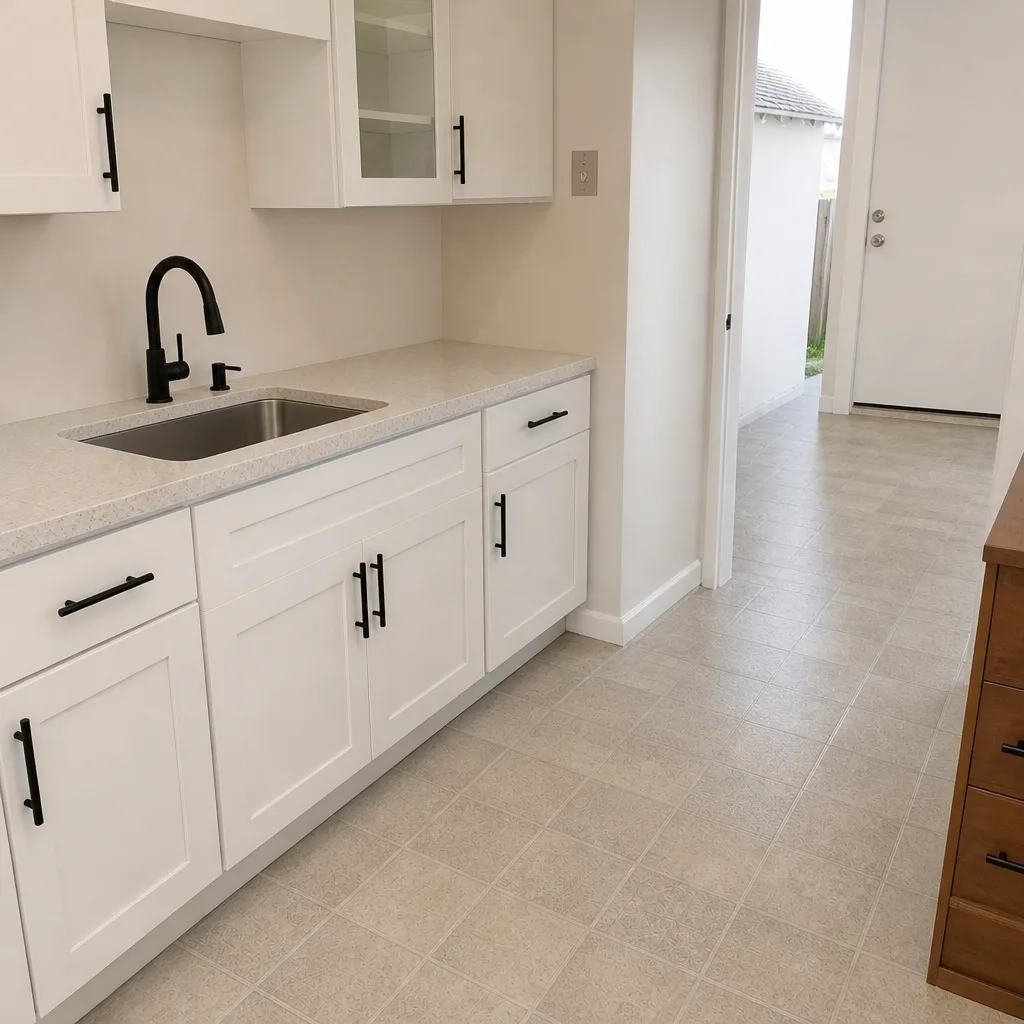
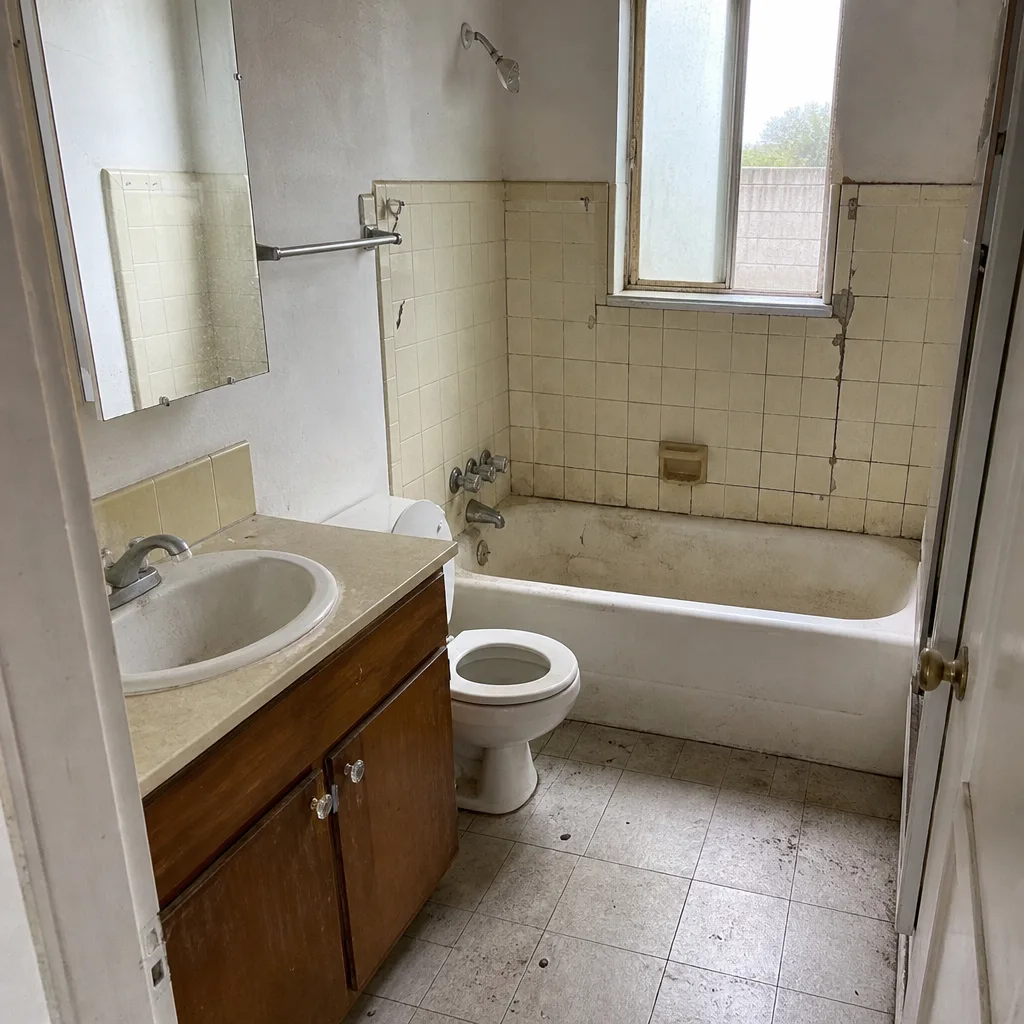
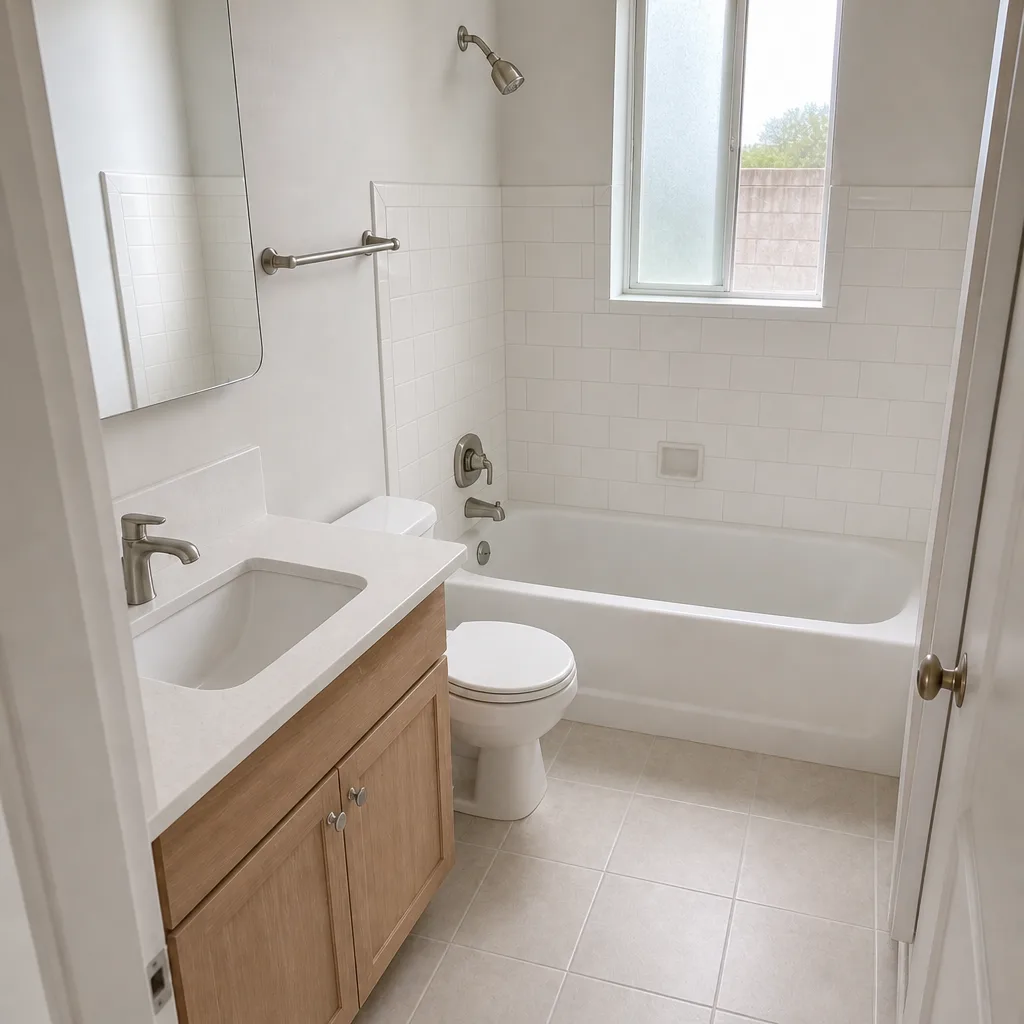
See the difference
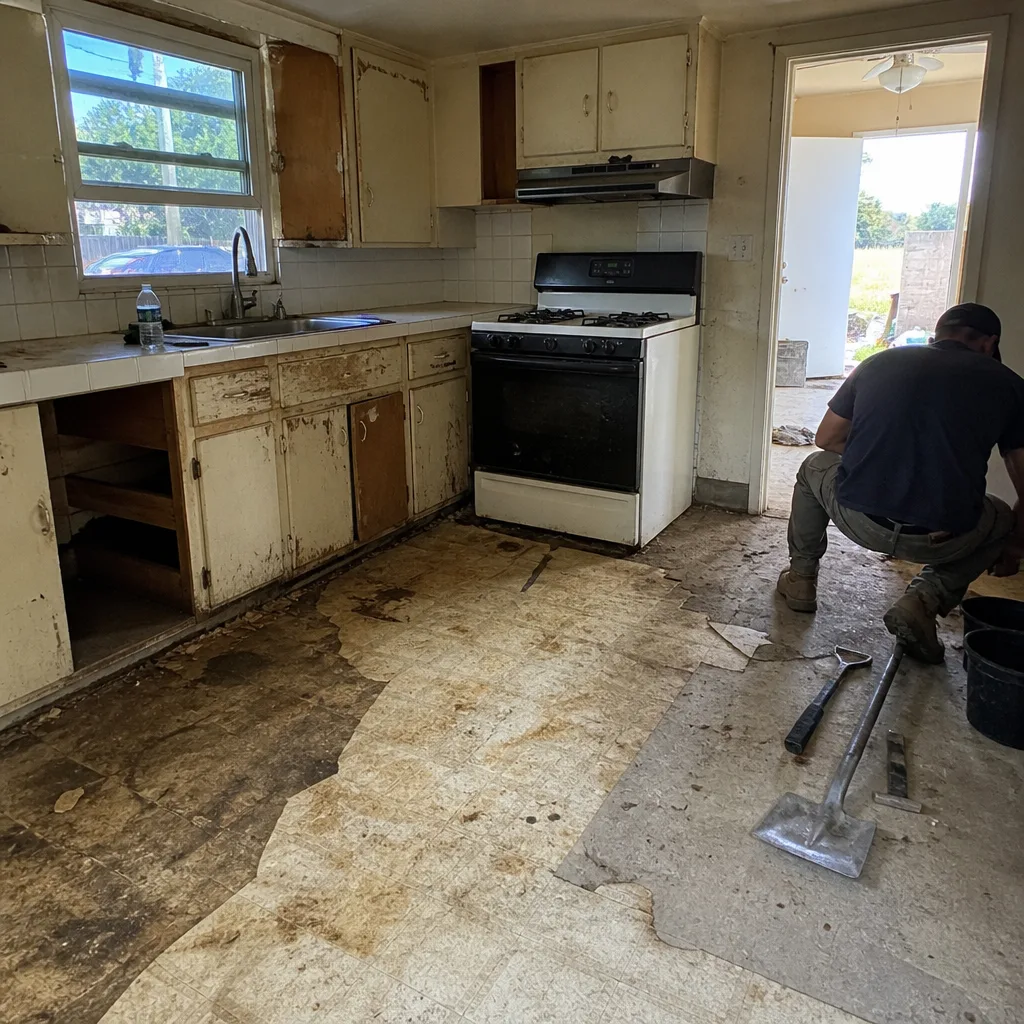 Before
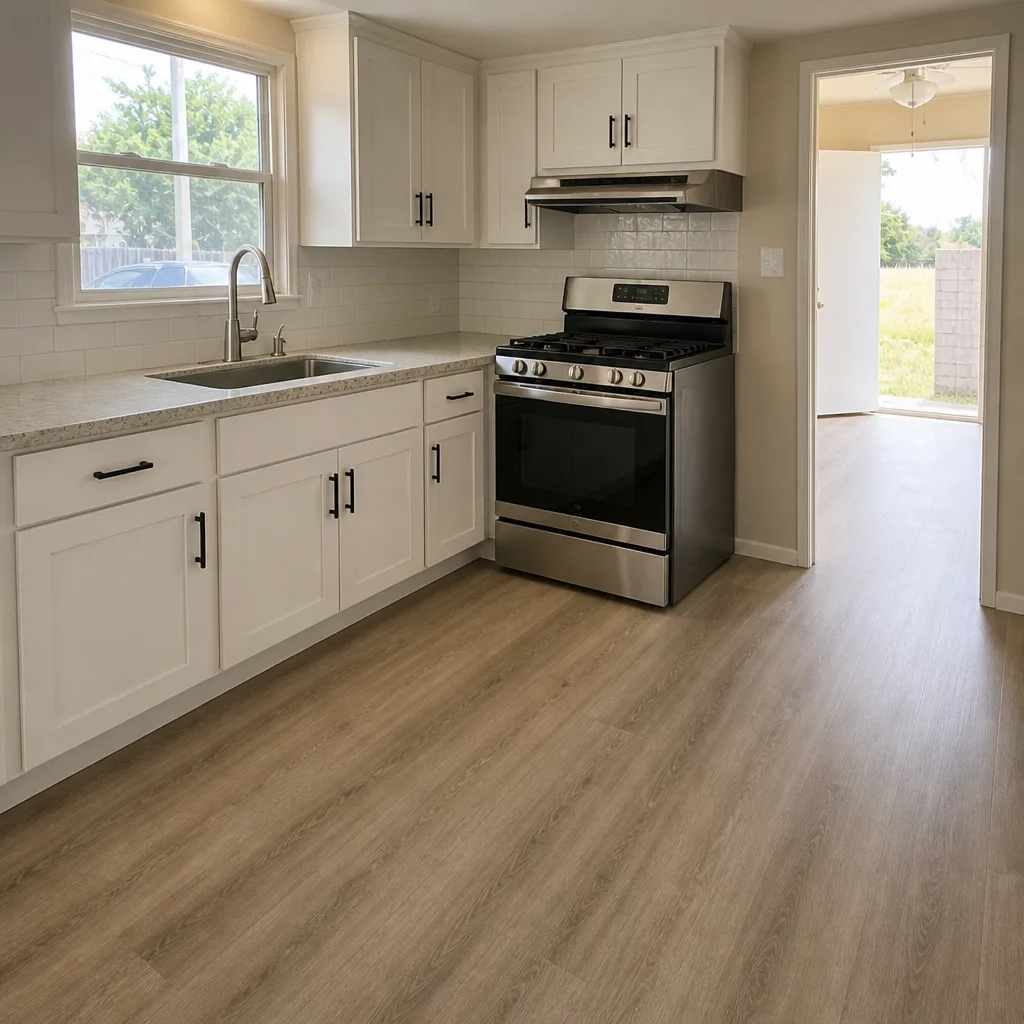 After
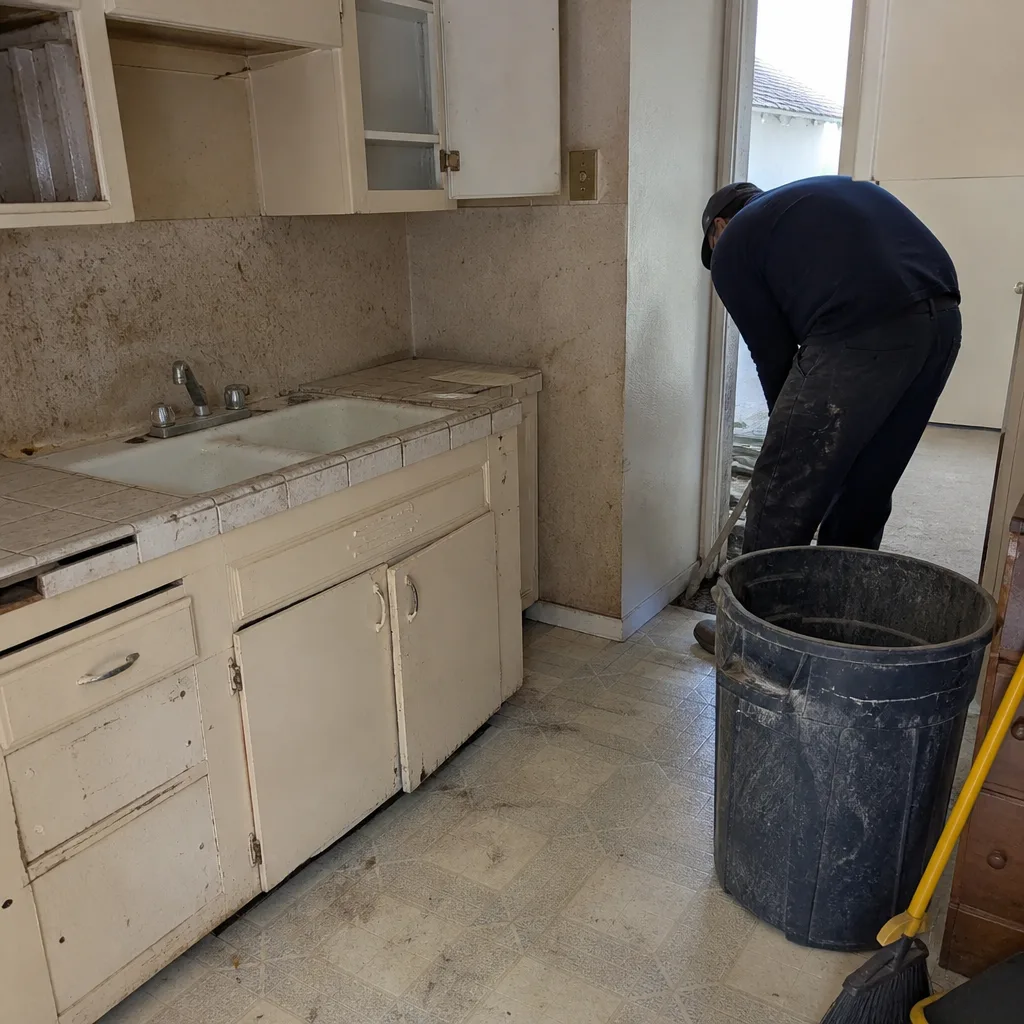 Before
 After
 Before
 After
When to Call a Professional
Call a professional when water is showing up below the bathroom or on an adjacent wall, when tile has visibly moved or cracked in a run of three or more pieces, when a shower door won’t seal after two adjustment attempts, or when a contractor has ghosted and you need an independent written assessment to support a CSLB complaint. Those are the situations where a trained inspection and a written price matter more than another round of caulk.
Bradford Remodeling Co Los Angeles offers free estimates in Los Angeles – call (844) 343-6681. A live person answers 24/7, and you’ll get a written price before any work starts, not a number that moves at the door. Our technicians have up to 22 years of experience with tile, waterproofing, and substrate repairs. Every completed project carries the 365-Day Done Right Promise: if it isn’t done right, we come back and correct it at no charge.
Frequently Asked Questions
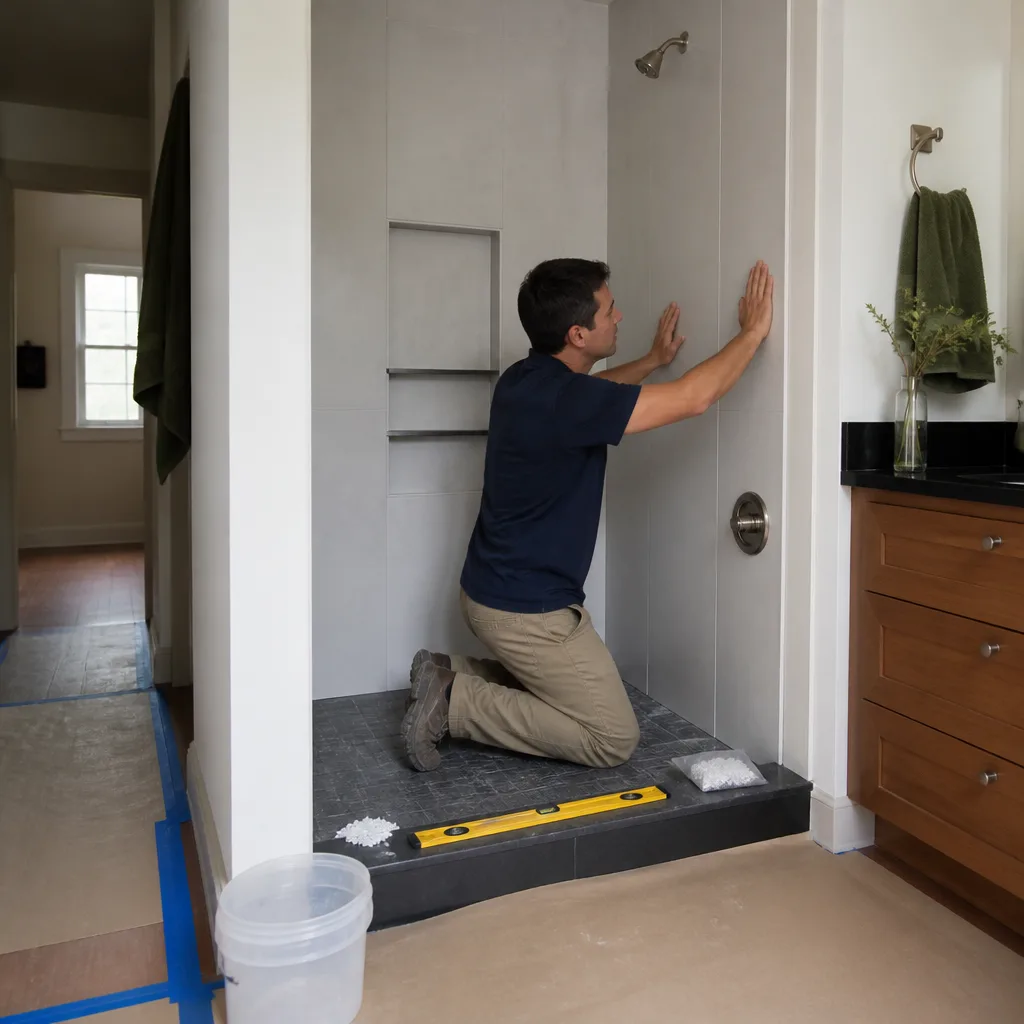
A full shower pan rebuild in Los Angeles typically runs $2,500-$6,500, and a localized leak repair without a full rebuild starts around $400-$900. The range depends on whether the waterproofing membrane has to be replaced or only the tile layer above it. Call (844) 343-6681 for an exact quote on your shower – estimates are free, and the price is written before any work starts.
ANSI A108 allows a maximum of 1/32 inch (0.8mm) of lippage on pressed-edge tile with joints narrower than 1/4 inch, and 1/16 inch on rectified tile. Anything beyond that is an installation defect, not a stylistic choice. If your installer can’t cite the standard, ask them to put their tolerance in writing before the tile goes down.
Not without your written authorization. A change order is a new agreement, and it requires your signature and a written line-item price before the work proceeds. Verbal authorizations are the number one source of surprise invoices on Los Angeles remodels. If the contractor insists the change is mandatory, ask for photos of the field condition and a written scope of the additional work.
The California small claims limit is $12,500 for an individual filing against a contractor. Filing fees are modest, and the process is designed for people without lawyers. Bring the contract, the certified-mail notice, photos with measurements, and any independent assessment you obtained.
Yes, if the lip is localized and the substrate is sound. A competent tile setter can remove and reset the affected tile and regrout the run for $400-$900 in Los Angeles. If three or more tiles have moved or the substrate has cracked, the repair has to go deeper, and the cost climbs toward a full replacement of the affected zone.
Yes, if the contract specifies a workmanship warranty and the failure is caused by installation (missing pre-slope, membrane failure, improper sealing). A six-month shower leak is almost always a workmanship issue, not a materials defect. Confirm the warranty length in writing before you sign – the industry standard for a written guarantee on workmanship is a full year.
Only if you approve a written change order for a field condition that couldn’t have been seen beforehand, such as rotted subfloor under the tile. A fixed scope with a fixed written price should hold. Ask at the outset how the contractor handles contingencies: a written line-item for substrate surprises is normal, an open-ended “we’ll see” is not.
Yes, for anything involving plumbing relocation, electrical changes, structural work, or new waterproofing in a wet area. The City of Los Angeles Department of Building and Safety requires a permit for these, and the inspection record becomes part of your property history. Unpermitted wet-area work is a disclosure risk at sale, and it can void manufacturer warranties.
The Bottom Line
Bathroom remodel problems get solved at three points: the contract, the documentation, and the escalation. Pin down the scope with a specific standard (ANSI A108.5), a written workmanship warranty term, and a change-order process before work starts. If a defect surfaces, photograph it with a measurement in frame, send written notice via certified mail, and hold the contractor to the warranty. If they walk, the CSLB complaint, the $12,500 California small claims cap, and a county recorder lien search are your tools. Most failures trace back to a scope that was never specific enough to hold anyone responsible – and that’s the part you can fix before the first tile goes down.
Written by the team at Bradford Remodeling Co Los Angeles.