
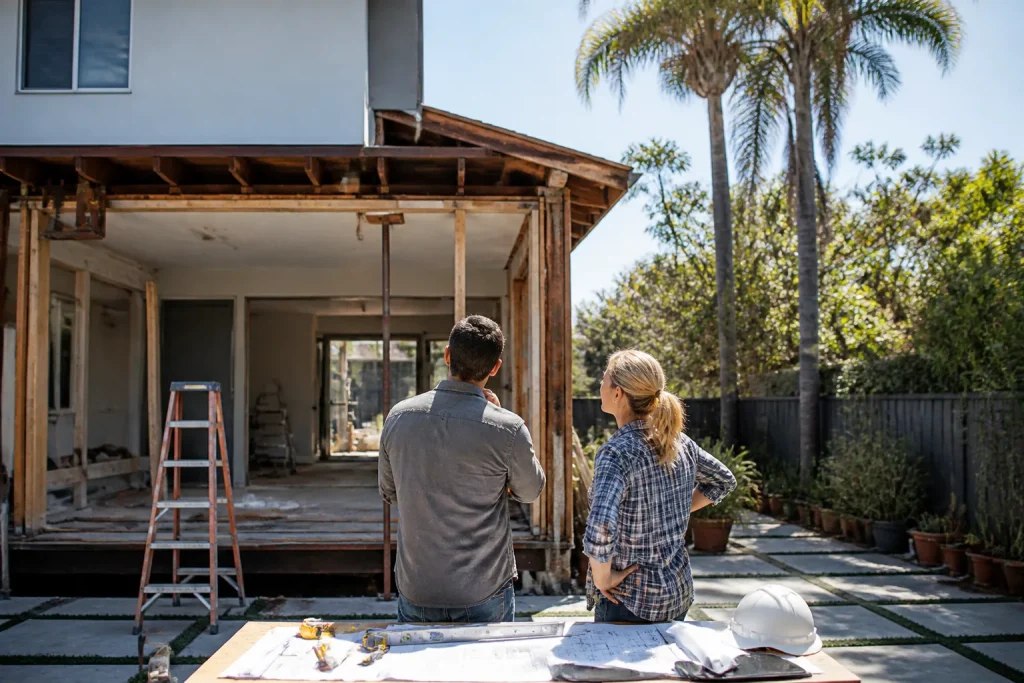
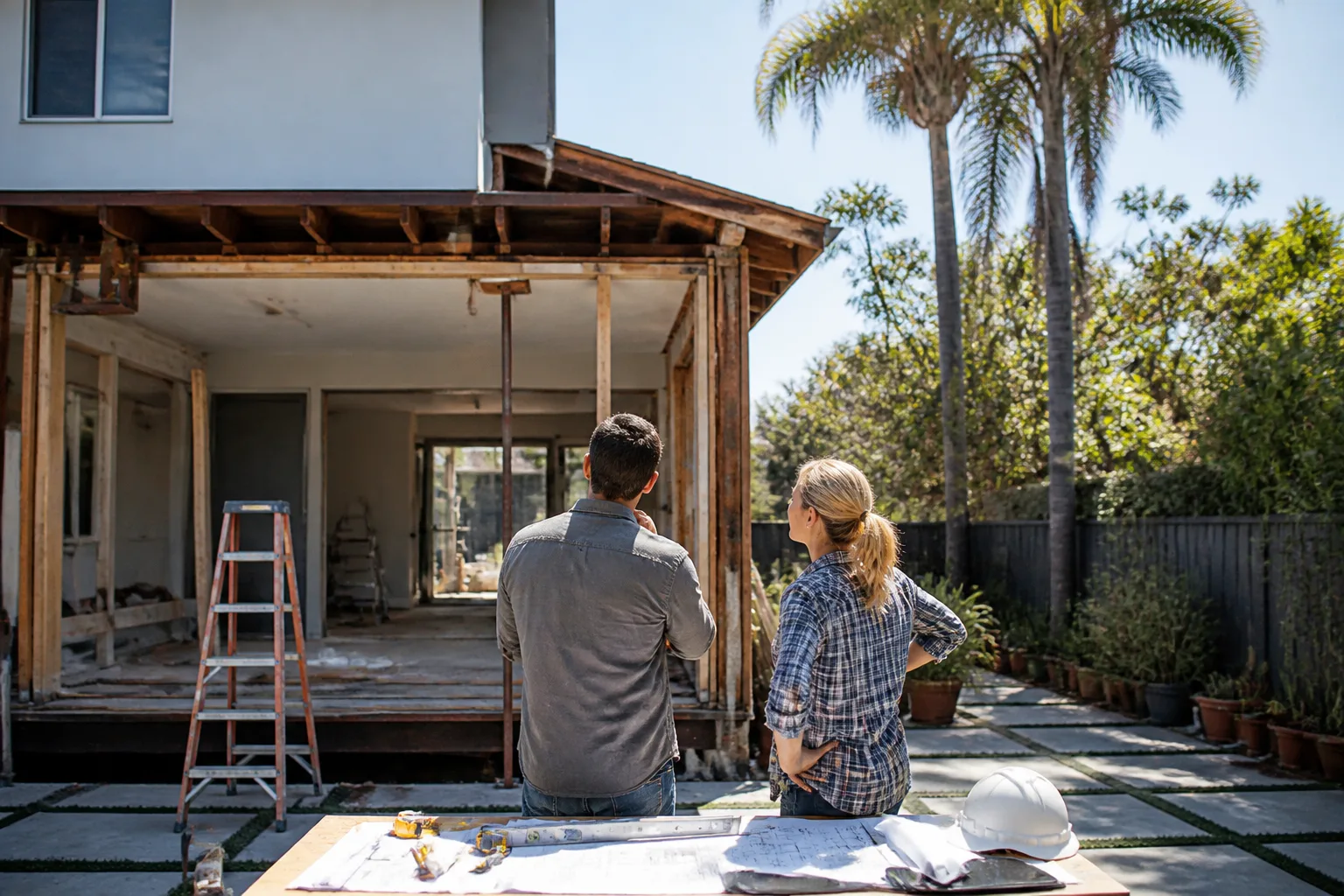
Home Remodeling: Repair or Replace? How Los Angeles Homeowners Decide
Here’s the surprise most Los Angeles homeowners don’t hear until closing: a repair that dodges a permit today can trigger a mandatory upgrade to current code the moment you sell, and that forced work often costs more than the replacement would have in the first place. In Los Angeles, the repair-vs-replace call isn’t mainly about aesthetics or even the number on today’s bid. It’s about which choice builds a permit trail that helps you at resale and which one leaves a liability waiting for a buyer’s inspector to find. If you’d rather not sort that out alone, call (844) 343-6681 and we’ll walk your project through it.
Key Takeaways
- A repair that exceeds 50% of a system’s replacement value legally triggers full code compliance for that system under Los Angeles Department of Building and Safety rules.
- Compare repair and replace on remaining service life, not just today’s bid. A $2,000 repair on a system with three years left usually loses to a $6,000 replacement that lasts 25.
- Galvanized supply lines, original sewer laterals, and 1970s panel boxes are the Los Angeles components where replacement nearly always pencils out.
- Hillside and soft-story properties change the math, because structural repair can pull in earthquake retrofit requirements.
- When the call is genuinely close, get the scope rationale in writing so you have a paper record for insurance and disclosure.
What Is the 50% Rule, and Why Does It Decide So Much in Los Angeles?
The Los Angeles Department of Building and Safety applies a threshold rule to repair work: when a repair exceeds 50% of the replacement value of a system, it legally triggers full code compliance for that system. In plain terms, if you’re patching more than half the cost of replacing, the city treats it as a replacement project and expects the whole system to meet current code, not the code from when your house was built.
This is why the “just fix it cheap” instinct backfires. We’ve watched homeowners spend $9,000 repairing a bathroom’s plumbing and electrical over two years, only to face a full code upgrade at sale anyway. The repair money didn’t reduce the replacement number. It added to it.
Practical implications for Los Angeles work:
- Plumbing: Patching several leaks in a galvanized supply system often crosses the 50% line and pulls the whole system into compliance.
- Electrical: Piecemeal repairs to an undersized panel can cross the same threshold, triggering a service upgrade you’d have needed eventually.
- Structural: A repair on a load-bearing wall or foundation can pull in seismic requirements you didn’t budget for.
The rule doesn’t exist to punish you. It exists because a system that’s half-repaired and half-original is the one that fails unpredictably. Knowing the threshold before you authorize work is the whole game.
How Do You Calculate True Repair vs. Replace Cost?
Don’t compare the repair bid to the replacement bid. Compare cost per remaining year of service. That single change reframes most decisions.
Here’s the formula: divide the cost by the years of service life you’re buying. A repair that costs $2,400 and buys three more years runs you $800 per year. A replacement that costs $6,000 and buys 25 years runs you $240 per year. The repair looks cheaper on the invoice and is three times more expensive in practice.
A remaining-service-life multiplier works the same way. Take the age of the system, subtract it from its expected service life, and you get the years left. Divide the cost of the repair by those years, then compare that to the replacement cost divided by the full new service life. Whichever number is lower is the better economics, full stop.
Two adjustments matter in Los Angeles specifically:
- Add permit and inspection cost to the repair side. A repair that triggers the 50% rule carries compliance costs, and those belong in the comparison.
- Discount a replacement that improves insurability or resale. A new panel or a new roof earns back part of its cost at sale and can lower premiums. That’s real value, not marketing.
Run the numbers on both sides. If the call is close, that’s the moment to bring in a pro who’ll put the reasoning in writing. Call (844) 343-6681 and we’ll help you frame the comparison honestly.
Which Los Angeles Components Almost Always Pencil Out to Replace?
Some components are so far down their service life, or so expensive to repair piecemeal, that replacement is the disciplined choice. In Los Angeles homes, these four come up constantly:
- Galvanized supply lines. Homes built before the mid-1960s often still carry galvanized steel water pipes. They corrode from the inside out, restrict flow, and fail at joints. Repairing one section usually accelerates failure in the next, and the 50% rule tends to pull the whole system into compliance anyway. Repipe.
- Original sewer laterals. The clay or cast-iron line running from your house to the city main is often the same age as the house. Root intrusion and offset joints don’t repair cleanly. If a camera inspection shows more than a couple of problem sections, replacement is the honest answer.
- 1970s panel boxes. Many Los Angeles homes still run undersized panels from that era. Adding a kitchen or a bathroom circuit to a panel that’s already near capacity is a repair that pushes you toward a service upgrade regardless. Replace the panel and stop paying twice.
- Roofs past 20 years. Patching a roof that’s near the end of its service life buys months, not years, and the next leak lands during the first rain. A full tear-off with a documented membrane and manufacturer warranty is the choice that holds.
We installed a full James Hardie exterior on a home in the hills above Silver Lake two years ago after the owner priced out three separate stucco repairs in one season. The repairs added up to roughly two-thirds of the replacement, and none of them addressed the water intrusion behind the original wall. That’s the pattern. When you can see the replacement cost approaching the repair cost, stop repairing.
Why Do Earthquake Retrofitting Rules Change the Math in Hillside and Soft-Story Properties?
Structural repairs in Los Angeles can pull in earthquake retrofit requirements you didn’t plan for. If you own a hillside home or a soft-story building, that changes the repair-vs-replace decision in a way a general bid won’t show you.
A soft-story building is one with a ground floor that’s mostly open, like a garage or a storefront under apartments. Those open bays are the first thing to fail in a quake. Hillside homes face slope and foundation issues that a structural repair has to address at the same time. When a repair touches a structural element, the city may require the whole assembly to meet current seismic code, not just the repaired section.
In practical terms:
- A foundation repair on a hillside property can require anchoring and shear wall work you weren’t budgeting.
- A soft-story repair usually triggers the full retrofit, because partial compliance doesn’t satisfy the code’s intent.
- A second-story addition or a major wall change is the moment to do the retrofit, not after.
If the structural repair is genuinely close to the replacement cost, doing both at once is usually the cheaper path. Doing them separately means paying for access, permits, and mobilization twice. Our technicians have up to 22 years of experience reading these situations, and we’ll tell you plainly when a repair is a stopgap and when it’s the right call.
When Should You Call a Pro, and What Should the Paperwork Show?
Call a pro when the repair crosses into any of the following, because these are the situations where the decision carries legal and financial weight that a homeowner can’t assess from the outside:
- The repair cost is anywhere near the 50% threshold, because the compliance question decides the whole job.
- You’re touching structural elements, especially on a hillside or soft-story property.
- The system is a sewer lateral, panel box, or gas line, where an error is expensive or dangerous.
- You’re planning to sell within a few years and need a permit trail that holds up in disclosure.
When the repair-vs-replace call is genuinely close, the thing that protects you is documentation, not opinion. Bradford puts the scope rationale in writing: which components were inspected, what condition they were in, why we’re recommending repair or replacement, and what the alternative would cost. That paper record matters for insurance claims and for the seller’s disclosure when you list. If the work is completed by us, it’s also covered by the 365-Day Done Right Promise: we come back and correct anything that fails inside that window at no charge, and you hold the written guarantee at close.
You can also see how we frame the scope decision on our General Contractor in Los Angeles page, and if the project is a kitchen, the trade-offs are laid out on our Kitchen Remodeling in Los Angeles page.
Related services in Los Angeles
If your decision lands on replacement rather than repair, we handle it end to end across our Bradford Remodeling Co Los Angeles home page, including full Bathroom Remodeling in Los Angeles where the plumbing and panel work usually lives.
The Bottom Line
The repair-vs-replace decision in Los Angeles comes down to four questions, in this order. Does the repair cross the 50% threshold and trigger full code compliance? What does each option cost per remaining year of service? Is the component one of the ones that almost always pencils out to replace, like galvanized supply lines, original sewer laterals, or a 1970s panel box? And does the property’s earthquake exposure, hillside or soft-story, pull in requirements a simple repair bid won’t show?
Answer those honestly and the call usually makes itself. When it doesn’t, get the scope rationale in writing so you’re covered for insurance and disclosure. If you’re in Los Angeles and want help thinking it through, Bradford Remodeling Co Los Angeles offers free estimates with a written price before any work starts. Call (844) 343-6681 and a live person will pick up.
Frequently Asked Questions
Yes. When a repair exceeds 50% of a system’s replacement value, the Los Angeles Department of Building and Safety treats it as a replacement project and requires the whole system to meet current code. Ask before you authorize the work, because the compliance cost belongs in your comparison. Call (844) 343-6681 for an exact quote on whether your repair crosses that line.
Divide each option’s cost by the years of service life it buys. A repair that costs $2,400 and buys three years runs $800 per year; a replacement that costs $6,000 and buys 25 years runs $240 per year. The lower per-year number is the better economics. Call (844) 343-6681 and we’ll run that comparison for your project, free.
Galvanized supply lines. Homes built before the mid-1960s often still carry them, and they corrode from the inside out, so repairing one section tends to accelerate failure in the next. Original sewer laterals and 1970s panel boxes are close behind. Call (844) 343-6681 to schedule a free inspection.
No. Bradford gives you a written price before any work starts, and that number doesn’t move at the door. If the scope changes because the inspection reveals something we couldn’t see, you get a new written price before we proceed, not a surprise invoice. Call (844) 343-6681 for your free estimate.
Written by the team at Bradford Remodeling Co Los Angeles.
Need Construction Help?
Call Bradford Remodeling Co Los Angeles - licensed & insured, here with fast after-hours help in Los Angeles.
(844) 343-6681