


Free written scope consultation - allowances, timeline, and change-order rules on paper before a single trade is scheduled
Silestone Kitchen Remodeling: The Los Angeles Owner’s Guide
Silestone kitchen remodeling in Los Angeles runs $16,520 to $53,100 installed, depending on square footage, cabinet layout, edge profile and whether the rough-in needs changes. That range covers tear-out, substrate prep, fabrication and installation of engineered quartz by a crew that works from a written scope. Owners here usually discover a problem the same way: a seam starts catching a fingernail, a hairline crack opens near the sink cutout, or a cabinet run sags just enough that the countertop rocks when you lean on it. In older Los Angeles homes, that rocking is often the first visible sign that the substrate under the quartz has moved, and it’s worth a look before a small fix becomes a full replacement.
Which Silestone Models This Applies To
Silestone is an engineered quartz, which matters for this page: the “part” that fails is rarely the slab itself and almost always what sits under and around it – the substrate, the seam adhesive, the cabinet frames carrying the load, and the backsplash transition. If you’re matching a replacement or an addition to existing Silestone, the color name and slab thickness are what you need first. Silestone slabs are typically produced in 2 cm and 3 cm thicknesses; 3 cm is the more common choice for a kitchen island that gets leaned on, while 2 cm is often paired with a build-up edge. A 2 cm slab set against cabinets framed for 3 cm will sit low at the toe kick and change your cabinet door clearance – we’ve seen that mismatch cause door rub on more than one Los Angeles job.
Identifying what you have: check the fabricator sticker or ink stamp on the underside of the overhang, measure the exposed slab edge with a tape (2 cm reads just under 3/4 inch; 3 cm reads about 1-3/16 inch), and note the color name. On the OEM-versus-aftermarket question, there is no third-party “replacement Silestone.” Quartz is a fabricated material, not a bolt-on component. What you can source aftermarket is the supporting hardware: seam adhesive color-matched to your Silestone color, substrate board, edge profiles, and support brackets. We are an independent service provider and not affiliated with Silestone, so we spec to the manufacturer’s published dimensions and warranty terms rather than selling you a stamped part.
Styles & brands we work with
- Kitchen remodeling
- Bathroom remodeling
- Home additions & ADU
- Roofing
- Windows & doors
- Driveway & pavers
- Fence
Signs Your Silestone Kitchen Remodeling Is Failing
Quartz is dense and doesn’t flex the way granite does. It fails at the joints and the edges first, and the symptoms tend to cluster.
- A seam that catches a fingernail or shows a dark line. That’s usually adhesive breakdown, and it happens faster near a dishwasher or sink where heat and moisture cycle daily. Left alone, the seam widens and the two slab sections start moving independently.
- Hairline cracks radiating from the sink or cooktop cutout. Cutouts create a stress point; if the substrate wasn’t fully supported around them, the quartz takes the load instead. This is the failure most likely to end in a full replacement rather than a repair.
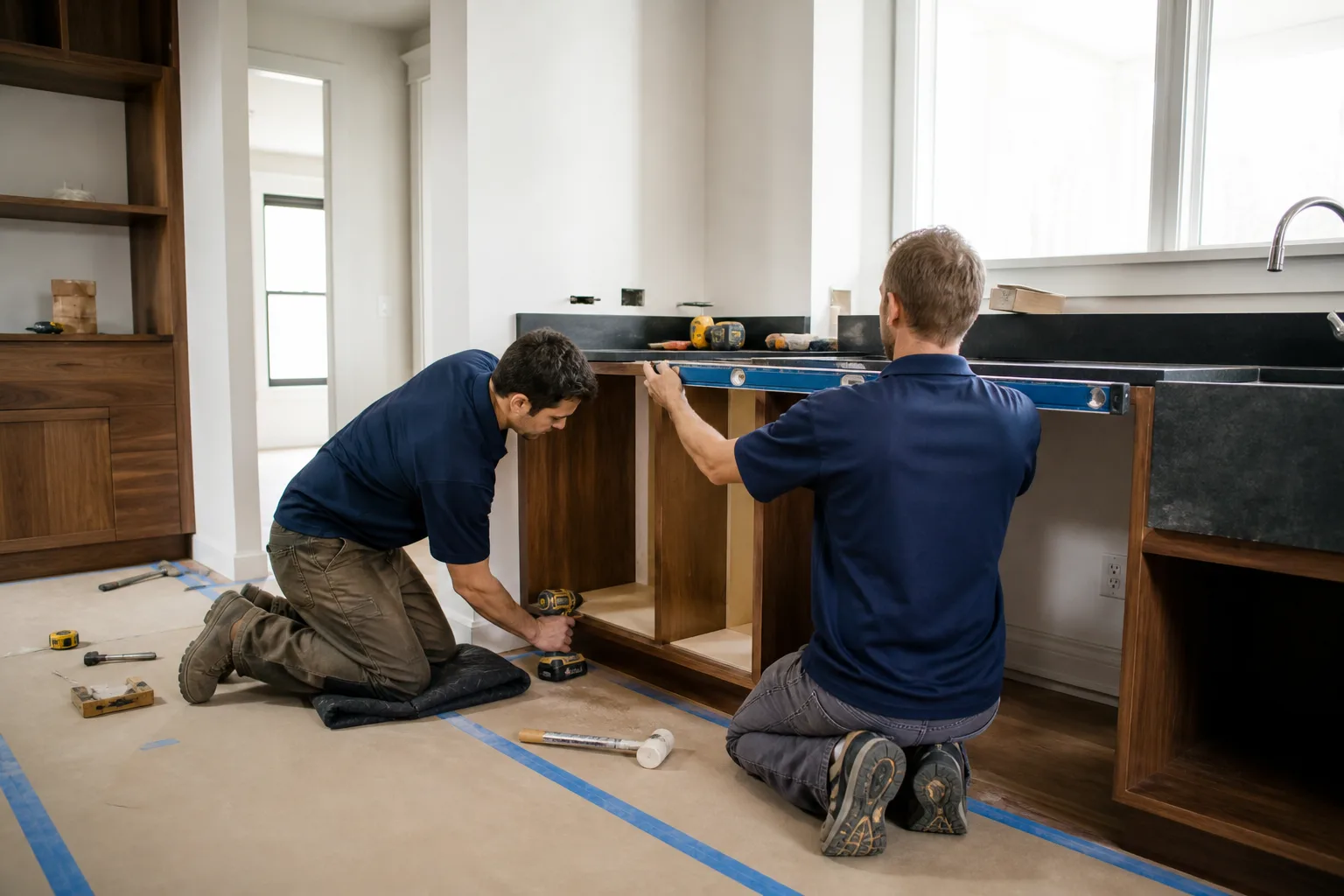
- A countertop that rocks or clicks under hand pressure. The substrate or the cabinet frames below have shifted. In Los Angeles homes built before 1980, we regularly find cabinet boxes that were shimmed to a floor that has since moved, and the quartz is bridging the gap.
- Chips at the front edge or corner. Impact damage from a dropped pan or a chair back. Small chips can be filled and polished; a chip that reaches the full thickness of the slab is a structural problem.
- Staining or cloudiness that won’t come out. Engineered quartz is non-porous but not stain-proof. Oil, wine and turmeric can sit on the surface if the finish has been scratched dull by abrasive cleaners, and that dulling is a maintenance reality rather than a defect.
See the difference
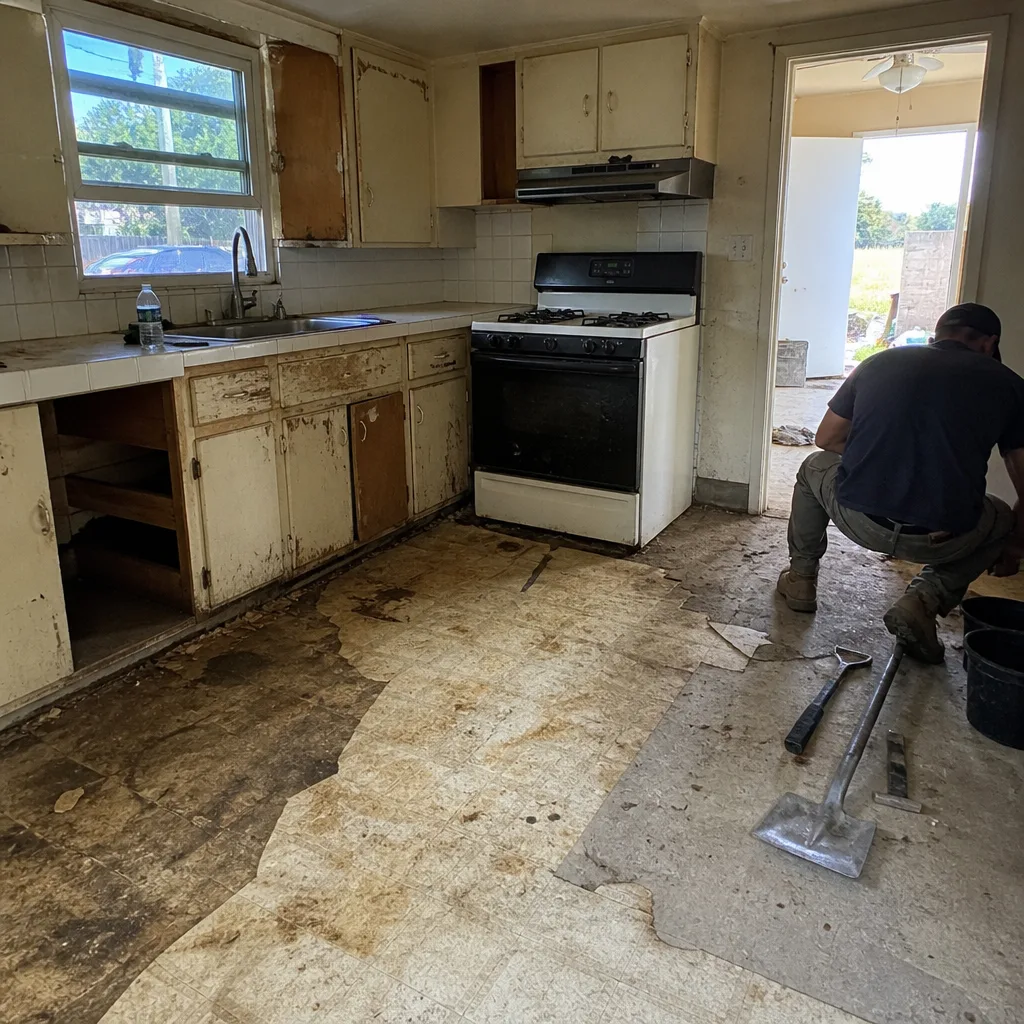 Before
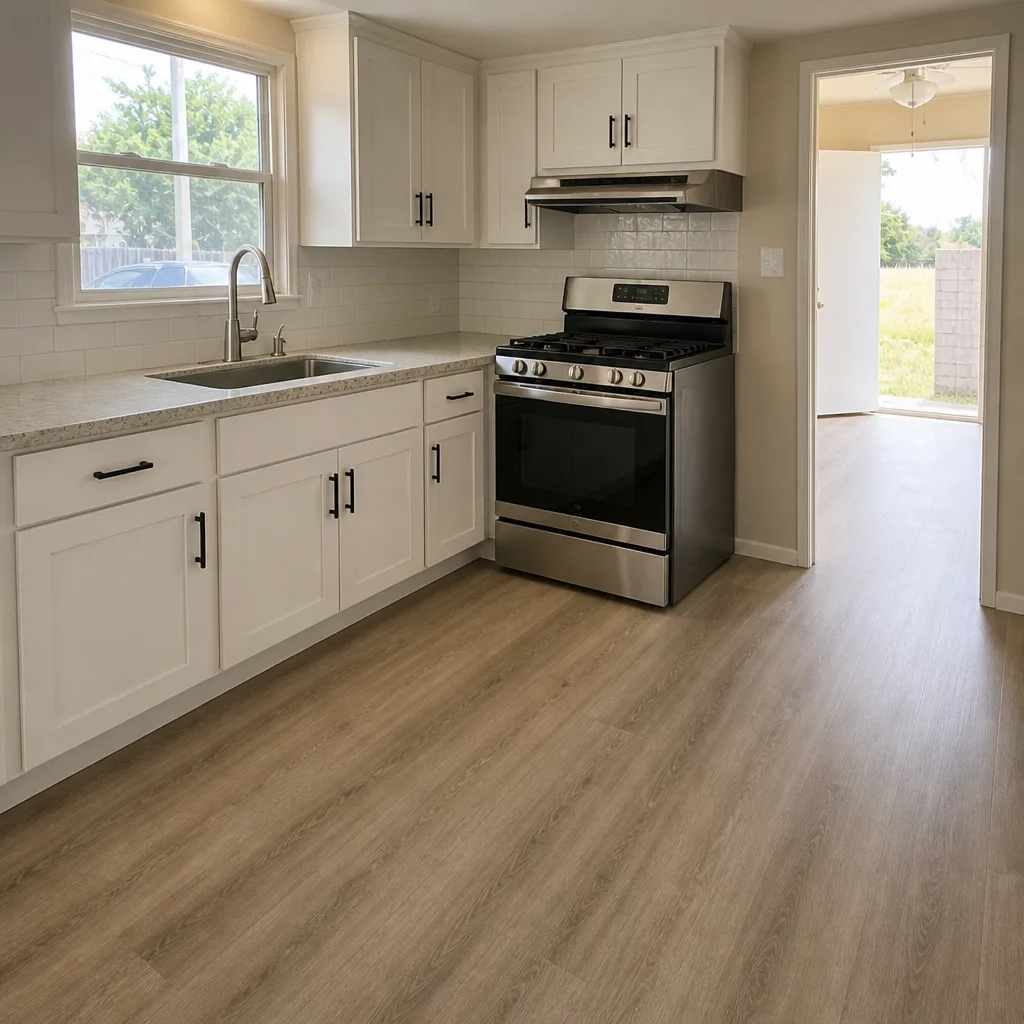 After
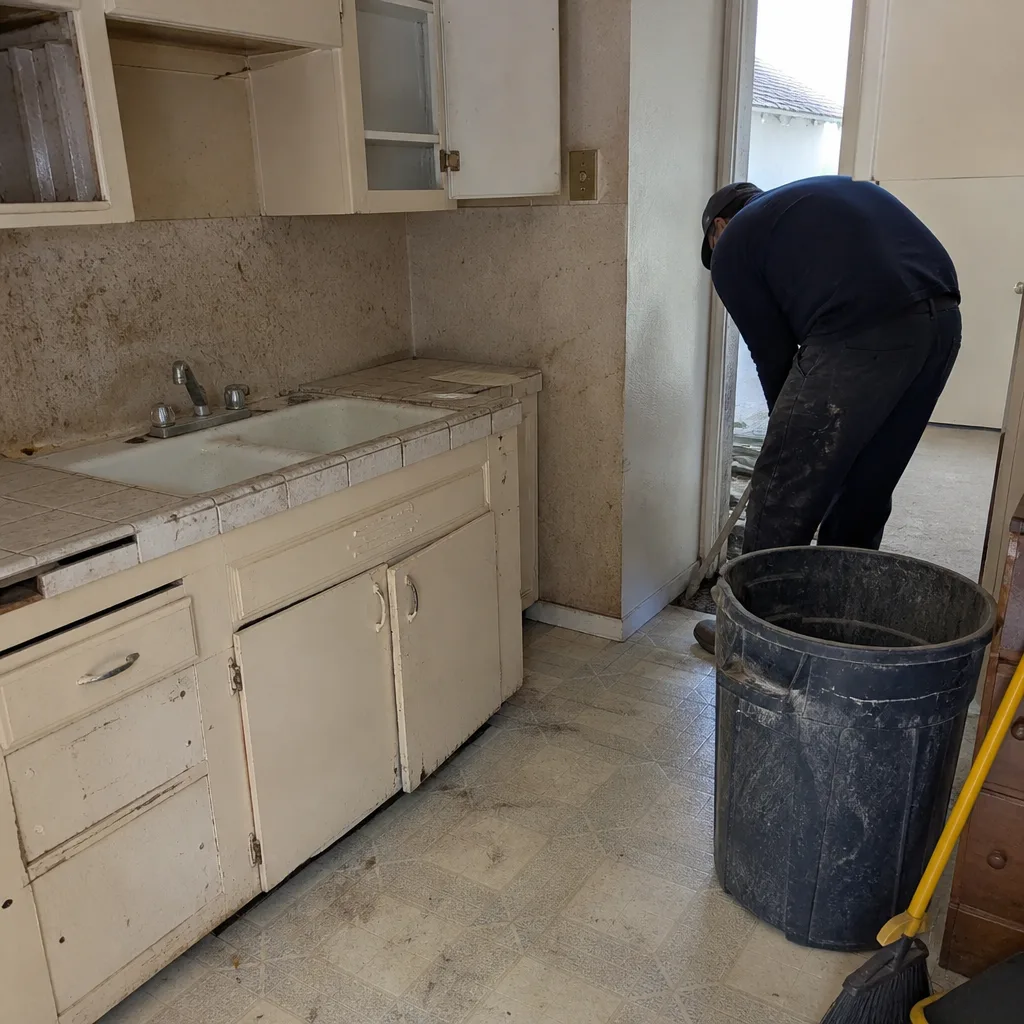 Before
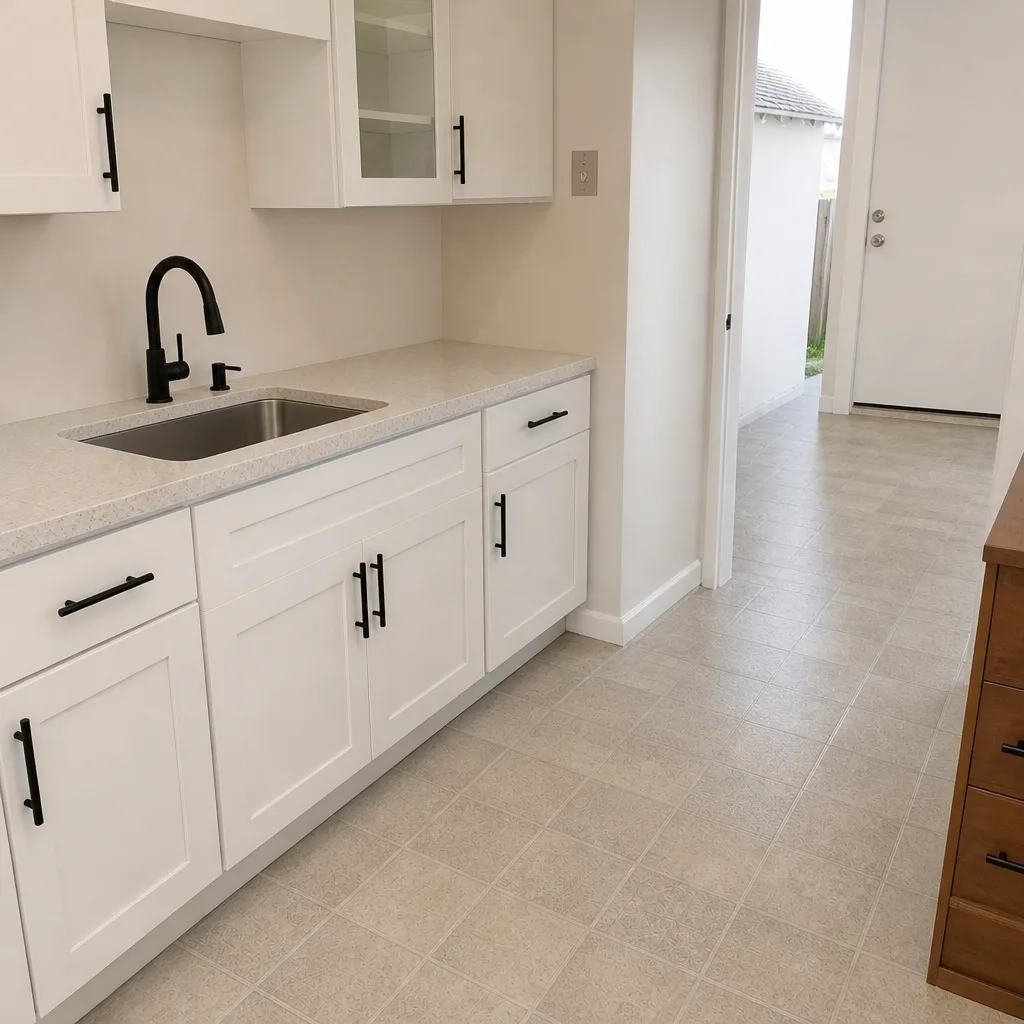 After
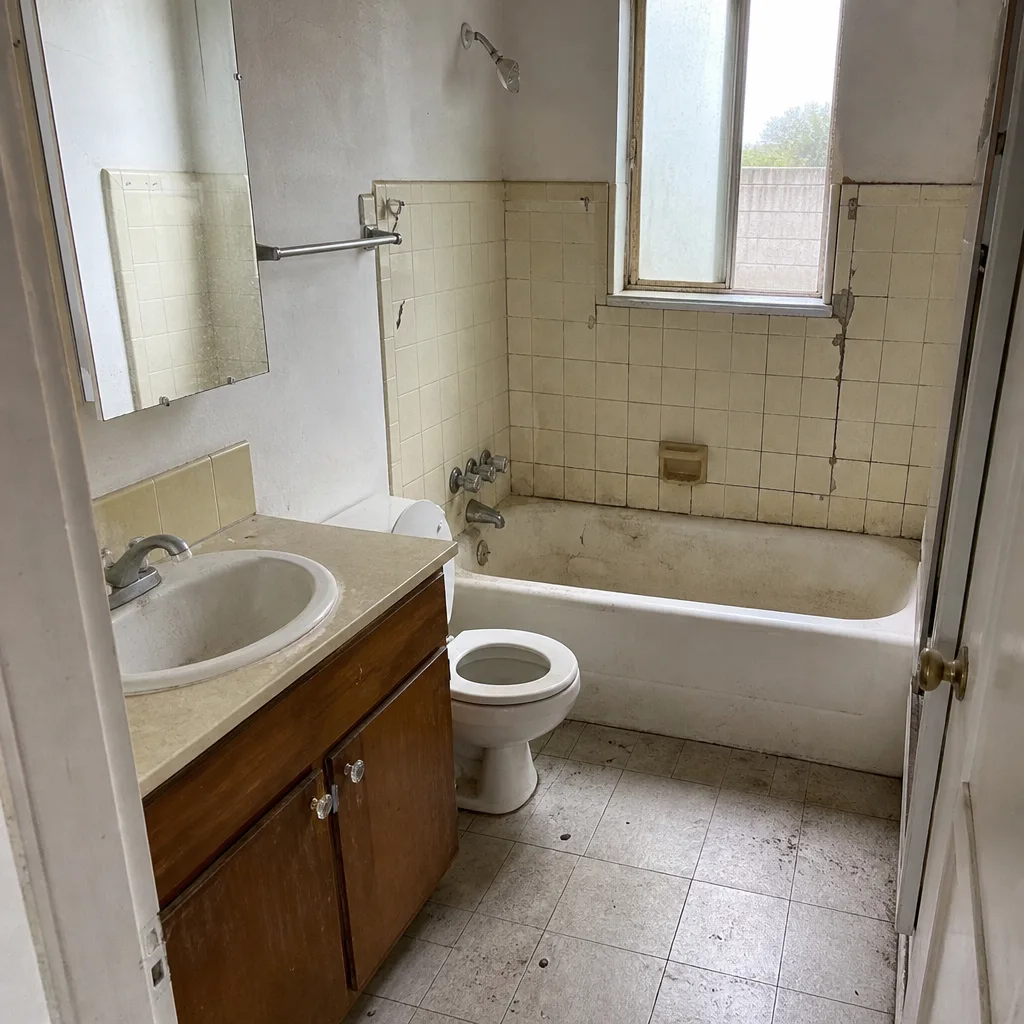 Before
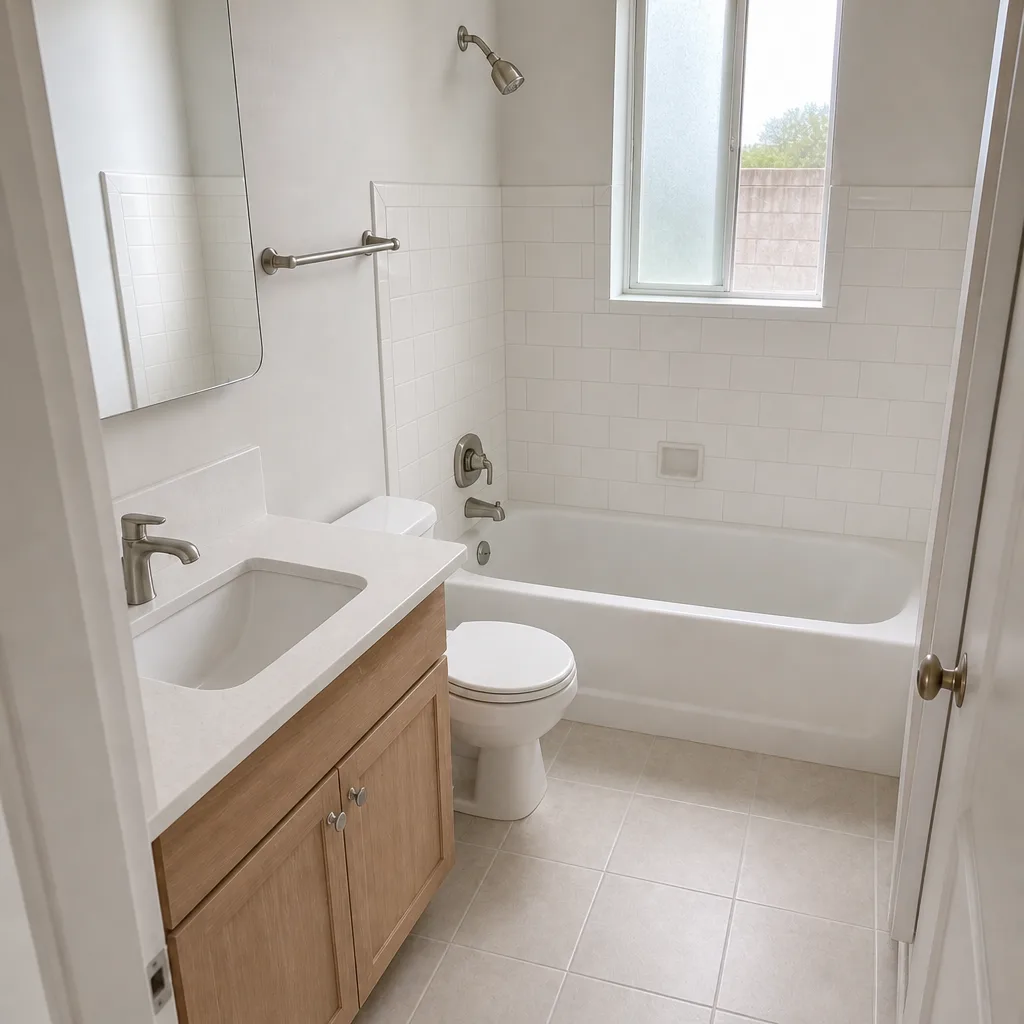 After
Replacement Cost & What’s Included
Here are the Los Angeles installed ranges we work from. Every one of these is a written price before any work begins, not a range that moves when the crew arrives.
| Scope | Installed range (Los Angeles) |
|---|---|
| Full kitchen remodel, Silestone surfaces included | $16,520 – $53,100 |
| Small kitchen remodel | $10,620 – $23,600 |
| Countertop installation (Silestone fabrication and install) | $2,360 – $7,670 |
| Cabinet installation | $4,720 – $15,340 |
| Backsplash installation | $945 – $2,950 |
| Kitchen island installation | $3,540 – $11,800 |
What drives the range: slab area and how many seams the layout forces, edge profile (a simple eased edge versus a mitered waterfall), whether the cabinets or substrate need correction before the quartz goes down, and cutout count for sink and cooktop. Labor and material are itemized separately in the written quote so you can see where the money goes. Every completed project carries the 365-Day Done Right Promise: if the work fails inside that year, we come back and correct it at no charge.
DIY or Call Us?
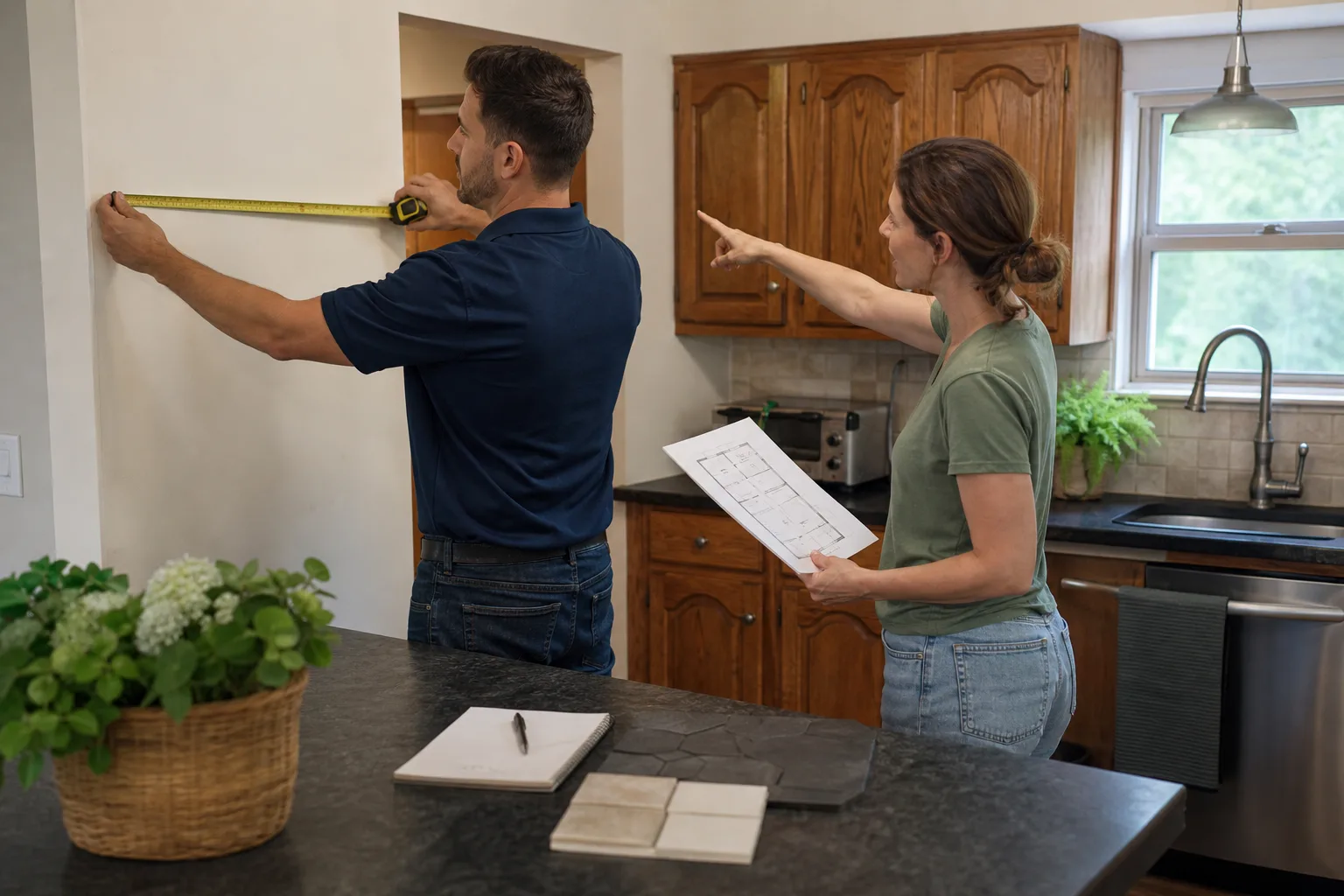
There are things you can check safely, and there are things you shouldn’t touch. Safe to check: look under the overhang with a flashlight for a fabricator sticker or thickness marking, press gently on the counter to see if it rocks, feel along each seam, and photograph any crack with a tape measure beside it for scale. That gives you real information to quote from.
What goes wrong with DIY here: quartz slabs are heavy, brittle at the cutouts, and unforgiving of a bad lift. Trying to shim a rocking countertop yourself, or prying a seam open to re-glue it, is how a $600 seam repair becomes a $7,670 countertop replacement. There is also a genuine safety side – a 3 cm slab over a sink run can weigh several hundred pounds, and a two-person lift on a ladder is exactly how people get hurt. This is a two-crew job with proper support, not a weekend project.
If you’ve been burned by a contractor who no-showed or repriced at the door, that’s the pattern we’re built against. Call (844) 343-6681 and a live person answers, any hour. Our technicians have up to 22 years of experience, they’re background-checked and uniformed, and you’ll have a written price before we start.
FAQs

A properly supported Silestone countertop should hold for 15 to 25 years in normal kitchen use. What shortens that here is sun exposure through a slider or skylight and heat cycling near the dishwasher. Los Angeles’s dry climate is easier on quartz than a humid one, but a south-facing window that bakes a counter daily can dull the finish and stress seams faster.
Usually yes if the damage is a small chip, a surface scratch, or a single seam that has opened. A crack that runs through a cutout corner or spans the slab is a replacement. A technician can tell you which within minutes of looking at it.
A countertop-only replacement is typically a two-day job – template day, then fabrication and install. A full Silestone kitchen remodel with cabinets and backsplash runs longer and gets a written schedule up front. Call (844) 343-6681 for an exact quote; estimates are free.
We work with a documented roster of name-brand materials, including Silestone, Cambria and Caesarstone for surfaces alongside KraftMaid and Wellborn cabinetry and Kohler fixtures. That means specifications are traceable to the manufacturer and your quote names the exact color and thickness. Call (844) 343-6681 to schedule a free estimate.
Whether your counter is rocking, a seam is failing, or you’re planning a full Silestone kitchen remodel in Los Angeles, the next step is a written number you can actually plan around. Bradford Remodeling Co Los Angeles puts every price and every guarantee in writing before a single tool comes out – under The Garrison Standard, that’s not optional. Call (844) 343-6681 for a free estimate and we’ll walk the kitchen with you.
Written by the team at Bradford Remodeling Co Los Angeles, serving Los Angeles and nearby areas.