


5 Mistakes to Avoid With Bathroom Remodeling
The number-one complaint filed with the California Contractors State License Board isn’t shoddy tile work. It’s contract disputes over scope changes that were never written down. The five costliest bathroom remodeling mistakes in Los Angeles aren’t design errors at all. They’re contract and sequencing errors that happen before demo even starts, and they almost always resurface as surprise charges on the back end. Each one is avoidable if you know what to look for in the paperwork. If you’d rather have someone walk you through it, call (844) 343-6681.
Key Takeaways
- Allowances for tile and fixtures are the most common hidden cost in a Los Angeles bathroom remodel.
- Skipping a permit on a wet-wall move can affect your homeowner’s insurance and your resale disclosure.
- Waterproofing membrane type belongs in the contract, not in a verbal promise.
- Every scope change should be priced and signed before work continues.
- A written price before work starts is the single best protection you have.
1. Signing a Contract Without a Fixed Scope of Work

This is the mistake that causes the rest. A fixed scope of work is a written document that lists every task, every material, and every square foot of the job, with a price attached. When a contractor hands you a one-page bid with a lump sum and a line that says “tile allowance: $8 per square foot,” you haven’t been given a price. You’ve been handed an open tab.
Here’s how allowances work in practice. A contractor budgets $8 per square foot for tile, you fall in love with a $22 per square foot porcelain, and the difference lands on your final invoice, multiplied across 60 square feet of floor and 80 square feet of shower wall. That gap can run into the thousands on a single Los Angeles remodel. The same logic applies to vanities, faucets, and lighting. An allowance isn’t a discount; it’s a placeholder for a number nobody has committed to.
What a real fixed scope looks like:
- Named materials with model numbers. Not “premium tile” but a specific product, brand, and size. We work from a documented roster of name-brand materials (KraftMaid and Wellborn cabinetry, Cambria and Caesarstone surfaces, Kohler and Moen fixtures) so every specification is traceable. That’s how you avoid guesswork.
- Square footage and unit counts. 84 square feet of shower wall tile, one 60-inch vanity, two recessed lights.
- A written price before any work starts. No numbers that move at the door.
- Demo, haul-away, and disposal listed as line items. These get quietly added back in when they’re missing.
We pulled a job file apart over in Sherman Oaks recently and found a bid with four allowances and no material list at all. The homeowner had no way to know whether she was looking at a $28,000 bathroom or a $41,000 one. A fixed scope makes that answer clear before you sign.
2. Skipping a Permit on a Wet-Wall Move
A wet-wall move means relocating the plumbing supply and drain lines that serve the shower, tub, or sink. It’s one of the most common requests in a Los Angeles bathroom remodel, and one of the most common places homeowners try to save a few hundred dollars by skipping the permit.
Don’t. Here’s what happens when you do.
Your insurance may not cover the failure. Most homeowner policies exclude or limit water damage tied to unpermitted work. If a shower drain installed without inspection fails and floods the ceiling below, the adjuster will ask for the permit. An unpermitted rough-in gives the carrier a reason to reduce or deny the claim.
You’ll have to disclose it at resale. California requires sellers to disclose known material defects and unpermitted work. A buyer’s inspector finds an unpermitted wet-wall move, and you’re either paying to bring it up to code or negotiating the price down. Either way, the permit you skipped becomes the most expensive line item on the deal.
The rough-in inspection is a quality control step. An inspector looks at the drain slope, the venting, the supply lines, and the waterproofing before the tile goes on. Once it’s tiled, nobody can see it. That inspection is one of the few chances anyone gets to catch a slow leak before it costs you a subfloor.
In our experience, the permit fee on a residential bathroom in Los Angeles is a small fraction of what a failed flood claim or a price renegotiation costs at closing. Pull the permit.
3. Sequencing the Vanity Delivery Before the Rough Plumbing Inspection
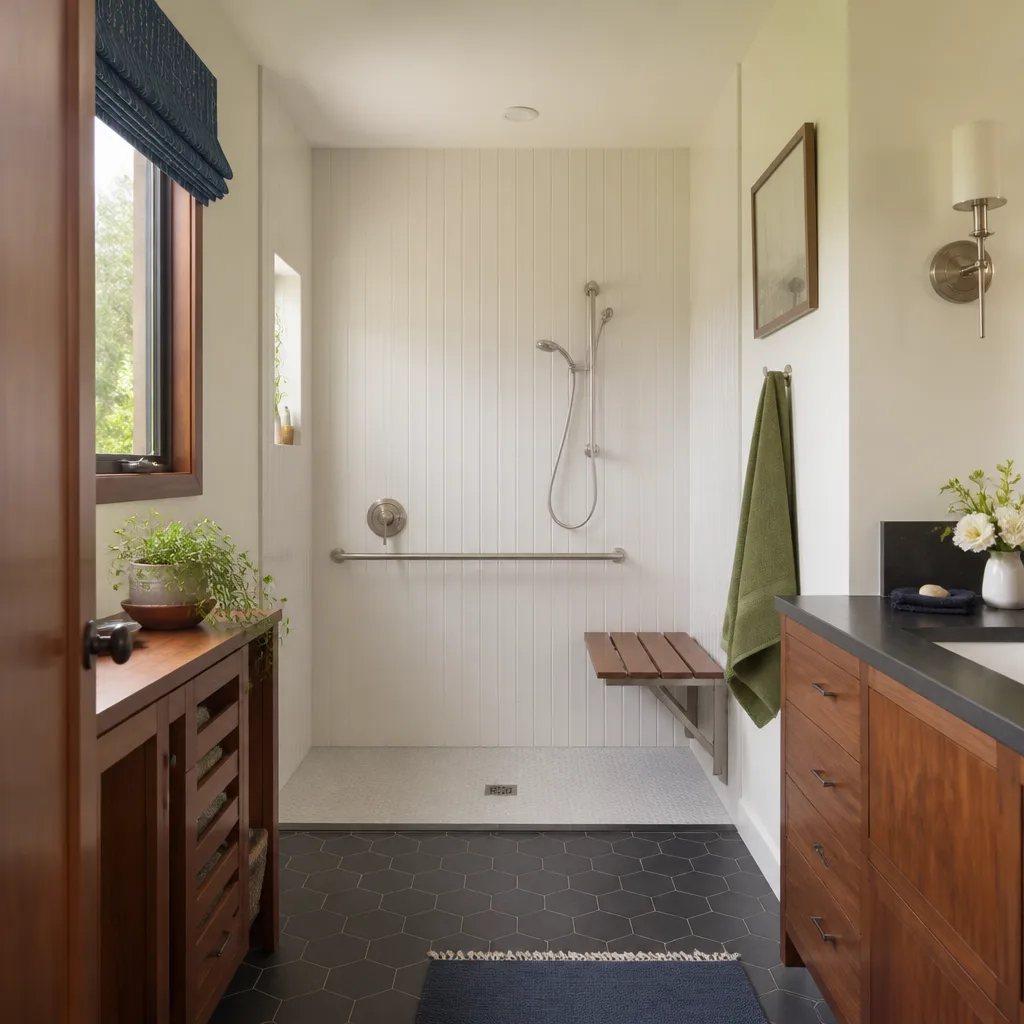
Bathroom remodels stall for boring reasons. A common Los Angeles scheduling mistake is ordering the vanity, the tile, and the glass shower enclosure to arrive before the rough plumbing inspection has been signed off. When the inspector flags a drain issue, the crew can’t close the wall, the vanity sits in a garage in a box, and the project sits for three to five weeks waiting on a re-inspection.
The sequence that actually works:
- Demo and haul-away.
- Rough plumbing and electrical, then the rough-in inspection with a signed-off card or tag.
- Insulation, drywall, and waterproofing.
- Tile and flooring.
- Vanity and fixture set, with the cabinet delivered after the wall is closed and painted.
- Glass, mirror, trim, and final inspection.
Vanities and glass are the two items that most often arrive too early. A freestanding vanity in a hallway for a month is a trip hazard and a storage problem. A glass shower enclosure ordered before tile is set gets built to a measurement the tile work may not match, and it comes back wrong. Holding delivery orders until the wall is closed and the floor is finished keeps a Los Angeles bathroom moving on a predictable schedule.
This is a project management problem, not a design problem. A contractor with a written sequence handles it; a contractor juggling five jobs from a truck often doesn’t.
4. Not Specifying the Waterproofing Membrane Type in Writing
The waterproofing membrane is the layer that sits behind your tile and keeps water out of the wall assembly. Get it wrong and your beautiful tile shower grows a mold colony inside the wall, where nobody sees it until it’s a full teardown. Two membrane systems dominate: sheet membranes and liquid-applied membranes.
Sheet membrane is a rolled, factory-made waterproofing layer bonded to the substrate with a specific mortar. It’s a consistent, thin, factory-controlled product. Liquid-applied membrane is brushed or rolled on in layers, and its performance depends almost entirely on the number of coats, the thickness (measured in mils), the cure time between coats, and the skill of whoever holds the roller.
Both can work. Both can fail. The failure mode is what matters: a liquid membrane applied one coat thick on a damp Los Angeles morning isn’t waterproof, it’s tinted concrete. If your contract doesn’t name the system, the number of coats, and the cure schedule, you have no recourse when a shower pan starts leaking in year two.
What to put on paper:
- The membrane brand and product name.
- Sheet or liquid, and if liquid, the number of coats and the mil thickness.
- Substrate preparation: cement board or foam board, seams taped and treated.
- Flood test: the pan is filled with water and held for a set period before tile goes on.
A specific note here: many premium tile products and fixtures, including some from Cover, Dvele, and Mighty Buildings’ systems, come with manufacturer installation specs. Those specs protect your warranty. The membrane callout belongs in the written scope, alongside the material list. If a contractor can’t name the system, that’s your answer about how seriously they’re treating the wet wall.
5. Accepting a Verbal Change-Order Process

A change order is any addition or modification to the original scope. A homeowner points at the shower niche and says “let’s tile it in marble,” the crew does it, and the charge appears on the final invoice with no prior price and no signature. This is how a written contract turns into a verbal argument.
The fix is simple. Every change gets priced, in writing, before the work continues. Not after. If the crew is standing in your bathroom holding a box of stone with a question on their face, the process is broken.
A proper written change order has four parts:
- 1
The exact addition. A 14-inch by 24-inch marble niche, with setting materials named.
- 2
A fixed price. A number, not a range, and not an estimate to be reconciled later.
- 3
A schedule impact. “Adds one day to the schedule,” or “no impact.”
- 4
Two signatures. Yours and the contractor’s, dated.
Verbal changes create a second problem: they blur the line between the original work and the addition. If the tile on the niche fails two months after the project closes, was that the original scope or the change order? A signed written change order answers that question immediately and keeps your 365-Day Done Right Promise clean. That guarantee means something specific: if completed work fails inside the one-year window, we return and correct it at no charge. A verbal change order puts that guarantee in limbo, because nobody can prove what was agreed.
When to Call a Pro
Some bathroom work is designed for a homeowner with a free weekend. Replacing a vanity faucet, swapping a light fixture on an existing circuit, painting the room, or re-caulking the tub surround. If that’s your list, have at it.
The work that needs a trained professional, without debate:
- Any gas line work, if you’re adding a gas appliance or relocating a line.
- Any electrical panel or new circuit work, including adding a heated floor or a GFCI in a wet zone.
- Any wet-wall plumbing move.
- The waterproofing membrane on a tile shower. This is a detail that fails quietly and expensively.
- Any structural change, like removing a load-bearing wall between the bathroom and a bedroom.
A bathroom is one of the few rooms in a Los Angeles home where water, electricity, and code sit in the same small footprint. That’s not a place for guesswork.
If you’re comparing bids and something feels off about the scope, that feeling is usually right. A Los Angeles Bathroom Remodeling in Los Angeles project should come with a written scope before you sign anything, and a General Contractor in Los Angeles who answers the phone when you call with a question. If your project is part of a larger job, we also handle Kitchen Remodeling in Los Angeles and whole-home work. Start at our Bradford Remodeling Co Los Angeles home page if you want the full picture.
The Bottom Line
Every one of these five mistakes shows up on the back-end invoice. A missing written scope becomes an allowance overrun. A skipped permit becomes an insurance claim denial or a resale negotiation. A vanity delivered too early becomes a three-week delay. An unspecified membrane becomes a tearout in year three. A verbal change order becomes an invoice you can’t dispute.
The fix isn’t complicated, and it doesn’t cost extra. It’s paperwork, done before demo. A fixed scope with named materials. Permits pulled. A written sequence. The membrane specified in writing. Every change priced and signed before it happens. That’s and The Garrison Standard in practice: every price and every guarantee in writing before a single tool comes out.
At Bradford Remodeling Co Los Angeles, we put a written price in your hands before any work starts, and every completed project carries the 365-Day Done Right Promise. If the work fails inside that window, we return and correct it at no charge. Our technicians have up to 22 years of experience, and a live person answers the phone around the clock, not a voicemail. If you’re in Los Angeles and need help, Bradford Remodeling Co Los Angeles offers free estimates. Call (844) 343-6681.
Frequently Asked Questions
The most common mistake is signing a contract without a fixed scope of work, especially one that relies on allowances for tile and fixtures. Allowances act as a blank check because the final price depends on what you pick later, and the gap lands on your invoice. Require named materials with model numbers and a written price before work starts. Call (844) 343-6681 for a free estimate with a fixed written scope.
Yes. Moving the supply or drain lines serving a shower, tub, or sink requires a permit and a rough-in inspection in California. Skipping it can limit your homeowner’s insurance coverage on a water damage claim and create a disclosure obligation if you sell. The rough-in inspection is also your only clean look at the drain and waterproofing before tile covers it. Call (844) 343-6681 to talk through your project’s permit needs.
Yes, and it matters enough to be named in your contract. Sheet membrane and liquid-applied membrane both work, but a liquid membrane depends on coat count, thickness in mils, and cure time between coats. If the application is thin or rushed, the shower pan can leak within the guarantee period and behind the tile. Put the system, the number of coats, and a flood test in writing. Call (844) 343-6681 with questions before you sign.
It shouldn’t, if the scope is fixed and any addition gets a signed written change order before the work continues. A price that moves at the door is a sign the original bid had allowances or missing line items. Ask for the full scope, the material list, and the change-order process in writing before you sign. Call (844) 343-6681 for a written estimate with a fixed scope.
Written by the team at Bradford Remodeling Co Los Angeles.
Need Construction Help?
Call Bradford Remodeling Co Los Angeles - licensed & insured, here with fast after-hours help in Los Angeles.
(844) 343-6681