
Bathroom Remodeling: Repair or Replace? How Los Angeles Homeowners Decide
Regrouting a shower in a Los Angeles home with 1960s-era galvanized drain lines is cosmetic work on a structural problem. It will look right for about 18 months, then fail in a way that costs twice as much to fix. The repair-or-replace decision in Los Angeles bathrooms almost always comes down to two things nobody puts on a bid sheet: the condition of the substrate behind the tile and the age of the supply and drain lines. Decide those two first, and the rest of the scope writes itself.
If you’d rather have someone read the wall for you than guess, call (844) 343-6681 and we’ll put both a repair price and a replace price in writing before you commit to either.
Why the Substrate Decides Before the Tile Does

Tile is a wear layer. The thing holding it up is the substrate, and in Los Angeles bathrooms that’s usually one of three systems: cement board, a bonded waterproof membrane like Schluter Kerdi, or an old mud bed (a thick mortar base packed over a liner, common in 1950s through 1970s construction). Each fails differently, and each failure determines whether a tile repair is honest or just deferred.
Here’s what we look for before quoting a repair:
- Sound test. Tap the wall with a screwdriver handle. A dull thud with give behind it means the substrate has broken its bond to the studs. Hollow is fine; mushy is not.
- Grout line movement. Cracks that follow a straight line, or grout that keeps cracking in the same place after regrouting, usually mean deflection, not bad grout.
- Efflorescence. White mineral bloom at the base of the wall means water is moving through and evaporating. The substrate is wet.
- Mud bed condition. In a mud-bed shower, the pan and the walls are one continuous system. If the bed has gone soft at the curb, there’s no partial repair that holds.
- Membrane integrity. A bonded membrane can be patched if the failure is localized and the surrounding membrane is intact. If it’s lifting at a corner, the whole field is suspect.
One thing worth flagging: dark grout and a fresh caulk line can hide a wet substrate for a year. We’ve pulled tile in a Fairfax District bungalow where the shower looked clean and the cement board behind it crumbled in our hands. No surface inspection catches that.
The Los Angeles Plumbing Reality: Galvanized Lines Change the Math
This is the factor most repair-or-replace advice skips entirely. A large share of Los Angeles housing stock was built before 1970, and pre-1970 homes commonly have galvanized steel supply lines and, in many cases, cast iron or galvanized drains. Galvanized pipe rusts from the inside out. By the time it’s 50 or 60 years old, the interior bore can close to a fraction of its original diameter.
What that means in practice:
- Supply lines. If your shower pressure drops when the kitchen sink runs, or you get rusty water on the first draw of the morning, the galvanized supply is already restricted. Tiling over it doesn’t fix it.
- Drain lines. A galvanized or cast iron drain that’s been patched once will usually need a second patch. If the drain needs replacing anyway, the wall is coming open, and once the wall is open the repair-versus-replace question for the whole bathroom changes.
- Code and inspection. In Los Angeles, work inside the wall means a permit and an inspection. An inspector who sees corroded galvanized running through an opened wall is not going to sign off on tiling over it. Budget for the plumbing before you budget for the tile.
Our technicians have up to 22 years of experience reading exactly this, and the honest answer is sometimes “the tile is fine, but the pipe behind it isn’t.” That’s a plumbing conversation, not a tile conversation, and it should happen before anyone buys a box of grout.
Shower Pan vs. Tile Repair: When a Crack Is Just a Crack

A surface crack is cosmetic when it’s isolated to a grout joint, doesn’t repeat after regrouting, and the surrounding tile is bonded tight. A crack is a pan failure when it shows up in one of these patterns:
- The crack comes back. Regrout it and watch. If the same joint cracks within 6 to 12 months, the movement is coming from below.
- It runs at a corner or the curb. Curb and corner cracks are the classic sign the pan liner has failed and water is sitting in the bed.
- There’s a soft spot at the curb or floor edge. Press with your thumb. Give means the mud bed is saturated.
- The neighbor below has a stain. In a Los Angeles condo or a two-story home, a ceiling stain below the bathroom is the pan telling you it’s done.
- The floor tile sounds hollow across a wide area. That’s a debonded bed, not a cracked tile.
If two or more of those are true, a full tear-out is usually the cheaper path over a 10-year window. A patched pan that fails again means paying for demolition twice, and the second time you’re also paying to fix whatever the leak damaged.
The Open-Wall Opportunity (and Why It’s the Cheapest Moment You’ll Get)
Here’s the part that saves homeowners real money: the moment a wall is open for any reason (a plumbing repair, an electrical upgrade, a vent relocation), the incremental cost to replace the supply lines and drain serving that bathroom is a fraction of what it costs to open the same wall later.
We write it into the scope as a line item, not a suggestion:
- Open-wall plumbing allowance. A stated dollar range to replace the branch supply and the drain stub while the wall is open, priced before demo starts.
- Shutoff and access panel. New quarter-turn shutoffs at the fixture and an access panel at the valve, so the next repair doesn’t require demolition.
- Substrate specification. What goes back on the wall: cement board with a bonded membrane, or a foam board system, named by brand so the spec is traceable.
- Inspection line. Permit pulled and inspection scheduled, with the cost in the written price rather than added after.
In a Los Angeles bathroom, that open-wall window might come once every 30 years. Skipping it to save a few hundred dollars now is how you end up paying for the same wall twice.
How to Get a Repair Price and a Replace Price Side by Side
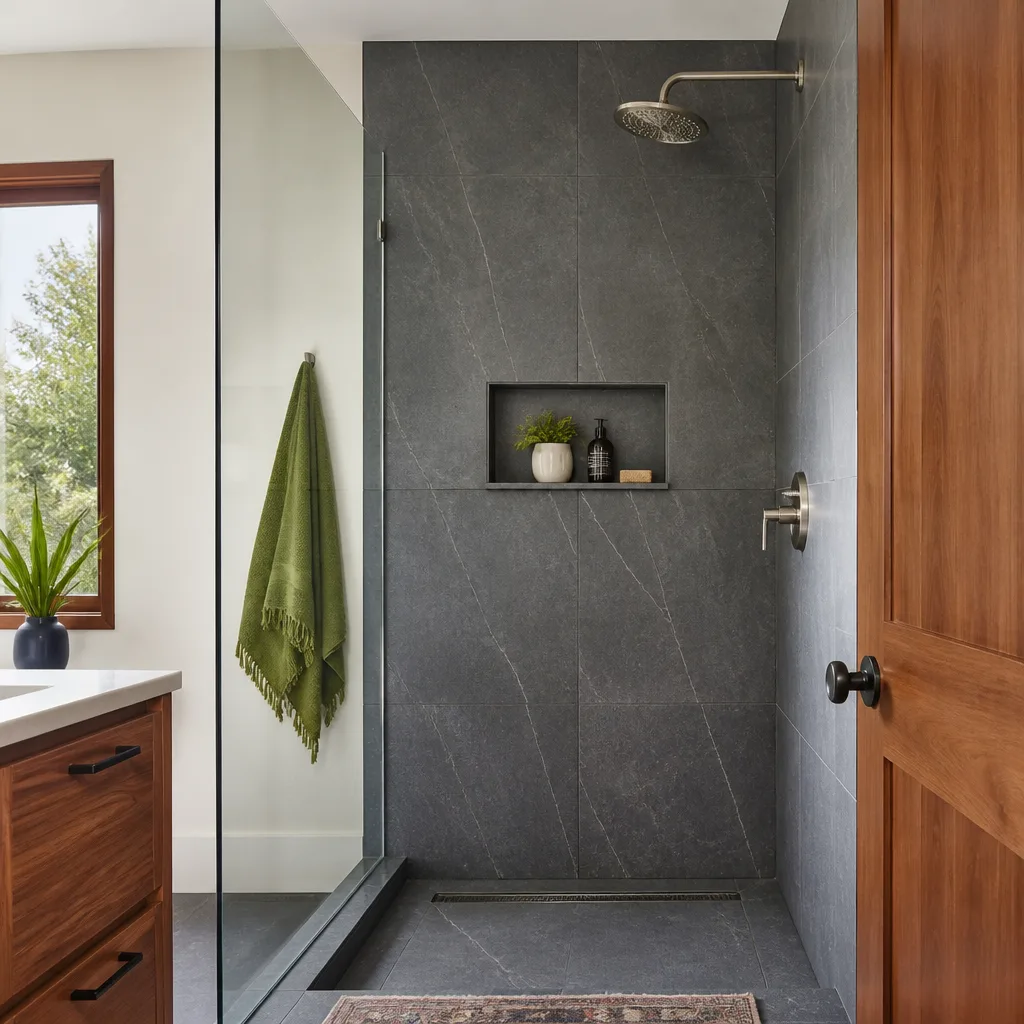
Ask for both, in writing, before you decide. A contractor who can’t or won’t put a repair number and a replace number on the same page is telling you something about how they work.
A fair comparison looks like this:
- Repair quote: scope (specific tile, specific area), substrate findings from the inspection, what the repair does not address (e.g., “does not include supply line replacement”), and the guarantee terms.
- Replace quote: line-item pricing for demo, substrate, plumbing allowance, fixtures, tile, labor, permit, and disposal, with a fixed total.
- The delta: the difference between the two numbers, plus an honest estimate of when the repair will likely need to be redone.
At Bradford Remodeling Co Los Angeles, every project gets a written price before any work starts and a 365-Day Done Right Promise: if the work fails within that year, we come back and correct it at no charge. That guarantee applies to whatever we install, so we’re just as careful about telling you when a repair is the wrong call as when it’s the right one.
If you want the reference point for what a full-scope project looks like, see our Bathroom Remodeling in Los Angeles page. We also work closely with our General Contractor in Los Angeles team when a bathroom scope pulls in framing or electrical, and our Kitchen Remodeling in Los Angeles crew often handles the powder room that comes with a kitchen project. For everything else across the home, start at the Bradford Remodeling Co Los Angeles home page.
When to Call a Pro
If you’ve found a soft spot at the curb, a recurring crack, rusty water on first draw, or a ceiling stain below the bathroom, stop here. Those four findings point to work behind the wall or below the pan, and neither is a DIY job. High-tension plumbing, gas lines (in some bathrooms), and electrical inside a wet wall all carry real risk. A trained, background-checked technician should be the one opening that wall, and the inspection should be scheduled before any tile is purchased.
The Bottom Line
Three rules cover almost every Los Angeles bathroom decision:
- Read the substrate first. If the cement board, membrane, or mud bed has failed, a tile repair is a temporary patch, not a fix.
- Check the plumbing age. Galvanized supply and drain lines in pre-1970 Los Angeles homes should anchor the whole scope. If the pipe needs replacing, the bathroom gets opened, and once it’s open, replace beats repair.
- Get both prices in writing. A repair number and a replace number on the same sheet, with the guarantee terms attached. Anything less is guesswork.
If you’re in Los Angeles and want both prices side by side before you commit, Bradford Remodeling Co Los Angeles offers free estimates and a written price before any work starts, backed by the 365-Day Done Right Promise. Call (844) 343-6681 for a free estimate. A live person answers, day or night.
Frequently Asked Questions
A full bathroom remodel in Los Angeles typically runs in the mid five figures to the low six figures depending on size, tile selection, and how much plumbing has to be replaced behind the wall. A repair that addresses failing tile or grout without opening the wall costs far less, but it only makes sense when the substrate and plumbing are sound. Call (844) 343-6681 for a written line-item estimate with both a repair and a replace price on the same page.
No. A tile repair over a failed shower pan liner will look correct for a short time and then fail again, usually within 18 months, and the second repair costs more because demolition and water damage are added to the bill. A failed pan requires a tear-out of the floor, the liner, and the mud bed. Call (844) 343-6681 and we’ll walk you through what the inspection shows.
Yes. Any bathroom work that opens the wall for plumbing or electrical requires a permit and an inspection in Los Angeles, and the permit cost is line-itemed in the written price before work starts. We don’t start a permitted scope without one, and we don’t add the fee after the fact. Call (844) 343-6681 to schedule the estimate and review the permit scope.
A typical full bathroom remodel takes several weeks once demolition begins, and a repair that doesn’t open the wall usually takes a few days. Plumbing replacement behind the wall and inspection scheduling are the two biggest variables, which is why we put the schedule in writing at the same time as the price. Call (844) 343-6681 for a free estimate and a written timeline specific to your bathroom.
Written by the team at Bradford Remodeling Co Los Angeles.
Need Construction Help?
Call Bradford Remodeling Co Los Angeles - licensed & insured, here with fast after-hours help in Los Angeles.
(844) 343-6681