
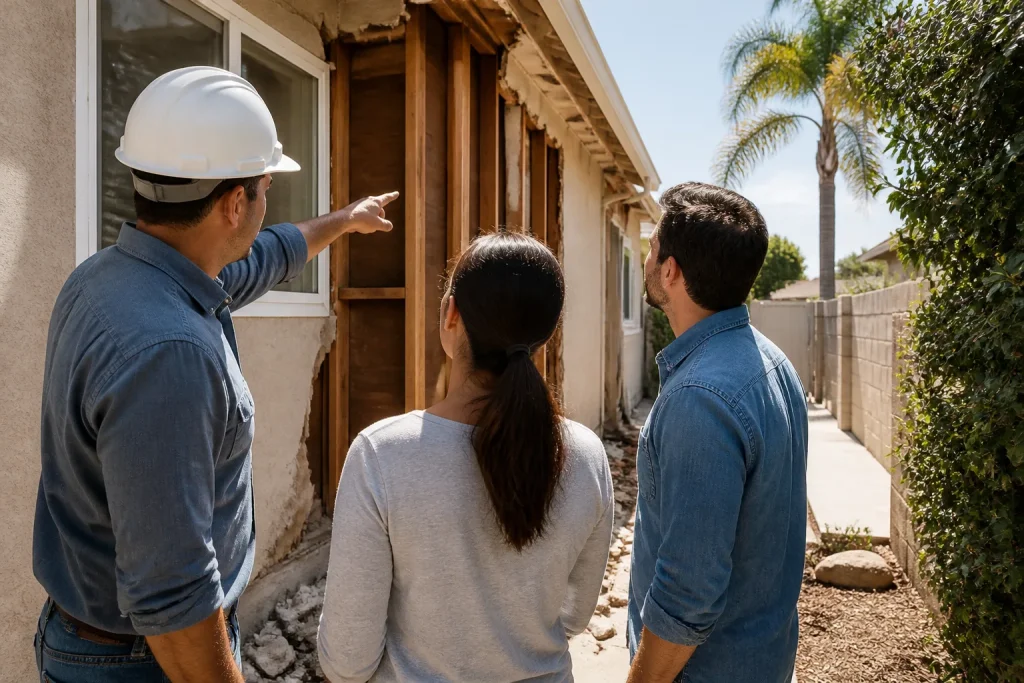
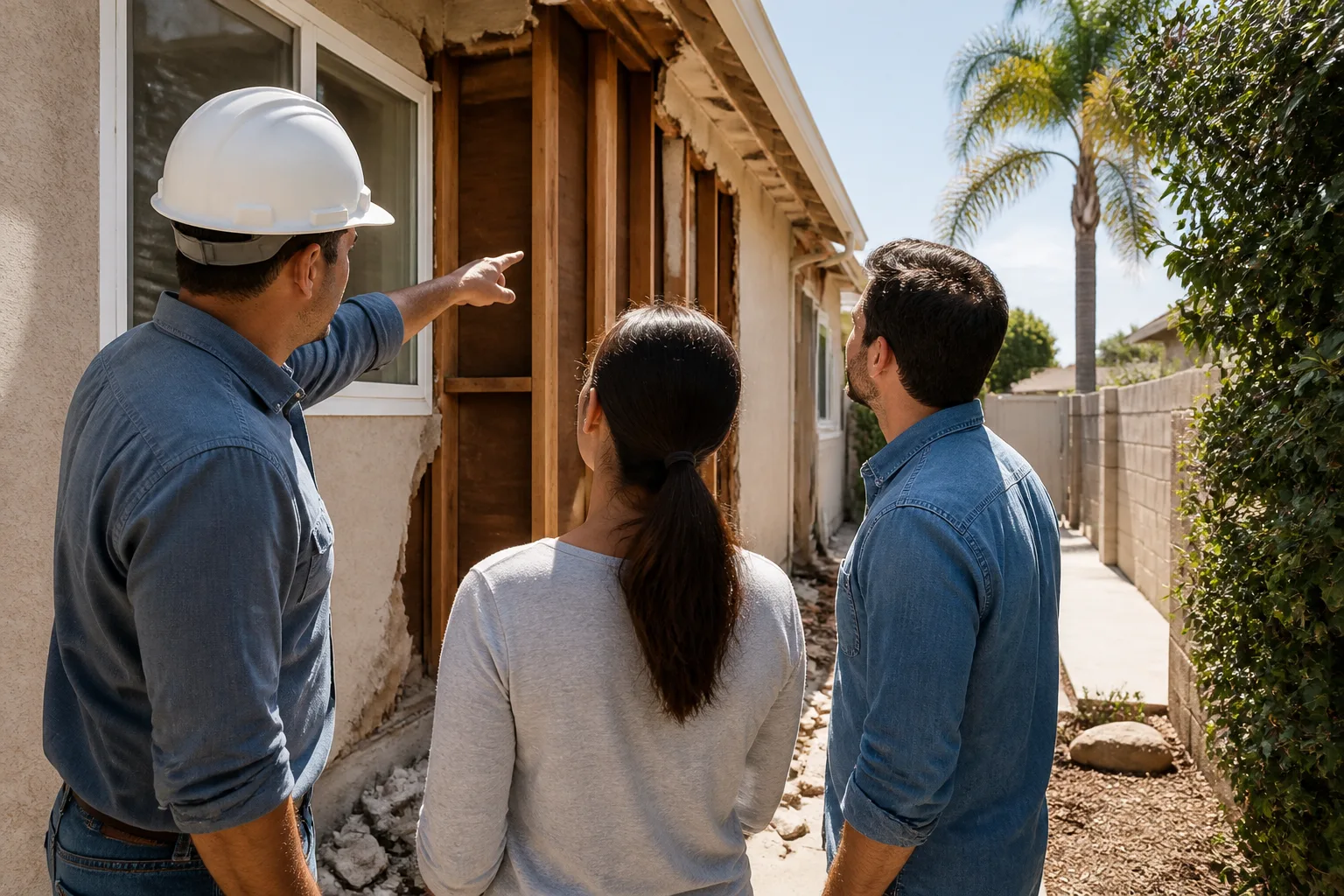
General Contractor: Repair or Replace? How Los Angeles Homeowners Decide
A contractor who always says “replace” is selling you. One who always says “repair” is protecting their bid. Here’s how to run the number yourself before anyone picks up a tool.
The repair-or-replace question isn’t emotional, and it shouldn’t be decided by whoever talks loudest. It’s a math problem with four variables: remaining useful life, cascade risk, labor overlap, and material lead time. Get those four lined up and the answer usually falls out on its own. This is the framework we use when we walk a Los Angeles house, and it works whether you’re staring at a failing window, a tired kitchen, or a roof that’s starting to argue with you.
Key Takeaways
- Repair wins when the part has real life left and the failure is contained. Replace wins when a fix starts dragging other systems down with it.
- Bundling a replacement into an already-open scope costs less than a standalone job later. Ask for that number explicitly.
- A pre-1978 Los Angeles home adds scope risk to almost any “small” repair. Post-1980s construction is more predictable.
- A by-the-book contractor will put a repair price and a replace price side by side in writing. If you only get one, you’re not being shown the whole picture.
What are the four variables that actually decide repair or replace?

Most homeowners weigh sticker price and stop there. That’s the wrong number. The right question is total cost over the next several years, and four variables drive it.
Remaining useful life. How many years does the existing element have left before it fails again? A window with 15 years on it is worth repairing. One down to its last three is throwing good money at a clock that’s already running out.
Cascade risk. When this part fails, what does it take down with it? A leaking window that rots a wall cavity costs several times a cracked pane. That risk tilts the math toward replace even when repair is cheaper today.
Labor overlap. If the wall is already open or the crew is already on site, the incremental cost of replacing instead of repairing drops sharply. Labor is the biggest line in most Los Angeles jobs, and you only pay for it once.
Material lead time. In the Los Angeles market, specialty windows, custom cabinetry, and certain exterior products can run weeks or longer depending on the manufacturer and the order. If you’re waiting on one item anyway, folding a replacement into that window costs you time you’d never notice.
Run all four, and “it’s cheaper to repair” often stops being true once you add up what the repair sets in motion.
How does the age of a Los Angeles home shift the math?
Age changes everything, and it’s one place generic advice fails Los Angeles homeowners. The housing stock here runs the full range, and the decade a house went up tells you how predictable a repair will be.
Pre-1978 construction. Homes built before 1978 carry a real chance of lead paint and other legacy materials. Any repair that disturbs a painted surface, a window frame, or a wall cavity can trigger testing and safe-handling requirements. That can turn a simple patch into a bigger scope than you budgeted. If you’re weighing repair on a pre-1978 house, price in the possibility that opening the wall finds something the original repair didn’t cover.
Post-1980s construction. Newer homes are more predictable. Materials and methods are closer to current standards, so a repair tends to stay a repair. That makes the repair option genuinely competitive more often.
There’s also deferred maintenance to consider. A Los Angeles home that’s had spot fixes stacked on spot fixes for years is a different calculation than one that’s been maintained. Sometimes the honest answer is that you’re not repairing a part – you’re paying to postpone a replacement you already know is coming.
Why does bundling a replacement cost less than a standalone job?
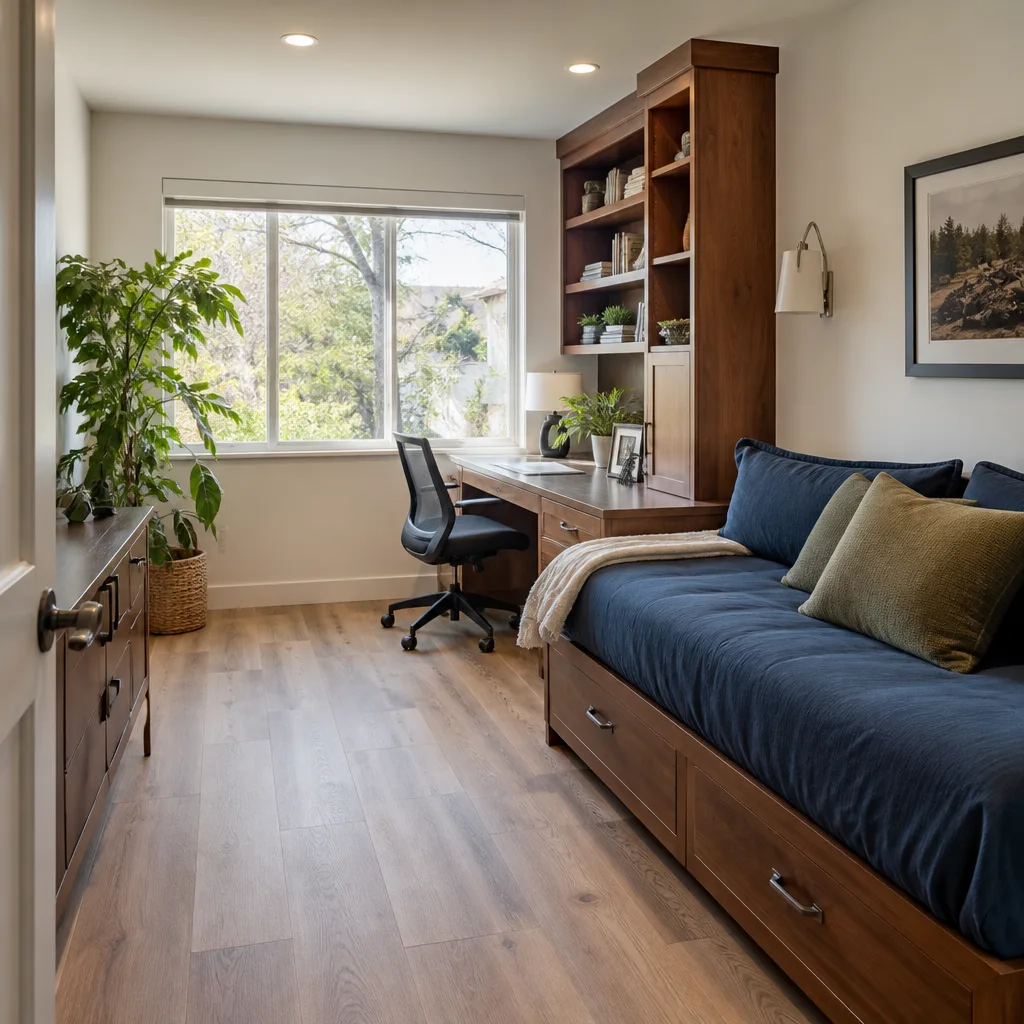
Here’s where homeowners leave money on the table. A replacement done as part of an already-open scope almost always costs less than the same replacement done as its own job later. The reason is straightforward: mobilization, protection, tear-out, and disposal are already paid for. When those costs are shared across more work, the incremental price of the replacement drops.
Say you’re already remodeling a kitchen and the window above the sink is on its last legs. Replacing it while the wall is open and the crew is on site is a fraction of what that same window costs as a standalone job a year from now – new mobilization, new protection, new tear-out, new dumpster.
The practical move: ask your contractor for the bundled number, not just the base bid. A specific ask works better than a vague one. Try “If we replace the [part] while you’re already in there, what does that add to the total?” A straight answer shows up in writing. Vague answers, or “we’ll figure it out later,” are a signal the estimate isn’t squared away.
We see this most often in the middle of a kitchen or bathroom project, where the scope is already open and the homeowner realizes the adjacent element is closer to failure than they thought. Getting that number in writing before work starts is the whole game. If you’re weighing a larger scope, our kitchen remodeling in Los Angeles page walks through how open-scope pricing works.
What is the written estimate test?
You don’t need to be a contractor to judge whether one is by the book. You need to see the numbers. A by-the-book contractor can put a repair price and a replace price side by side, in writing, before you decide. That’s the written estimate test, and it filters out a lot of bad bids.
Ask for both numbers in one document:
- A line-item repair price with the scope spelled out – what gets fixed, what doesn’t.
- A line-item replace price for the same element.
- What each option does to labor, protection, and disposal if bundled with the rest of the job.
- What the guarantee covers on each path.
Contractors who only quote one path are steering you. Maybe toward the cheaper repair to protect their bid, maybe toward the bigger replacement to grow the job. Both are guesses when the homeowner can’t see the other number. A written price before any work starts removes the uncertainty.
Our own approach, part of The Garrison Standard, is to put the price in writing before a tool comes out – no numbers that move at the door, no “we’ll see once we’re in.” That’s not a sales line. It’s a working method. The general contractor in Los Angeles page covers how that written-price commitment works across a full scope.
When is repair the wrong answer even if it’s cheaper?
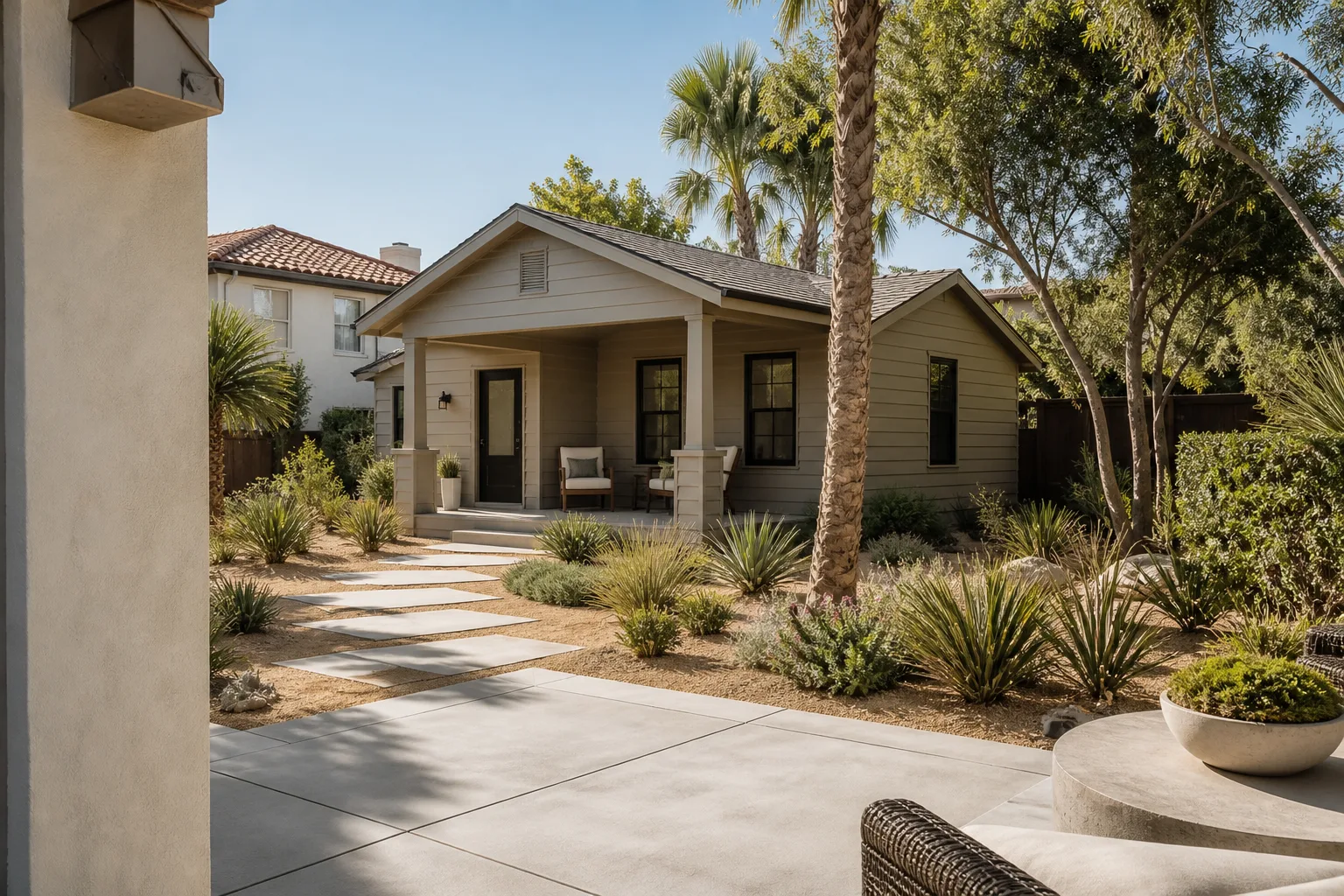
Cheaper isn’t the same as correct. There are scenarios where a patch job looks like a deal and quietly costs you more than the replacement would have.
- It voids the manufacturer warranty. Many products – windows, exterior products, cabinetry – have installation terms. An out-of-spec patch can void a warranty on a component that would otherwise be covered. That’s a permanent loss for a short-term saving.
- It fails inspection. Some repairs don’t meet current code on a permitted scope. If the work has to be inspected, a shortcut repair is a dead end – you’ll pay for the patch and the replacement after the inspector turns it down.
- The part is already past its service life. Repairing something that’s on borrowed time just pushes the failure a few months down the road – and the replacement still comes.
- The failure is systemic, not local. A single cracked pane is local. Water infiltration that’s been finding its way in for years usually isn’t. Fix the symptom and you miss the cause.
When a repair isn’t going to hold, the honest move is to say so. The bathroom remodeling in Los Angeles page has more on when a bathroom is past patching, since water damage there rarely stays put.
When should you call a pro?
If the scope touches structure, electrical, plumbing, gas, or a permitted element, call a pro – not because the repair is impossible to do yourself, but because a wrong call there can be dangerous or unpermitted, and both cost more than the job. High-tension components don’t forgive a shortcut, and neither do gas lines. For the four-variable math itself, the test is whether you can get two written numbers side by side. If your contractor won’t produce both, bring in someone who will.
We’ve walked Los Angeles homes where a “small” repair turned into a wall cavity, a rotted sill, and a permit – because nobody ran the four variables first. If you’re at that fork, the call is free. Related services in Los Angeles: Bradford Remodeling Co Los Angeles home for the full picture of what we do.
The Bottom Line
Run the four variables – remaining useful life, cascade risk, labor overlap, and lead time – before anyone picks up a tool. Then apply the written estimate test: ask for a repair price and a replace price side by side. If you’re bundling a replacement into an open scope, get the incremental number in writing. And check the age of your home – a pre-1978 Los Angeles house carries scope risk a newer one doesn’t, so the repair path is less certain there. A disciplined contractor shows you both numbers. If they won’t, that tells you everything you need to know.
If you’re in Los Angeles and need help, Bradford Remodeling Co Los Angeles offers free estimates – call (844) 343-6681. Every project gets a written price before work starts, and every completed job is covered by the 365-Day Done Right Promise: if it doesn’t hold within the year, we come back and make it right at no charge. A live person answers the phone around the clock.
Frequently Asked Questions
Repair is usually cheaper on a single line item, but replace often wins on total cost once cascade risk and labor overlap are added in. Run the four variables – remaining life, cascade risk, labor overlap, and lead time – before you assume repair is the cheaper path. Call (844) 343-6681 for a free estimate with both a repair and a replace price in writing.
It shouldn’t. A by-the-book contractor puts the price in writing before any work begins, with no numbers that move at the door. If a repair uncovers something the original scope didn’t cover – common in pre-1978 Los Angeles homes – you should get that in writing before proceeding, not a surprise invoice after. Call (844) 343-6681 for a written, line-item estimate.
It depends on the element and the scope. Structural, electrical, plumbing, and many exterior and window replacements require permits; cosmetic repairs usually don’t. A version of the same scope can be permitted or not depending on how the work is done, so get the permit question answered before you decide. Call (844) 343-6681 and we’ll tell you what your job needs.
Once you have both written numbers, the decision usually takes an evening, not a month. The one variable that can stretch it is material lead time – specialty windows and custom cabinetry in the Los Angeles market can run weeks or longer depending on the manufacturer and the order. Call (844) 343-6681 to get your repair and replace prices side by side and know your timeline.
Written by the team at Bradford Remodeling Co Los Angeles.
Need Construction Help?
Call Bradford Remodeling Co Los Angeles - licensed & insured, here with fast after-hours help in Los Angeles.
(844) 343-6681